

Audio By Carbonatix
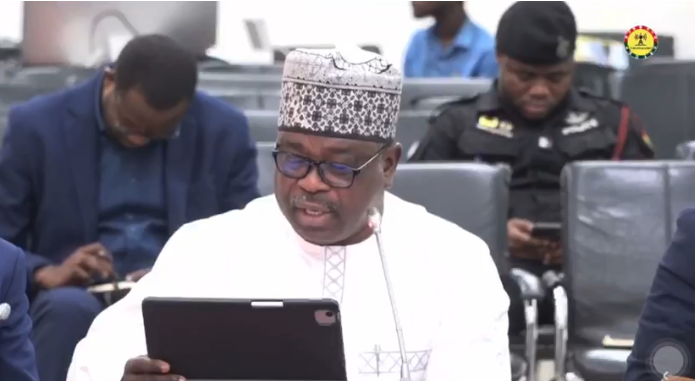
The Minister of State for Climate Change and Sustainability, Alhaji Baba Seidu Issifu, has called for climate considerations to become a mandatory component of all public infrastructure and development projects to strengthen Ghana’s resilience against climate change.
Appearing before Parliament’s Assurance Committee on Thursday, July 9, Mr Issifu said climate resilience must be integrated into the planning, design and implementation stages of national development projects.
According to the Minister, ensuring that every public project has a climate component would not only support environmental sustainability but also create opportunities for Ghana to access climate financing and generate carbon credits.
“All hands must be on deck if we have to make significant progress in our fight against climate change,” Mr Issifu said.
He explained that Parliament, as the oversight institution of government, could play a critical role by demanding clear climate considerations before approving development projects.
“Assuming government presents a proposal or project to Parliament and you ask the Minister or the sponsors what the climate dimension of that project is, you are immediately ensuring that any project approved by Parliament has a climate component,” he said.
Mr Issifu said incorporating climate measures into development projects would contribute to Ghana’s efforts towards achieving global climate targets, including limiting global temperature increases to 1.5 degrees Celsius.
He added that climate-compliant projects have the potential to generate carbon credits, which could provide additional financial support for government programmes.
“At the end of the day, that is the way to achieve the 1.5 degrees Celsius target. And that is the way to generate carbon credits, because any project that is climate compliant has the tendency of generating carbon credits,” he noted.
The Minister further explained that climate-focused projects could attract cheaper and blended financing to support national development efforts.
He stressed that while climate change-related disasters, particularly flooding, cannot be eliminated completely, the country can reduce their impact through proper planning and resilient infrastructure.
“We cannot stop flooding entirely. It is difficult to do that. But at the end of the day, we have to be able to contain it. We can only do that if we introduce a climate dimension into some of these development projects that we are undertaking,” he said.
Mr Issifu maintained that introducing climate considerations into public projects would help Ghana better manage climate risks and ensure sustainable development.
He encouraged Parliament and the Assurance Committee to take a leading role in ensuring that climate resilience becomes a key requirement for all major development projects approved in the country.
Latest Stories
-
Nilex Corp donates US$259,000 medical equipment to Mahama Cares
3 minutes -
Minority caucus demands parliamentary recall over US$1bn drug seizures linked to Ghana
6 minutes -
Bono FDA seizes 57,000 pieces of unregistered baby diapers at major markets
13 minutes -
World Cup: Kofi Adams rejects claims of visa overstays by Ghana delegates
20 minutes -
Residents and chiefs of Jema protest over detention of Techman nurse; demands her release
34 minutes -
“Sometimes it’s deliberate to allow the cedi to depreciate a little” – Governor assures of control
40 minutes -
One million tonnes of waste to be evacuated from Agbogbloshie in 90 days – Mahama
40 minutes -
UCC confers honorary doctorate on Kwesi Pratt Jnr
48 minutes -
Inheritance is not succession: REBRAND Masterclass ’26 to challenge founders on legacy
50 minutes -
Young entrepreneurs urged to use digital platforms to cut business start-up costs
51 minutes -
If GBA can’t comment on perception of partisanship, our democracy is in trouble – NPP communication member
52 minutes -
One Family, Many Farewells – At Lashibi Funeral Homes
56 minutes -
Mahama orders immediate dissolution of National Cathedral Board of Trustees
1 hour -
CRC recommendations: Dr Asah-Asante calls for early preparation of gov’t team, rejects five-year term
1 hour -
My support for SHS students goes beyond kindness; it’s a dream come true – Gideon Boako
1 hour