

Audio By Carbonatix
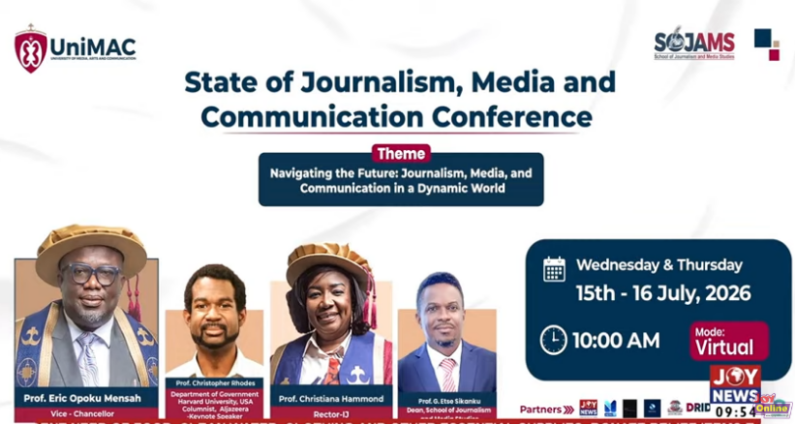
The University of Media, Arts, and Communication (UniMAC) has opened its maiden State of Journalism, Media, and Communication Conference (SJMCC 2026), marking the institution's first major international academic conference since the merger of the Ghana Institute of Journalism (GIJ), the National Film and Television Institute (NAFTI), and the Ghana Institute of Languages (GIL).
The two-day virtual conference, which began on Wednesday, July 15, is being held on the theme "Navigating the Future of Journalism, Media, and Communication in a Dynamic World."
The conference brings together academics, researchers, media practitioners, and communication experts from across the world to deliberate on the rapidly evolving media landscape and the future of journalism in the digital age.
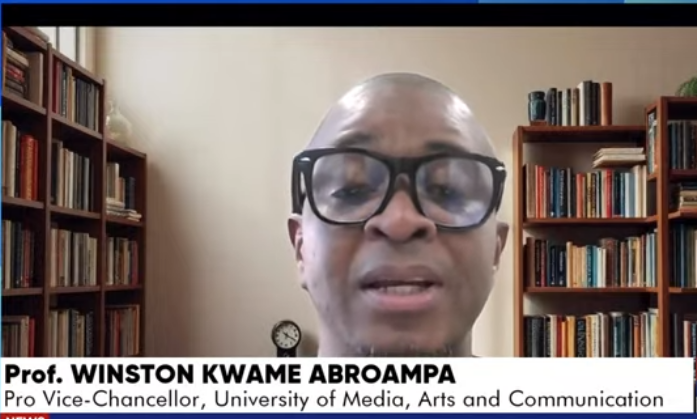
Delivering the welcome address on behalf of the Vice-Chancellor of UniMAC, Prof Eric Opoku, the Pro Vice-Chancellor, Prof Winston Kwame Abroampa, described the conference as the beginning of what he believes will become one of the world's leading academic gatherings on journalism and communication.
"I therefore solemnly believe that years from now, we shall look back on this gathering as one that began a new chapter in UniMAC's scholarly journey... One that grows into enduring research collaborations, influential publications, informed public policy, and stronger partnerships across Ghana, Africa, and the wider international community."
He added that he was confident the conference would establish itself as a globally recognised platform for scholarly engagement.
"In years to come, SJMCC will stand among the world's important conferences on journalism and communication. It is a platform for reflection, dialogue, collaboration, and most importantly, solutions."
Prof Abroampa said the conference would examine a broad range of issues shaping contemporary journalism and communication, including artificial intelligence, technology and democracy, fact-checking, media ownership, journalism education, investigative reporting, science and environmental journalism, strategic communication, gender in the media, development communication, and wider issues relating to media and society.
According to him, although these topics may appear distinct, they are deeply interconnected and ultimately point to one critical concern.
"Ultimately, ladies and gentlemen, they converge on one central question. How do we build media systems that genuinely serve the public interest? This conference offers an excellent opportunity and platform to explore these questions."
He stressed that safeguarding the integrity of the information ecosystem requires collective action from journalists, universities, governments, and technology companies.
The Pro Vice-Chancellor also encouraged participants to use the conference as an opportunity to build lasting research collaborations rather than simply present academic papers.
"Knowledge achieves its greatest value when it improves society. And I'm confident these discussions will generate ideas capable of influencing policy, strengthening professional practice, and enriching scholarship."
Prof Abroampa commended the Dean of the School of Media Arts and Communication, the School of Journalism and Media Studies, the conference planning committee, faculty, staff, students, and volunteers for successfully organising the inaugural event.
He also expressed appreciation to keynote speaker Prof Christopher Rhodes, plenary presenters, moderators, reviewers, and participants for contributing to what he described as a landmark conference in UniMAC's academic journey.
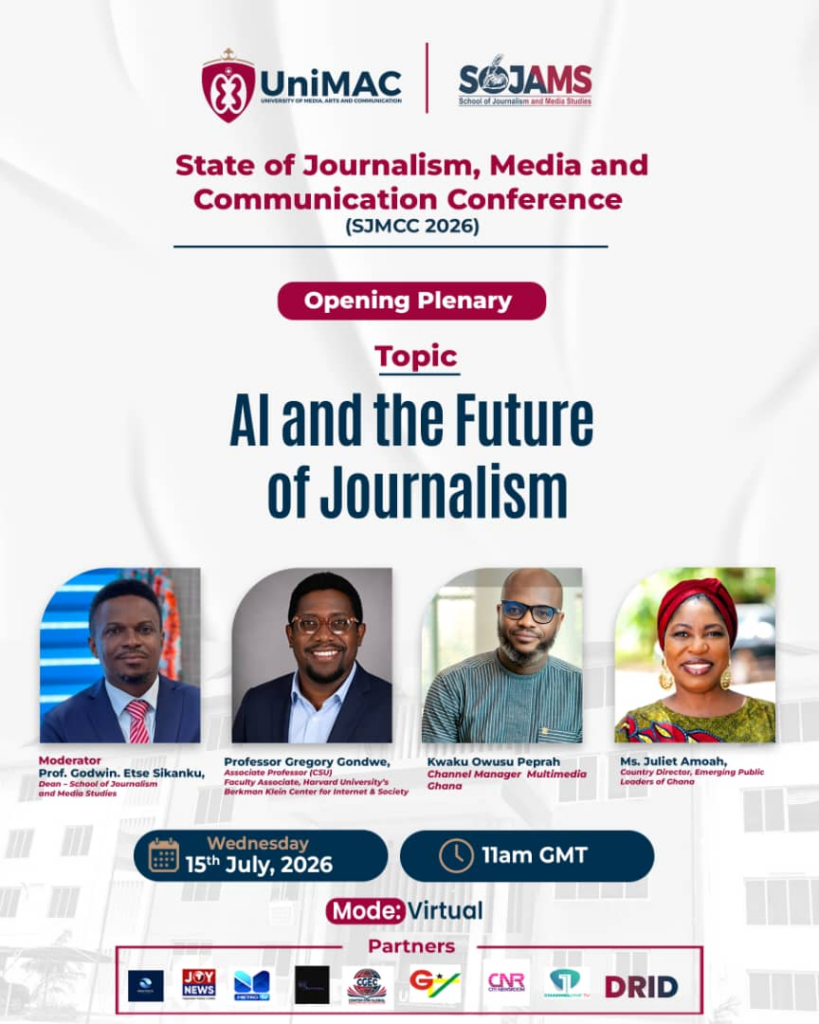
The two-day programme features keynote presentations, plenary sessions, roundtable discussions, and research panel sessions focused on addressing emerging challenges and opportunities within journalism, media, and communication.
Latest Stories
-
Banks wrote off GH¢1.23bn as bad debt in half-year-2026
15 minutes -
T-bills auction: Government exceeds target marginally; interest rates decline
36 minutes -
Édouard Mendy annonce sa retraite internationale avec le Sénégal
4 hours -
Lamine Yamal scores twice as Barcelona maintain perfect start
4 hours -
Haaland scores controversial winner for 10-man City at Man Utd
4 hours -
Ghana’s narcotics crisis deepens as drug seizures linked to country top US$1bn – Minority
4 hours -
CAF CC: Nations FC bow out after draw with FC Diarra in Accra
4 hours -
Kenyans dominate 2026 KGL Millennium Marathon as race champions mental health
4 hours -
Minority demands full-scale probe into Ghana’s alleged emergence as narcotics transit hub
4 hours -
NaCCA trains teachers to implement new Chinese language curriculum
6 hours -
Ghana, China deepen cooperation on galamsey and mining sector
6 hours -
JoyNews–Republic Bank Habitat Fair ends on a high note after 3 days of strong patronage, expert engagement
7 hours -
Emma Ofosua takes West African spoken word to three UK cities
7 hours -
Traditional artists will become more expensive because of AI – Aewura Arts
7 hours -
Clients would disappear after I finished their artworks – Aewura Arts recounts challenges
7 hours