

Audio By Carbonatix
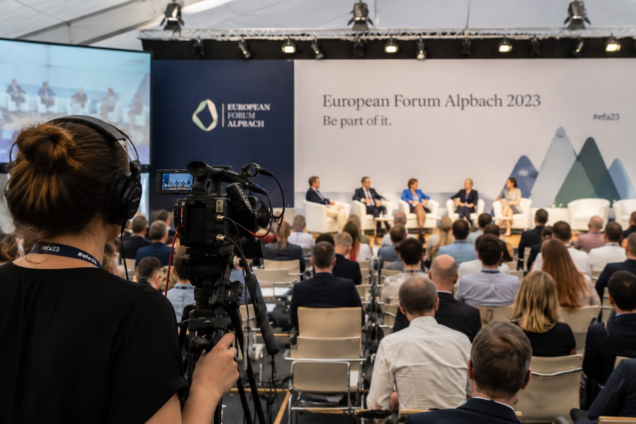
Political leaders, researchers, entrepreneurs, policymakers, and journalists gather at the European Forum Alpbach 2026 under the theme: "How Europe Wins," one question echoes throughout discussions on innovation, democracy, and artificial intelligence: how can societies harness technological progress while preserving public trust?
The answer will shape not only Europe's future competitiveness but also the future of journalism.
Artificial intelligence is transforming how news is gathered, produced, and distributed. Journalists can analyse vast datasets, transcribe interviews, translate stories, and identify emerging trends faster than ever.
Yet these advances cannot replace the principles that distinguish professional journalism from the constant flow of online information.
Editorial judgement, ethical decision-making, contextual understanding, and independent verification remain fundamentally human.
Technology may accelerate reporting, but only journalists can determine whether information is accurate, balanced, properly sourced, and worthy of public confidence. In an era when digital content can be created and shared instantly, credibility has become journalism's greatest competitive advantage.
The urgency of that responsibility has become increasingly clear. During Russia's full-scale invasion of Ukraine and the conflicts in the Middle East, manipulated videos, recycled images, and AI-generated content spread rapidly across digital and social media platforms.
Investigative journalists and open-source researchers relied on satellite imagery, geolocation, eyewitness testimony, and forensic verification to distinguish fact from fiction. Their work demonstrated that rigorous verification remains indispensable in an age of sophisticated digital deception.
The challenge extends well beyond conflict reporting. Recent elections across Europe, North America, and other democracies have been accompanied by manipulated recordings, fabricated quotations, and coordinated disinformation campaigns.
Public health emergencies have likewise shown how quickly misleading medical claims can spread online. These developments reinforce a simple reality: when misinformation is easier to produce, trustworthy journalism becomes even more valuable.
Independent journalism performs a public service that no algorithm can replicate. It verifies evidence, provides context, scrutinises those in positions of power, and corrects mistakes transparently. These responsibilities strengthen informed public debate, democratic accountability, and societal resilience.
Responsibility, however, is shared. Citizens also need the skills to navigate an increasingly complex information environment.
The Reuters Institute's Digital News Report has consistently shown that trust in news varies significantly across countries, underscoring the importance of transparent and accountable journalism in strengthening public confidence.
UNESCO likewise identifies media and information literacy as an essential democratic competency. Responsible journalism and media-literate audiences must therefore go hand in hand.
Innovation must be matched by accountability. News organisations should be transparent about their reporting methods, corrections, and the responsible use of artificial intelligence.
Such transparency strengthens credibility and helps distinguish professional journalism from the growing volume of unverified online content.
The discussions at the European Forum Alpbach 2026 reflect a broader challenge facing Europe and the wider world. Technological leadership, democratic resilience, and economic competitiveness all depend on institutions that command public confidence, including a free, independent, and trusted press.
Artificial intelligence will continue to evolve, but journalism's mission remains unchanged: to verify facts, provide context, challenge misinformation, and hold power to account.
As Europe debates how to thrive amid rapid technological change, one lesson is clear: innovation may drive progress, but trust gives it lasting value.
Latest Stories
-
Accra-Kumasi Expressway: Only nation-wreckers will oppose project – Frank Amoakohene
9 minutes -
Emerging agri-journalists gather in Croatia for global event
1 hour -
PPI Ghana congratulates Dr Abdul-Baasit Aziz-Bamba: Ghana needs a proper reset on value for money
1 hour -
Kasise Ricky Peprah writes: GBA’s face must be called out – for the record
1 hour -
Bernice Offei battled dementia for five years before death, former manager reveals
1 hour -
Jordan Ayew’s return offers Ghana timely boost ahead of AFCON qualifiers
1 hour -
De Zerbi raises doubts over Kudus’ availability for Ghana’s AFCON qualifiers
2 hours -
Ghana’s reputation must not be dented by self-centred individuals – Madina MP on cocaine seizure
2 hours -
MTN Ghana pushes digital growth for SMEs as sixth business clinic ends in Accra.
2 hours -
Black Maidens confident of WAFU B title defense ahead of Burkina Faso clash
2 hours -
5 players who deserve a Black Stars call-up for AFCON 2027 qualifiers
2 hours -
Photos: Vice President Jane Naana reviews changing of guard as Ghana Air Force takes over at Presidency
2 hours -
Africa’s richest man launches continent’s biggest share sale
2 hours -
Why Ghana’s MSMEs must rethink human capital investment: Seven strategic benefits
2 hours -
Asutifi South Assembly forms taskforce to stamp out illegal NHIS fees
2 hours