

Audio By Carbonatix
The Ghana Journalists Association (GJA) has called for increased investment in journalism to strengthen the fight against human trafficking.
Secretary of the GJA Dominic Hlodzi said effective advocacy and investigative reporting on human trafficking required sustained support for journalists in training, access to information, safety, and protection.
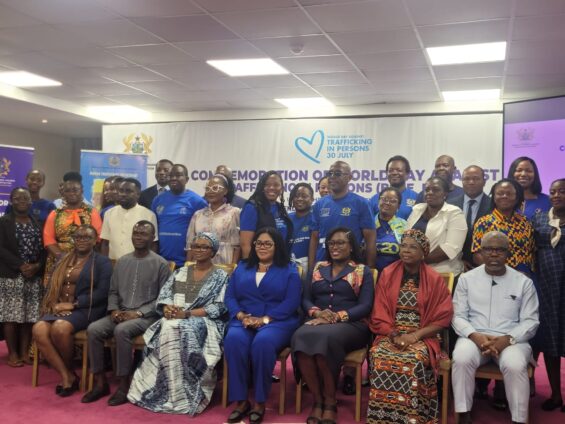
He made the call at the media launch ahead of the commemoration of the World Day Against Trafficking in Persons (Blue Day) in Accra on Tuesday.
According to the United Nations Office on Drugs and Crime (UNODC), human trafficking involves the recruitment, transportation, transfer, harbouring, or receipt of persons through force, fraud, or deception for exploitation.
Blue Day, established by the United Nations General Assembly on December 18, 2013, is observed annually on July 30 to raise awareness about human trafficking, promote the protection of victims’ rights, and encourage governments, organisations, and individuals to combat the crime.
The theme for this year’s observance is "Human trafficking can end: The time is now. Blow the whistle on sports trafficking.”
Mr. Hlodzi said the media, as a strategic partner in the national fight against trafficking, also required logistical support and funding for public interest reporting.
He, therefore, called on the government, development partners, civil society organisations, and the private sector to support journalists and media institutions.
The GJA Secretary said human trafficking remained a grave violation of human rights and dignity, destroying dreams, separating families, and exposing victims, especially women and children, to abuse and exploitation.
“Media reportage in Ghana has consistently highlighted child trafficking activities on the Volta Lake, where children are forced into dangerous fishing under harsh and exploitative conditions,” he said.
Mr. Hlodzi noted that investigative reports by journalists and media organisations had helped sustain public attention on the issue and strengthened calls for law enforcement and victim protection.
He urged the media to continue educating the public on the dangers of trafficking, expose trafficking syndicates and criminal networks, and promote whistleblowing and public vigilance.
He also encouraged journalists to amplify survivors’ stories responsibly and ethically, support prevention campaigns and community awareness efforts, hold institutions accountable for enforcement and victim protection, and sustain national conversations that inspire collective action.
Latest Stories
-
NPP NEC election: John Boadu, JFK, Titus-Glover and Hawa Koomson in strong lead, according to latest national outlook survey
9 minutes -
TRAFFITECH-GH full implementation rescheduled to November 1
10 minutes -
‘Insults must not replace arguments’ – Bagbin cautions political actors against language that could undermine democracy
14 minutes -
Minority demands full data on Ghana narcotics seizures, arrests and prosecutions since 202
17 minutes -
Man City found guilty of all charges of financial rule breaches, Premier League confirms
35 minutes -
Jeffrey Nortey wins Screen Icon of the Year again at Ghana Entertainment Awards USA
38 minutes -
Man Utd do not deserve Man City titles – Rooney
38 minutes -
Birifoh outdoors new chief: Naa Victor Gandaa V outlines vision for security, education and tourism
39 minutes -
DreamOval Foundation appoints five-member board to drive digital education and youth empowerment
53 minutes -
Accounting for public funds is not enough to prove performance – Ghana Audit Service
54 minutes -
GACC trains journalists on Auditor-General’s NPA Performance Audit Report
54 minutes -
Freedom of expression doesn’t require degradation of public discourse – Bagbin
57 minutes -
NADMO begins relief distribution to over 4,000 households affected by Hohoe floods
1 hour -
Road Minister tasks Arab Contractors to expedite Kumasi Outer Ring Road
1 hour -
Media must strengthen fact-checking to fight information disorder – President’s Legal Advisor
1 hour