


Audio By Carbonatix
There is a quiet habit we have normalised over the years, almost without questioning it. We call it “Ghana Man Time,” a phrase that sounds casual but carries a deeper cost than we often admit.
It shows up in our events, our schedules, and slowly, in the way we all begin to adjust our expectations of professionalism.
As a journalist, I have attended countless events across the country where start times feel more like suggestions than commitments. A programme scheduled for 9 a.m. begins at 10:30am or even later.
Organisers often brush it away. They say key guests have not arrived or attendance is still low. But over time, what this creates is something more damaging than delay. It creates a culture of waiting.
And when you are constantly made to wait, something shifts even in the people who are meant to document the event. Journalists begin to adjust too. You hear people say, “If I go early, nothing will start, so why rush?”
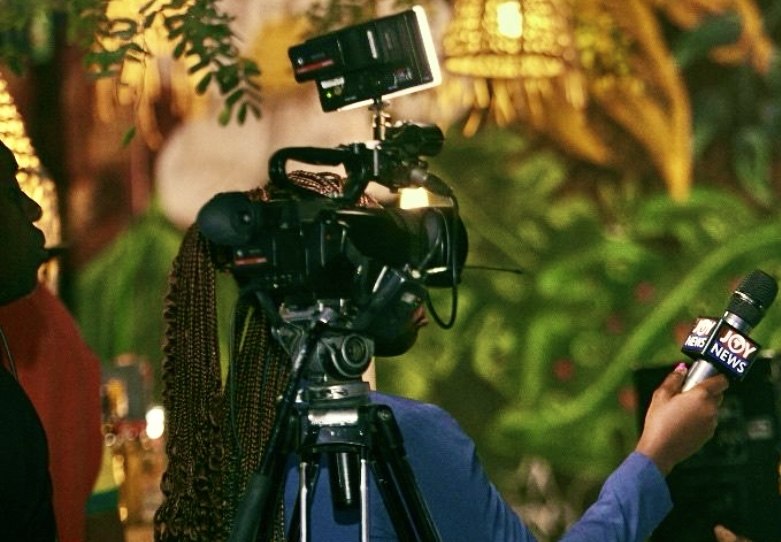
It sounds harmless, but it slowly changes discipline. It affects planning, deadlines, and the ability to do proper work. A programme meant to end at midday drifts into late afternoon, and by the time it is over, even the simplest post-event interviews become a struggle against time itself.
The irony is that we are capable of absolute discipline when it truly matters to us. Nobody jokes with a flight. If it is 3 p.m., people are at the airport early, alarms are set on multiple devices, and time suddenly becomes sacred.
That is because the consequences are clear. You either respect the time or you miss the opportunity entirely. The question then is simple: why can we not extend the same seriousness to our own events?
In the middle of this culture, however, there are moments that stand out sharply, almost like reminders of what is possible. One of those examples is the celebrated Ghanaian playwright and founder of Roverman Productions, Uncle Ebo Whyte. Attending his productions feels different from the usual experience.
If a show is scheduled for 4 p.m., it begins at 4 p.m. precisely—no minute later. The structure is firm, and the audience quickly learns that punctuality is part of the experience itself.
That consistency does something powerful. It retrains the audience. People no longer stroll in casually assuming there is extra time to spare. They plan around the schedule because they know it will be respected.

A two hour production means exactly that, from 4 p.m. to 6 p.m., and anything outside that window simply does not exist.
What makes it even more striking is that the discipline holds regardless of circumstance. Even if there are only a few people seated at the beginning, the show still starts. There is no waiting for the hall to fill. Time is treated as fixed, not flexible.
But beyond the stage, there is another layer that often goes unnoticed. The way he treats people who come to cover his work, especially journalists. Moments where, even while engaged with guests, he acknowledges journalists immediately and makes space for them first.
In one instance, when he noticed journalists waiting, he simply said, “Please excuse me for a moment, I need to speak with the press first.” That small shift in priority changes everything. It signals respect not only for the work being done but for the time it takes to do it well.
However, in many spaces, media professionals are treated as an afterthought, often made to wait long after events have ended. Interviews become negotiations, sometimes delayed so much that the moment itself begins to lose relevance. It begins to feel as though you are asking for a favor rather than doing your job.
I have personally heard remarks like, “Please hold on, our star is still getting ready or engaging with guests, give us a few more minutes.” Minutes that often stretch far beyond what was promised, leaving journalists in limbo.
I have seen fellow journalists walk away out of sheer frustration, not because the story was not worth telling, but because the delays made it impossible to stay.
But that is exactly where the difference becomes clear. When time is respected, everything else falls into place more smoothly. The audience is more present. The coverage is cleaner. The work becomes more meaningful.
Perhaps this is the real conversation we need to have. Not just about lateness, but about what lateness slowly teaches us to accept. Because when delay becomes normal, excellence quietly suffers.
And maybe, just maybe, the standard has already been shown to us. Uncle Ebo Whyte is already proving it; being on time isn’t impossible, we’ve just not made it a habit.
Latest Stories
-
Government inherited GH¢111bn debt burden but continues infrastructure projects – Lands Minister
3 minutes -
Mallam Atta traders urge government to speed up 24-hour market redevelopment
11 minutes -
Catholic Church has a duty to speak on issues affecting human dignity – Bishop Gyamfi
22 minutes -
KATH sickle cell, blood bank project stalled over $1.6m legal dispute – CEO
36 minutes -
Restricting preaching in moving vehicles is an attempt to gag the church – Rev. Kwadwo Bempah
40 minutes -
Central Charismatic Baptist Church marks 30 years, urges review of law restricting preaching on buses
41 minutes -
Mafi Kope residents appeal for urgent medical intervention over illnesses affecting children, adults
48 minutes -
ECG to limit planned power outages in Ashanti to two days a week
49 minutes -
NYA CEO, management doing ‘yeoman’s job’with meagre budget — Parliament’s Youth Committee Chairman
54 minutes -
Mahama commends Trade Minister for championing Ghana’s industrial growth
1 hour -
Public cautioned against transactions over Borteyman land as Supreme Court rules in favour of Sino Africa
1 hour -
Ghana Air Force mourns with Nigeria over 25 citizens killed aircraft accident
1 hour -
Minority demands permanent scrapping of GSA’s $300 PVoC charge on imported vehicles
1 hour -
White vs traditional marriage: Aesthetics above culture?
2 hours -
Tumu Municipal Hospital receives new delivery bed to boost maternity care
2 hours