

Audio By Carbonatix
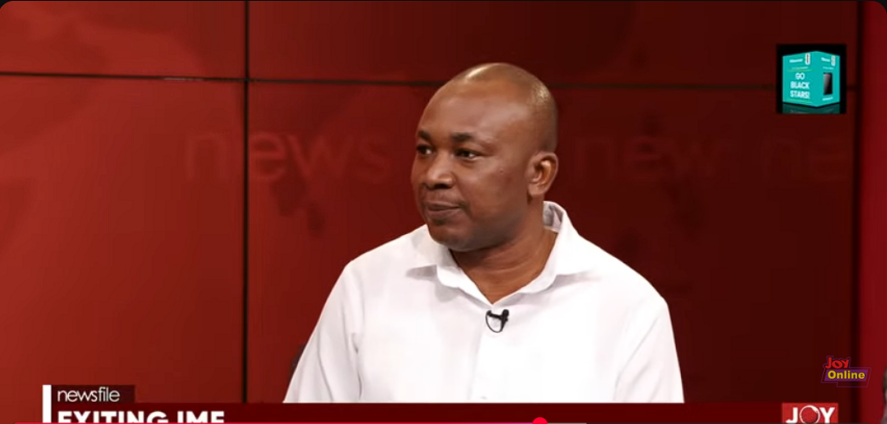
Economist Prof. Godfred Bokpin has called for a major shift in Ghana’s approach to financial education, urging institutions to meet people on the digital platforms where they increasingly spend their time.
He believes financial literacy efforts must move beyond occasional campaigns and adopt a coordinated approach that starts from an early age.
Prof. Bokpin made the call at the JoyNews-Hubtel dialogue on fraud’s impact on Ghana’s digital economy on Wednesday.
He argued that the growth of digital finance requires citizens to have stronger financial and digital literacy skills to protect themselves from fraud and make informed decisions.
“The traditional Western idea of the financial market is not for ignorant people, so there’s a saying in finance that every financial market participant ought to meet some minimum financial literacy standard,” he said.
According to him, financial education should not only be introduced when problems emerge but should become part of a broader national strategy.
“So the idea is that the issue I see here is that sometimes we see an issue, and then we leverage on that to reach out to the people. But I think we should have an integrated approach, right from kindergarten or so, to give financial literacy,” he said.
Prof. Bokpin noted that education alone is no longer enough in an increasingly digital economy, stressing the importance of digital skills.
“Because these days we are saying that you can be educated, but if you are digitally illiterate, you will be successfully unemployed,” he said.
He also called for greater coordination among institutions responsible for financial education, arguing that public awareness messages must be consistent and reinforced.
“And then there was a point that some also made: it’s easier to find people online today than in physical locations. It is so, so we should also follow that trend in terms of how we reach people with information,” he said.
The economist added that while physical engagement remains important, the reality of modern communication requires a stronger online presence.
“So it’s good to invest in physical contact and all of that, but sometimes people may be sitting here, and they actually present online. It’s just their body you see physically here,” he said.
Prof. Bokpin’s comments come amid growing concerns over fraud in Ghana’s digital financial ecosystem, as more people rely on mobile money, online banking and other digital platforms for transactions.
He believes a coordinated financial and digital literacy programme could help citizens better navigate the risks associated with the expanding digital economy.
Latest Stories
-
Beyond politics: Why Kwame Nkrumah’s ideals still matter for today’s leaders
29 minutes -
Narrowed space, intolerance – Sammy Crabbe says NPP is driving talented members away
59 minutes -
We’re not analytical enough – Sammy Crabbe calls for data-driven decision-making
1 hour -
Tonto Dikeh celebrates Bobrisky as birthday tribute sparks online reactions
1 hour -
Peter Okoye tells court he received over $800,000 in P-Square royalties
2 hours -
I’ve never had problems with artistes – Rema addresses alleged fight with Davido
2 hours -
I was mocked for getting pregnant out of wedlock as pastor’s daughter – Davido’s baby mama
2 hours -
Young John rejects collaboration request from Blaqbonez over old tweet
2 hours -
Trump administration to admit primarily Afrikaners under new refugee proposal
2 hours -
They should have Ghana first – Ntim Fordjour warns MPs against politicising drug crisis
2 hours -
We got more than 15% – Ntim Fordjour confirms support for Parliament recall over cocaine scandal
3 hours -
Wherever there is money laundering, it is linked to terrorism – Ntim Fordjour warns over drug crisis
3 hours -
Parliament Recall: Ntim Fordjour expects emergency sitting over drug-trafficking crisis
3 hours -
Oil falls on increased Gulf supply and hopes for US-Iran talks
4 hours -
South Sudan’s Kiir dissolves government, clears hurdles to delayed election
4 hours