

Audio By Carbonatix
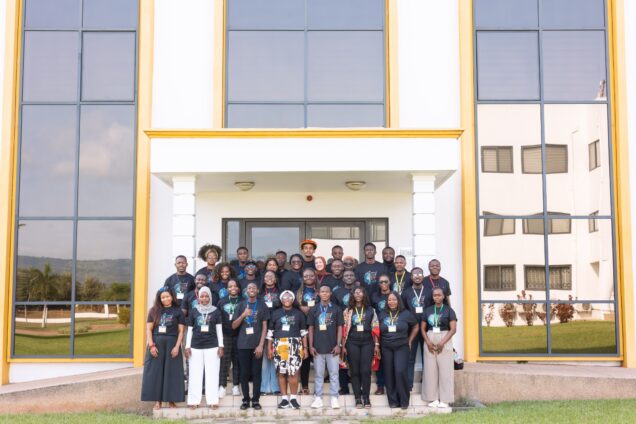
The Global Alliance for Incinerator Alternatives (GAIA) Africa and the Green Africa Youth Organization (GAYO) have begun the in-person phase of the Africa Zero Waste Academy 2026, a flagship programme aimed at equipping young climate and waste practitioners with skills to develop sustainable waste management solutions across the continent.
The physical training session in Kpong, in the Eastern Region, follows the successful completion of the academy’s online segment launched last month.
Now in its second year, the Africa Zero Waste Academy seeks to build the capacity of participants to design localised zero-waste systems that reduce greenhouse gas emissions, create green jobs and protect public health.
More than 700 climate and waste practitioners from across Africa applied to participate in this year’s programme, with organisers selecting participants to ensure gender and geographical diversity.
The initiative comes amid growing concerns over the global waste crisis, with more than 2.1 billion tonnes of municipal solid waste generated worldwide each year. Organisers say locally driven solutions, including organic waste management and waste separation at source, are critical to addressing the environmental and social impacts of waste.
The programme also highlights Ghana’s growing role in the global zero waste movement, following Accra’s designation by the United Nations in March 2026 as one of 20 Cities Towards Zero Waste.
The award-winning Zero Waste Accra Project, implemented by GAYO, contributed to the recognition by preventing organic, plastic and electronic waste from ending up in landfills while helping to reduce methane emissions.
“This is not just about managing waste better; it’s about rethinking systems for climate resilience, green jobs and community health,” said Ama Asiedu, GAIA Africa’s Zero Waste and Climate Programme Associate.
She added that the academy is built on the understanding that waste management must be approached through a justice lens, with attention to human rights, the protection of waste pickers and workers, and the creation of systems that prevent harm from the outset.
Fathia Selasi Charway-Glover, Project Coordinator for Zero Waste Cities at GAYO, said achieving zero waste requires a fundamental transformation of economic and material systems that generate waste.
“Zero waste is a systems transformation agenda that challenges us to rethink and redesign the economic and material systems that generate waste,” she said, adding that the transition requires investment in people, knowledge, policy coordination and inclusive infrastructure.
Participants have completed a five-week virtual programme covering movement building, waste characterisation and monitoring frameworks. The in-person session in Ghana is consolidating their learning through expert presentations and field visits to zero waste projects in Accra.
GAIA Africa and GAYO believe the knowledge and collaboration generated through the academy will empower participants to influence sustainable practices and policies in their respective communities while accelerating Africa’s transition towards a circular economy.
The Africa Zero Waste Academy is a capacity-building initiative designed to equip climate and waste practitioners with the technical skills needed to implement zero waste solutions, reduce emissions and promote sustainable livelihoods across Africa.
Latest Stories
-
Black Stars: Seven years of decline while hashtagging love
16 minutes -
Today’s front pages: Thursday, October 1, 2026
17 minutes -
Gov’t to suspend GH¢1 D-Levy on diesel for October and November
49 minutes -
Fire destroys belongings in Akweteyman apartment
1 hour -
Baffour Awuah to turn himself in to EOCO today – JoyNews sources
1 hour -
Government identifies payment discrepancy holding up teachers’ strike resolution
2 hours -
BoG signals no FX intermediation for October as GoldBod plans $1bn support for banks
2 hours -
When share ownership becomes personal: The African mindset of the Dangote IPO
2 hours -
Why MFWA Legal Fund matters to Ghana’s democracy
2 hours -
Fuel prices to rise from October 1; diesel could hit GH¢19.60 – COMAC
2 hours -
Parliament must investigate how 3.9 tonnes of cocaine left Ghana undetected – Samuel Jinapor
2 hours -
Government pledges to pay striking teachers as payment dispute is resolved
2 hours -
Government cannot investigate drug exports under its own watch – Abu Jinapor
2 hours -
Government extends GH¢2 diesel subsidy for two more months
2 hours -
GTEC flags over 100 tertiary institutions as unrecognised
2 hours