

Audio By Carbonatix
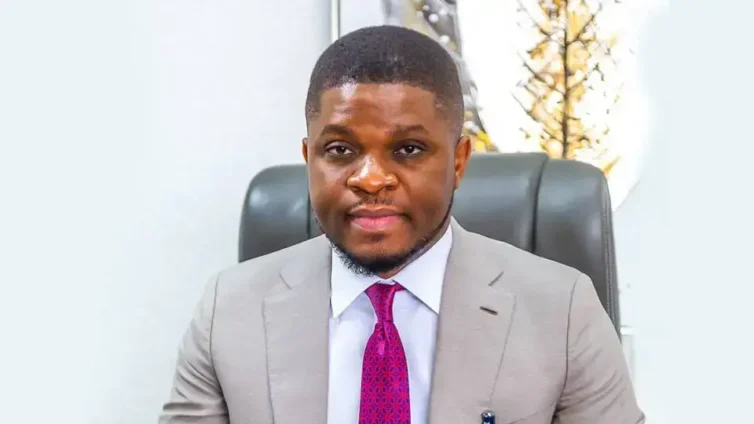
The Chief Executive Officer of the Ghana Gold Board (GoldBod), Sammy Gyamfi, has presented the Ghana Gold Board as a practical example of how African countries can maximise the value of their natural resources through deliberate state-led reforms and strategic planning.
Speaking at the EMY Africa – Africa Rising Symposium in London on Thursday, July 30, Mr Gyamfi said GoldBod reflects Ghana’s determination to ensure that the country’s mineral wealth contributes more directly to economic transformation, industrialisation and job creation.
He observed that Africa continues to export raw minerals while importing finished products, leaving much of the value created from its natural resources in foreign economies.
“As Chief Executive Officer of the GoldBod, I speak from a sector that captures Africa’s paradox. Africa is rich in minerals, yet too often poor in the value created from them. We export what nature gave us and import what human ingenuity made of it. We celebrate production and surrender processing, financing, invention and pricing power,” he said.
According to him, GoldBod was established to help reverse that trend by ensuring greater local participation and value retention in Ghana’s gold industry.
“The GoldBod is an important part of Ghana’s answer to this age-long problem. It is a success story because it demonstrates what becomes possible when the state acts not merely as a regulator, but as a strategic architect of national value.”
Mr Gyamfi explained that the institution is building a transparent and value-focused gold ecosystem that supports responsible trading, strengthens accountability and positions gold as a catalyst for national development.
“Through GoldBod, Ghana is building a well-organised, transparent, and value-focused gold ecosystem; one that strengthens local participation, improves accountability, supports responsible trading, promotes value addition and positions gold not simply as a commodity we extract, but as a platform for national economic stability, industrialisation, job creation and national development.”
He said GoldBod has already recorded significant gains since its establishment, including tackling gold smuggling, formalising the gold supply chain and boosting foreign exchange generation.
“Since its inception, GoldBod has helped address gold smuggling, formalised the gold trade supply chain, strengthened foreign exchange generation and created stronger opportunities for investment in gold production, responsible sourcing and value addition in Ghana.”
Mr Gyamfi also announced that the institution would soon launch gold-backed tokenised investment assets aimed at expanding African participation in mineral ownership.
“Just in case you are yet to hear, we will soon be rolling out our gold-backed tokenisation investment assets which will open the way for more Africans to own the mineral wealth of Africa.”
He argued that GoldBod offers an important lesson for the rest of the continent by demonstrating that meaningful transformation requires strong institutions rather than rhetoric alone.
“If GoldBod offers one lesson, it is this: transformation requires structures. Sentiment is not enough. Speeches are not enough. Even capital is not enough unless it is organised into vehicles that can endure, govern, scale-up and deliver.”
He concluded that Africa’s mineral wealth must increasingly be harnessed to create jobs, industries and prosperity for Africans rather than benefiting economies outside the continent.
“My brothers and sisters, Africa’s rise must not mean African resources rising into foreign balance sheets while the African youth remain unemployed. Africa’s rise must mean African resources creating African industries, African jobs, African brands, African wealth, African reserves, and African dignity.”
Latest Stories
-
Teacher unions strike: Gov’t presents fresh proposals as talks end inconclusively
17 minutes -
51,000 teachers’ promotion arrears to be validated for October payment – Education Minister
47 minutes -
Kwabena Boamah appointed Board Chair for Impact Investing Ghana
54 minutes -
Striking teacher unions to meet Fair Wages and Salaries Commission on October 6
1 hour -
EOCO working with AG to arraign Nana Baffour Awuah before weekend court
1 hour -
Duraplast reassures customers after fire, announces October 5 reopening
1 hour -
Call off strike, gov’t will not renege on promotion arrears pledge – Haruna Iddrisu appeals to teacher unions
1 hour -
Committee set up to validate teachers eligible for 20% deprived-area allowance – Education Minister
1 hour -
Five-member committee to search for new Black Stars coach after Sports Ministry-GFA meeting
2 hours -
Pinktober: Breast cancer survival exceeds 90% when detected early – Breast Society of Ghana
2 hours -
TCDA to adopt Upper West’s MATCO mango farm as northern prototype, issues warning against felling shea trees
2 hours -
‘Fear delegates’ tag: Afoko touts genuineness among delegates ahead of NPP delegates conference
2 hours -
John Boadu: The leader our party needs at this time – Amb. Edward Akwasi Boateng
2 hours -
Baffour Awuah: EOCO arrested, detained MP after hours of waiting, questioning – Afenyo-Markin
3 hours -
EOCO court warrant authorised search of Baffour Awuah’s law firm, not residence – Afenyo-Markin
3 hours