

Audio By Carbonatix
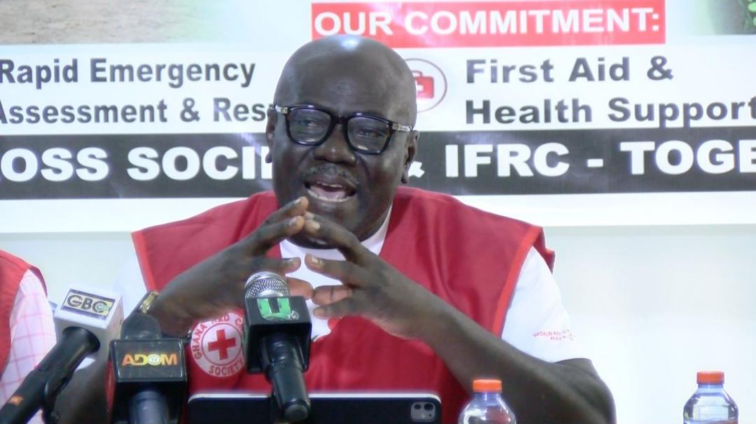
The Secretary General of the Ghana Red Cross Society (GRCS), Mr Eric Gregory Kwatia, has warned that Ghana's increasing exposure to climate change and extreme weather events is placing unprecedented pressure on humanitarian response systems, calling for a united national effort to protect vulnerable communities from future disasters.
Speaking at the official launch of the Ghana Red Cross Society's emergency flood response operation in Accra on Friday, July 30, Mr Kwatia said the devastating floods that struck four regions in June should serve as a wake-up call for the country to strengthen disaster preparedness, resilience and coordinated emergency response.
"The June floods are a stark reminder of Ghana's growing vulnerability to climate change and extreme weather events," he said. "The humanitarian needs are immense and the window to act is now."
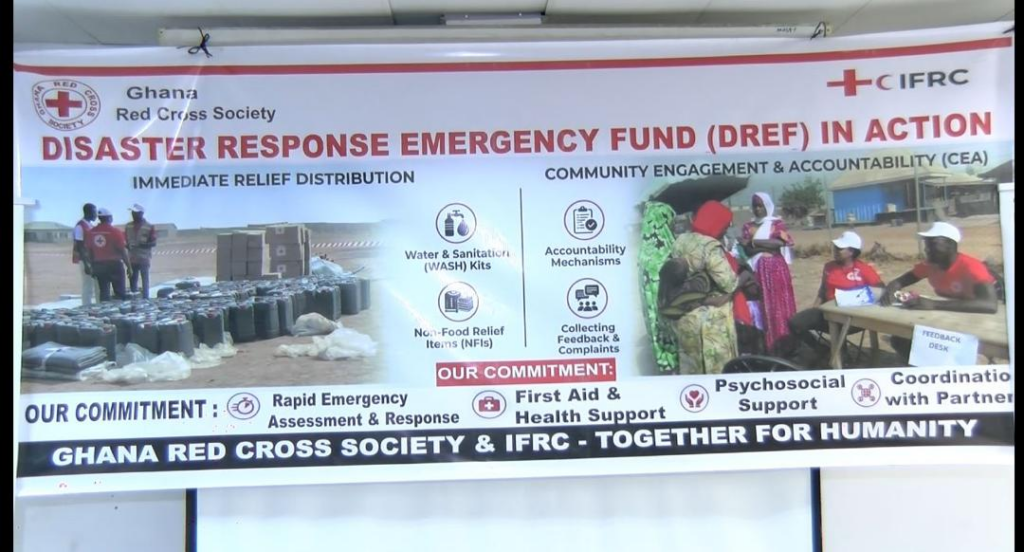
His remarks came as the Ghana Red Cross Society, with support from the International Federation of Red Cross and Red Crescent Societies (IFRC), unveiled a GH¢8.3 million Disaster Response Emergency Fund (DREF) operation aimed at assisting 30,000 flood victims over the next six months.
However, Mr Kwatia stressed that while emergency relief remains essential, the scale of recent disasters demonstrates that humanitarian organisations cannot respond effectively without sustained collaboration between government institutions, development partners, the private sector and local communities.
"We cannot do it alone," he told journalists. "We need the shared responsibility and commitment of government agencies, the United Nations, non-governmental organisations, the private sector, the media and every Ghanaian. Together we can prevent further suffering and help communities recover."
Mr Kwatia recounted how successive episodes of exceptionally heavy rainfall during the peak of Ghana's major rainy season culminated in catastrophic flooding on June 29.
Despite repeated severe weather advisories issued by the Ghana Meteorological Agency warning of possible flash floods, prolonged rainfall lasting more than 13 hours overwhelmed rivers, streams and drainage systems, causing widespread flooding across Greater Accra, Central, Volta and Western North Regions.
The disaster exposed the growing vulnerability of both urban and rural communities to increasingly intense weather events, with floodwaters destroying homes, roads, bridges and essential public infrastructure.
"The scale of the disaster demands immediate, coordinated and life-saving action," Mr Kwatia said.
According to figures presented by the Ghana Red Cross Society, the floods affected 69,867 people, leaving thousands homeless and forcing many families into temporary shelters established in schools, churches and other public buildings.
As of June 30, the disaster had claimed 30 lives, injured more than 70 people, while 30 others remained missing.
In the Central and Western Regions alone, more than 7,000 residents lost their homes after floodwaters swept through communities.
Beyond the immediate destruction, Mr Kwatia warned that the crisis continues to threaten livelihoods and public health, with contaminated water supplies and overcrowded shelters creating conditions conducive to disease outbreaks.
He said there is an elevated risk of cholera, acute diarrhoeal diseases, dysentery, typhoid and malaria among displaced populations.
"This is not just a statistical tragedy," he remarked. "It is a profound human crisis affecting families, children, older persons and the most vulnerable members of our society."
The Secretary General revealed that the Ghana Red Cross Society activated its emergency response mechanisms immediately after the floods, deploying 10 staff members and 50 volunteers to support government-led search and rescue operations, administer first aid, provide psychosocial support and conduct rapid assessments in affected communities.
However, he acknowledged that the scale of the disaster quickly exceeded the Society's immediate operational capacity.
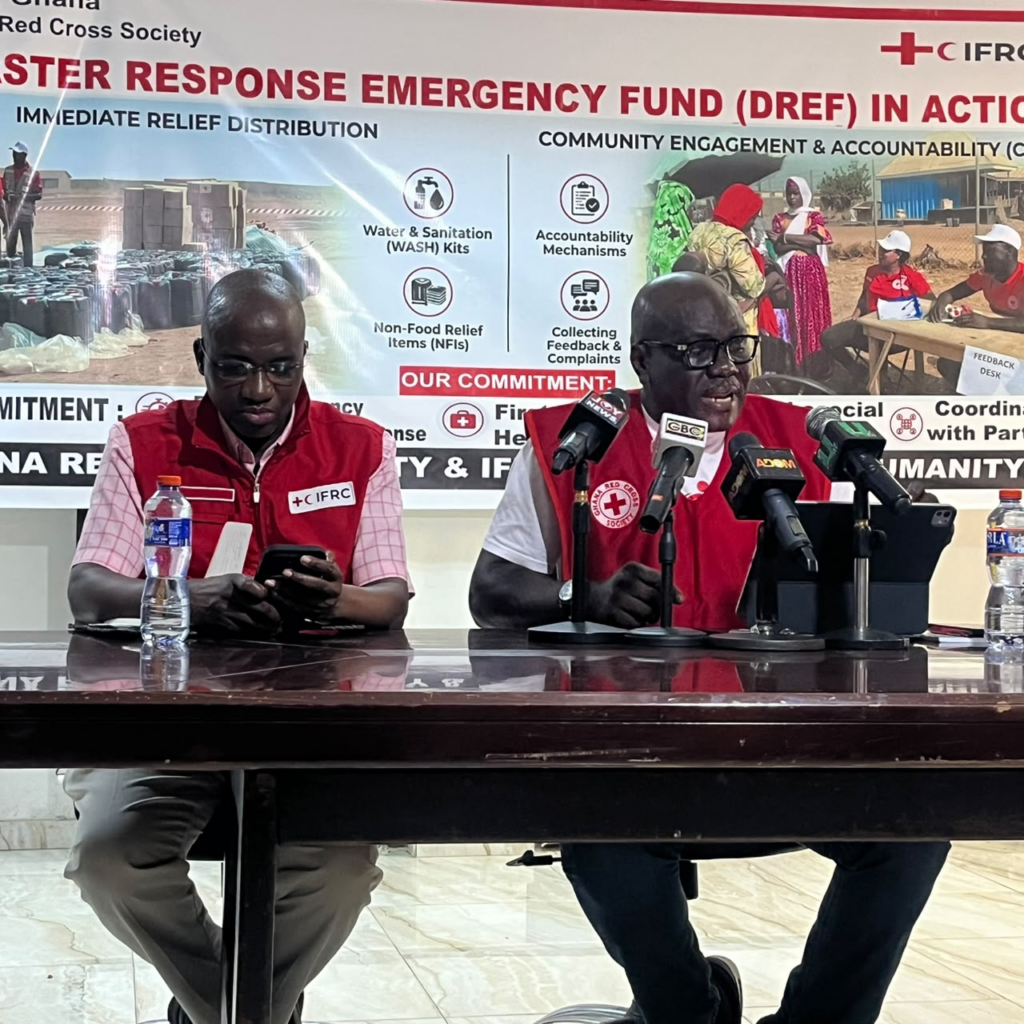
The activation of the IFRC's Disaster Response Emergency Fund has therefore enabled the organisation to mount a broader humanitarian intervention across the affected regions.
"Our emergency response has been strengthened through the DREF, allowing us to deliver timely, coordinated and multi-sectoral assistance to the most vulnerable households," he said.
Rather than focusing solely on emergency relief, the six-month operation seeks to support both immediate humanitarian needs and longer-term recovery.
Under the programme, the Ghana Red Cross Society will provide emergency shelter materials, household items and technical support to families whose homes were destroyed.
The organisation also plans to distribute 150 shelter kits, 2,000 blankets and 2,000 kitchen sets to vulnerable households while helping communities undertake safer reconstruction.
To cushion the economic impact of the floods, 1,050 vulnerable households—approximately 5,250 people—will each receive GH¢1,200 through mobile money transfers.
Mr Kwatia explained that unconditional cash assistance allows families to make decisions based on their own most pressing needs, whether purchasing food, paying medical expenses or repairing damaged homes.
"This approach respects the dignity of affected people and supports early recovery," he noted.
A significant component of the emergency response will focus on public health and disease prevention.
The Ghana Red Cross Society intends to distribute 2,000 insecticide-treated mosquito nets, train 200 community volunteers in health promotion, first aid and disease surveillance, and produce 7,000 educational materials to raise awareness about disease prevention in flood-affected communities.
Water, sanitation and hygiene interventions will also feature prominently.
The organisation plans to distribute 1,700 hygiene and dignity kits, supply 20,000 Aquatabs to improve access to safe drinking water, install 50 handwashing facilities in public places and train volunteers to lead community hygiene campaigns.
Mr Kwatia said preventing disease outbreaks was as important as providing emergency food and shelter.
The Secretary General emphasised that protection and inclusion would underpin every aspect of the humanitarian operation.
Women, children, older persons, female-headed households and persons with disabilities will receive particular attention, while all Red Cross staff and volunteers will undergo training on safeguarding, prevention of sexual exploitation and abuse, child protection and ethical conduct.
The Society also intends to establish community feedback mechanisms to ensure affected people can participate in decisions affecting their recovery.
According to Mr Kwatia, community engagement activities are expected to reach 240,000 people directly and approximately 300,000 people indirectly.
Mr Kwatia reaffirmed the Ghana Red Cross Society's auxiliary role to public authorities, saying the organisation is working closely with the National Disaster Management Organisation (NADMO), the National Emergency Operations Centre and district-level coordination teams to ensure humanitarian assistance complements government efforts.
He also expressed appreciation for the continued support of the International Federation of Red Cross and Red Crescent Societies, including its Country Cluster Delegation, the Africa Regional Office and the Abuja Cluster.
While the immediate priority remains supporting flood-affected communities, Mr Kwatia said Ghana must also invest in stronger disaster preparedness and climate resilience if similar emergencies are to be managed more effectively in the future.
He urged all sectors of society to view humanitarian response as a shared national responsibility rather than the work of relief organisations alone.
Latest Stories
-
Ghana’s clash with Ivory Coast ‘will be difficult’ without Kudus – Adebayor
54 seconds -
Daily Insight for CEOs: Understanding the Competitive Landscape
59 seconds -
IFC partners with Absa Bank Ghana and Complete Farmer to expand agricultural finance in Ghana
16 minutes -
The thing that transforms An Image into Art is The Point of View
21 minutes -
Mahama: Ghana’s health reset will prioritise local drug production
40 minutes -
Mahama lists maternal and child health as first test of Accra Reset
41 minutes -
Beyond the GH¢500b Target: A legislative blueprint to protect Ghana’s workforce (Part 2)
41 minutes -
Alan Kyerematen explains why he contested 2024 election under Movement for Change
42 minutes -
+233 to host Pat Thomas’ 80th birthday concert
1 hour -
EPA warns climate resilience plans face $22.6bn financing demand
1 hour -
Today’s front pages: Tuesday, September 22, 2026
1 hour -
Alan: ‘NPP has abandoned values of UP tradition, but I believe in those values’
1 hour -
Sustaining economic gains is Mahama’s real test – Alan Kyerematen
1 hour -
‘We won political independence, but global power remained elsewhere’ – Mahama
1 hour -
Mahama to take Accra Reset agenda into AU framework in 2027
1 hour