

Audio By Carbonatix
Chairman of the Constitutional Review Committee, Professor H. Kwasi Prempeh, has cautioned Ghana's political leaders against designing constitutional and governance reforms based on their current political fortunes.
He argued that today's governing party could easily become tomorrow's opposition.
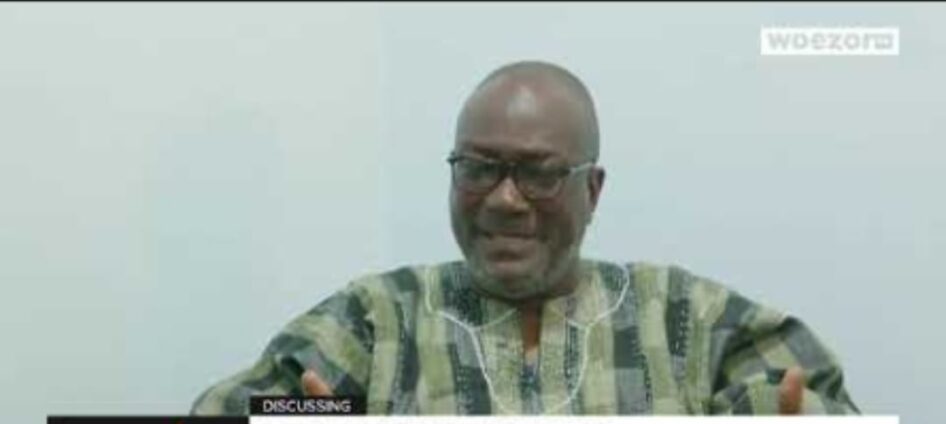
Speaking in an interview on Accra-based Woezor TV on Sunday, August 2, the constitutional law scholar said one of the greatest weaknesses in Ghana's political culture is the tendency of parties to support or oppose reforms depending on whether they believe they stand to gain politically.
According to him, constitutional reforms should be framed with future generations in mind rather than the immediate interests of governments or opposition parties.
"What we need to do is look at reforms not from the vantage point of where we are sitting today or where we will be sitting tomorrow," Professor Prempeh said.
Professor Prempeh argued that many political actors mistakenly assume their current position in government or opposition is permanent, which influences how they respond to proposed constitutional changes.
He noted that governing parties often champion reforms they believe will reinforce the advantages of incumbency, while opposition parties resist the same proposals for fear they could be placed at a disadvantage.
However, he stressed that such calculations frequently prove short-sighted because political power is never guaranteed.
"These things change," he observed, emphasising that governments and opposition parties regularly exchange roles through democratic elections.
He said constitutional rules should therefore be crafted in ways that remain fair regardless of which political party eventually occupies the seat of government.
Professor Prempeh also challenged the widely held perception that wealth and access to state resources automatically determine electoral success in Africa.
He pointed out that if financial resources alone decided elections, incumbent governments across the continent would never lose office.
"We must also know that elections have not always favoured the rich. Otherwise, incumbent governments in Africa would never lose power," he said.
According to him, although incumbent governments often command enormous state resources and enjoy the advantages of incumbency, opposition candidates have repeatedly overcome those odds to win elections.
"The resources available to incumbents in African democracies are huge, and yet challengers come from behind and win," he stated.
Professor Prempeh said these experiences demonstrate that democratic competition remains possible despite disparities in resources.
Drawing on political philosophy, Professor Prempeh urged political leaders to adopt a more impartial approach when considering constitutional reforms.
He referred to the theory of the late American philosopher John Rawls, particularly his concept of the "veil of ignorance", which proposes that rules governing society should be designed without knowledge of one's future position within that society.
Professor Prempeh explained that policymakers should imagine they do not know whether they will be in government, opposition or outside politics altogether before deciding what constitutional arrangements are appropriate.
"When you are making rules to govern a country or society, you must place yourself behind what John Rawls called the veil of ignorance," he said.
He argued that such an approach would encourage fairness and discourage political actors from pursuing reforms solely for partisan advantage.
The Constitutional Review Committee Chairman said the success of any constitutional reform process depends on political actors rising above immediate electoral considerations.
He expressed concern that debates surrounding governance reforms often become polarised because parties focus more on who benefits today than on what serves the country's long-term interests.
According to him, constitutional provisions should outlive governments and continue to function effectively irrespective of changes in political leadership.
He therefore urged political parties to evaluate reform proposals on their national merit rather than through partisan calculations.
Latest Stories
-
Teacher unions strike: Gov’t presents fresh proposals as talks end inconclusively
41 minutes -
51,000 teachers’ promotion arrears to be validated for October payment – Education Minister
1 hour -
Kwabena Boamah appointed Board Chair for Impact Investing Ghana
1 hour -
Striking teacher unions to meet Fair Wages and Salaries Commission on October 6
2 hours -
EOCO working with AG to arraign Nana Baffour Awuah before weekend court
2 hours -
Duraplast reassures customers after fire, announces October 5 reopening
2 hours -
Call off strike, gov’t will not renege on promotion arrears pledge – Haruna Iddrisu appeals to teacher unions
2 hours -
Committee set up to validate teachers eligible for 20% deprived-area allowance – Education Minister
2 hours -
Five-member committee to search for new Black Stars coach after Sports Ministry-GFA meeting
2 hours -
Pinktober: Breast cancer survival exceeds 90% when detected early – Breast Society of Ghana
3 hours -
TCDA to adopt Upper West’s MATCO mango farm as northern prototype, issues warning against felling shea trees
3 hours -
‘Fear delegates’ tag: Afoko touts genuineness among delegates ahead of NPP delegates conference
3 hours -
John Boadu: The leader our party needs at this time – Amb. Edward Akwasi Boateng
3 hours -
Baffour Awuah: EOCO arrested, detained MP after hours of waiting, questioning – Afenyo-Markin
3 hours -
EOCO court warrant authorised search of Baffour Awuah’s law firm, not residence – Afenyo-Markin
3 hours