

Audio By Carbonatix
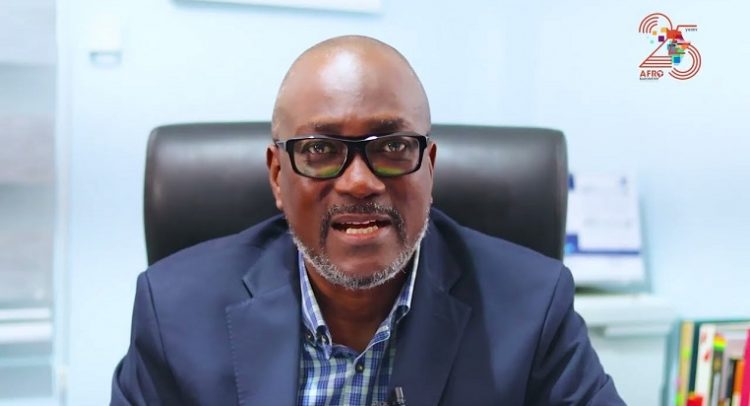
Chairman of the Constitution Review Committee, Prof H. Kwasi Prempeh, has cautioned political parties against reducing Ghana’s constitutional review process to a partisan contest.
He is warning that doing so would squander a rare opportunity for transformative national reforms.
Speaking on Joy News’ PM Express on Monday, Prof Prempeh said constitutional reforms must be approached differently from everyday politics because constitutions are designed to outlive governments, political parties and individual leaders.
“Constitutions are different; they are forward-looking. They last at least a generation. They set the foundational rules of the game for how the country is to be governed, how we recruit our national political leadership, how we remove them, and how we distribute power; these things transcend party governments. They transcend regimes. They transcend particular leaders.”
He said he expects the political class to approach the exercise with patriotism rather than party loyalty, stressing that the outcome will shape the lives of future generations.
“I’m expecting, I’m hoping that the political class, who for better or worse are the gatekeepers in this process… will come to this with a certain sense of patriotic obligation, not deference to party, because this is going to last beyond any party’s tenure, any president’s tenure.”
Prof Prempeh urged politicians to consider whether the constitutional changes they support would create a country their children and grandchildren would be proud to inherit.
“But if you see it as just a zero-sum game of another way for one incumbent party to get their preferences vis-à-vis the rival party, then I think we have lost an opportunity to do some real game-changing reforms.”
While acknowledging that constitutional reform is inherently political, he argued that broad public participation and robust national debate are essential to producing a credible outcome.
“I expect that everyday politics will also be infused into it. This is why I think it’s important for the deliberative content of this process to be very high, so that rather than rush things and go quickly to cast a vote, let us debate and argue it, and let the public be part of that debate, and let us see who has the superior arguments.”
He warned that failing to prioritise deliberation and participation would undermine the reform process.
“We are reforming our state, the republic, and how it’s governed. So, if we do not infuse it with a high degree of deliberation, debate, and participation, then we will probably have the result that you predict, and I think that that would be unfortunate.”
Prof Prempeh also admitted that valuable time has already been lost and said he would have preferred that government proposals be submitted directly through the consultative process, alongside views from other stakeholders.
“I think we’ve lost time… I would have preferred that any government position be funnelled through the consultative process as input, along with other positions.”
Although he understands the political need to align aspects of the process with upcoming local government elections, he maintained that speed should not come at the expense of legitimacy.
“That’s what makes constitutions and constitution-making and democracy slower than the alternative. You slow it so that you hopefully improve the outcome, the legitimacy of the outcome.”
He acknowledged that balancing competing political positions would not be straightforward, asking: “What does it mean if the other side comes and says, ‘This is also our position.’ Who weighs them? Who balances? How do we filter that into this process?”
Latest Stories
-
Amb. Edward Boateng congratulates Boadu, Kodua on election wins
7 minutes -
John Boadu pledges to rebuild NPP from grassroots and restore ‘winning machinery’
9 minutes -
Ashaiman Assembly deploys monitoring system to curb dumping in storm drain
21 minutes -
John Boadu must rebuild, unite NPP for 2028 – Edward Boateng
23 minutes -
Executive intimidation of opposition undermines separation of powers – Prof Oquaye
27 minutes -
I have no issue with John Boadu; we’ll work together – Justin Kodua
2 hours -
Adom FM Y2K Jam delivers a night of music, fashion and nostalgia
2 hours -
Lawrence Kobena Nsarko Otoo, Esq
3 hours -
Bel-Aqua intensifies mental well-being campaign ahead of 15th anniversary
3 hours -
From banking to party finances: Alfred Kwadwo Thompson elected NPP Treasurer
3 hours -
George Christian Papa Mends
3 hours -
Ali Suraj elected NPP NASARA Coordinator
4 hours -
Mustapha Hamid misses out on NPP Vice Chairmanship by 31 votes despite early poll lead
4 hours -
Kojo Bamba, Henry Nana Boakye and Nana Akomea elected NPP Vice Chairmen
5 hours -
From Delta Force to NPP First Vice Chairman – Kojo Bamba’s political journey
5 hours