

Audio By Carbonatix
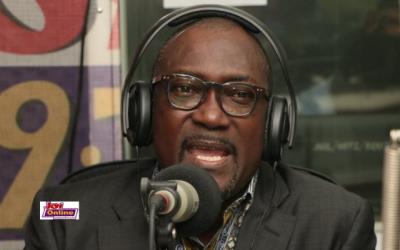
Chairman of the Constitution Review Committee, Prof H. Kwasi Prempeh, has urged Ghana’s political class to rise above partisan interests and approach the ongoing constitutional review with a sense of national duty.
According to him, the process must produce reforms that will endure beyond the lifespan of any government.
Speaking on Joy News’ PM Express on Monday, Prof Prempeh said constitutions are fundamentally different from everyday politics because they are designed to serve generations rather than the interests of governments in power.
“Constitutions are different; they are forward-looking. They last at least a generation,” he said, stressing that they establish “the foundational rules of the game” on how the country is governed, political leaders are chosen and removed, and power is distributed.
According to him, those principles go beyond political parties, individual presidents and governments.
“They transcend party governments. They transcend regimes. They transcend particular leaders,” he said.
Prof Prempeh expressed hope that political leaders, who he described as the gatekeepers of the review process, would place patriotism ahead of party loyalty because the outcome will shape the country long after current officeholders have left power.
“This is going to last beyond any party’s tenure, any president’s tenure,” he said, adding that politicians should instead ask themselves whether they are creating “a state, a society, a polity” that future generations would be proud to inherit.
He cautioned that reducing the exercise to a political contest between governing and opposition parties would squander a rare opportunity for meaningful constitutional reforms.
“If you see it as just a zero-sum game… then I think we have lost an opportunity to do some real game-changing reforms,” he warned.
While acknowledging that politics cannot be separated entirely from constitution-making, Prof Prempeh argued that the process must be driven by extensive public debate rather than rushed decisions.
“I think it’s important for the deliberative content of this process to be very high,” he said, urging stakeholders to debate proposals thoroughly and allow the public to participate before decisions are taken.
“Let us debate and argue it, and let the public be part of that debate, and let us see who has the superior arguments, because we are reforming our state, the republic, and how it’s governed.”
He admitted that valuable time had already been lost since January and said, in hindsight, government proposals could have been submitted directly to the Constitution Review Committee alongside those of other stakeholders instead of delaying the process.
Although he understood the political need to align any referendum with local government elections to improve voter turnout, Prof Prempeh insisted that the remaining period should prioritise consultation over speed.
“We should find window in the remainder of the process to really have as much deliberation as possible,” he said.
He acknowledged that slowing the process could delay implementation but argued that this is the very nature of constitutional democracy.
“That’s what makes constitutions and constitution-making and democracy slower than the alternative,” he said, explaining that taking more time helps improve both the quality and legitimacy of the final outcome.
Latest Stories
-
Amb. Edward Boateng congratulates Boadu, Kodua on election wins
6 minutes -
John Boadu pledges to rebuild NPP from grassroots and restore ‘winning machinery’
9 minutes -
Ashaiman Assembly deploys monitoring system to curb dumping in storm drain
21 minutes -
John Boadu must rebuild, unite NPP for 2028 – Edward Boateng
22 minutes -
Executive intimidation of opposition undermines separation of powers – Prof Oquaye
26 minutes -
I have no issue with John Boadu; we’ll work together – Justin Kodua
2 hours -
Adom FM Y2K Jam delivers a night of music, fashion and nostalgia
2 hours -
Lawrence Kobena Nsarko Otoo, Esq
3 hours -
Bel-Aqua intensifies mental well-being campaign ahead of 15th anniversary
3 hours -
From banking to party finances: Alfred Kwadwo Thompson elected NPP Treasurer
3 hours -
George Christian Papa Mends
3 hours -
Ali Suraj elected NPP NASARA Coordinator
4 hours -
Mustapha Hamid misses out on NPP Vice Chairmanship by 31 votes despite early poll lead
4 hours -
Kojo Bamba, Henry Nana Boakye and Nana Akomea elected NPP Vice Chairmen
5 hours -
From Delta Force to NPP First Vice Chairman – Kojo Bamba’s political journey
5 hours