

Audio By Carbonatix
The International Monetary Fund (IMF) has cautioned the government that its recent fuel subsidy measures must remain temporary and carefully targeted to avoid undermining Ghana’s fiscal gains.
The warning is contained in the IMF Staff Report submitted to the Fund’s Executive Board on July 27 ahead of the approval of Ghana’s Sixth Review under the Extended Credit Facility (ECF) programme.
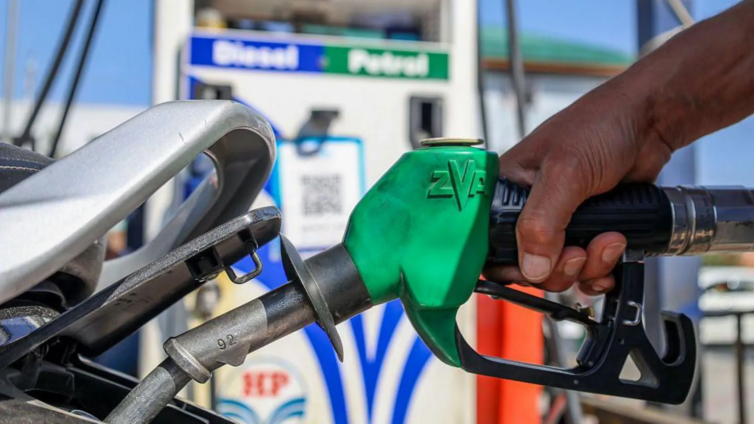
The caution comes just days after the government announced a GH¢2 subsidy on every litre of diesel for the month of August, a move aimed at cushioning consumers from rising fuel costs.
According to the Ministry of Energy, the intervention is expected to cost the government about GH¢500 million if maintained throughout August.
IMF warns over subsidy impact
While acknowledging Ghana’s improving macroeconomic outlook, the IMF stressed that fuel subsidies should not become a permanent policy tool.
According to the Fund, “the recent fuel subsidy measures must be temporary and well targeted.”
The IMF’s concern is that prolonged subsidies could weaken government revenue, widen the fiscal deficit and undermine the country’s ongoing economic recovery programme.
The warning comes as Ghana continues implementing fiscal reforms under the IMF-supported programme aimed at restoring debt sustainability and macroeconomic stability.
Government says relief is temporary
Energy and Green Transition Minister John Jinapor has already indicated that the intervention is only for August and will be reviewed before any decision is taken on its continuation.
In a social media post, the Minister stated:
“The relief measure is for a period of one month (August 2026) and will be subject to review within that period, taking into account prevailing market conditions and other relevant factors.”
He added:
“This intervention reflects government’s commitment to easing the burden on consumers while ensuring stability within the downstream petroleum sector.”
The Minister further assured Ghanaians that:
“We will continue to monitor developments closely and take pragmatic decisions that protect the interests of Ghanaians.”
IMF flags wider economic risks
Beyond the fuel subsidy, the IMF noted that Ghana’s short-term economic outlook remains positive but warned that significant risks persist.
According to the Fund, “Ghana’s near-term growth and inflation outlook is favorable but subject to elevated downside risks.”
It identified external threats including “commodity price volatility, geopolitical tensions (including from the war in the Middle East), and trade disruptions.”
On the domestic front, the IMF warned that “policy slippages, delays in the implementation of SOE reforms (including state-owned banks), and failure to safeguard the central bank’s balance sheet could undermine confidence.”
The report also disclosed that the Bank of Ghana recorded losses equivalent to 1.5 percent of GDP under the Domestic Gold Purchase Programme.
It further observed that “Several state owned enterprises (SOEs) continue to pose large fiscal risks,” highlighting continued weaknesses in oversight and operational performance.
As part of its Article IV consultations, the IMF said discussions with the government focused on medium-term macroeconomic sustainability, fiscal consolidation beyond 2026, reforms in the energy sector, developments in the gold sector and financial resilience to gold price shocks.
Ghana’s debt outlook improves
Despite the warnings, the IMF formally upgraded Ghana’s debt distress rating from high risk to moderate risk.
The Fund attributed the improvement to progress in debt restructuring, stronger-than-expected economic growth, fiscal consolidation and the appreciation of the cedi.
According to the IMF, debt sustainability indicators have improved significantly, although it cautioned that Ghana still has limited external debt service space and should continue to closely monitor non-resident participation in the domestic debt market.
Latest Stories
-
AFCON 2027Q: Interim Black Stars technical team to take charge of November games
5 minutes -
Gov’t suspends implementation of L.I. restricting preaching and hawking in moving vehicles
11 minutes -
Three Saudi nationals killed in Houthi attacks on Riyadh airport
25 minutes -
Jinapor demands accountability from energy sector agencies ahead of 2027
31 minutes -
Cars torched and shops looted as anti-migrant violence erupts in South Africa
36 minutes -
We’ll strengthen unity and party structures to win 2028 election – John Boadu assures Kufuor
39 minutes -
Mahama’s meeting with UN financial inclusion renews focus on women’s access to finance – Joyce Bawah Mogtari
42 minutes -
‘Africa is not the future; Africa is the now’ — Sammy Gyamfi tells African youth
46 minutes -
Mahama begins 2-day ‘Resetting Ghana’ tour of Ahafo Region
51 minutes -
It is a nuisance law; stop pretending it is a religious war
1 hour -
KGL U17 Colts 2026: Prempeh Elite Academy, Western Region, two others battle for final berths
1 hour -
LA 2028: Near misses and the crashouts, but Black Queens cannot afford another Olympic Games slip-up
2 hours -
Wode Maya recounts how he won Miss Trudy’s heart with Shatta Wale’s song
2 hours -
Dede Chancelor makes appearance at Milan Fashion Week 2026
2 hours -
Today’s Front pages: Friday, October 9, 2026
3 hours