

Audio By Carbonatix
When a woman enters Ghanaian politics, she should be judged by the same standard as a man: her ideas, her decisions, her leadership and what she contributes to the people she represents.
Unfortunately, our online news culture does not always work that way.
A woman can become a minister, a Member of Parliament or even occupy one of the highest offices in the country, yet the conversation around her can quickly shift from what she has achieved to what she looks like, who she married or how well she manages her family.
That is not simply a media problem. It is a problem with how we understand women and leadership.
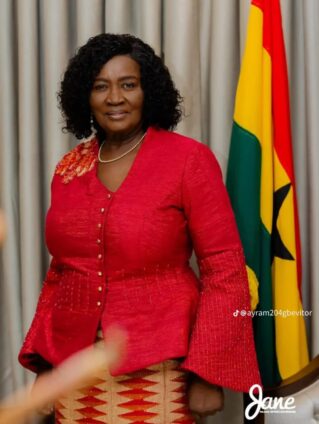
Ghana has made significant progress in women’s political representation. Prof. Naana Jane Opoku-Agyemang made history as Ghana’s first female Vice President. Women such as Ursula Owusu-Ekuful and Shirley Ayorkor Botchwey have also occupied important political and ministerial positions.
These achievements deserve to be discussed on their own terms.
Yet when we look at the way women politicians are sometimes presented in online news, an uncomfortable pattern emerges.
The woman leader often becomes the story instead of the work she is doing.
One of the clearest examples is the way family relationships are sometimes used to introduce women in politics.
A woman politician may be described as the “wife of a former president,” the “mother of three” or the “wife of a prominent businessman” even when the actual story concerns her political responsibilities.
There is nothing wrong with mentioning someone’s family when it is relevant. The problem begins when it becomes the most important thing we tell the audience about a woman who holds public office.
Male politicians are rarely reduced to their marital status in the same way.
When a man becomes a minister, the conversation is more likely to focus on his portfolio, political decisions, policies and achievements.
Why should women be different?
A woman does not become less qualified because she is married. She does not become more qualified because she is beautiful. And she does not become less capable because she has children.
Her competence should speak for itself.
Another problem is the attention given to women’s appearance.
Sometimes, a female politician’s clothes, hairstyle, beauty or physical appearance can receive more attention than the policy she is defending.
A woman may deliver a significant speech on education, the economy or national development, yet the online conversation may focus on what she wore.
Imagine applying the same standard consistently to male politicians.
Would we describe a male minister primarily by his hairstyle before discussing his policies?
Would we introduce a male MP by saying he is a handsome father of three before explaining his position on a national issue?
Probably not.
So why is it acceptable when the subject is a woman?
This is where journalism can quietly reinforce the idea that women must first be judged as women before they are judged as leaders.
Bias does not only appear in what journalists choose to report. It can also appear in the words they use.
When a woman in Parliament speaks passionately, she can quickly be described as “emotional,” “aggressive” or “ranting.”
When a man behaves similarly, he may be described as “bold,” “assertive” or “passionate.”
Those words are not interchangeable. They influence how audiences interpret the same behaviour.
A strong woman can easily be portrayed as difficult. A strong man can easily be portrayed as decisive.
This double standard matters because language shapes perception.
If women are repeatedly described as emotional whenever they disagree, audiences may begin to question their authority even when their arguments are reasonable.
There is another question we need to ask: what do we want to know about women politicians?
Too often, interviews with female politicians include questions about how they balance politics with motherhood, marriage and household responsibilities.
These are legitimate human-interest topics. But why are women asked them so frequently?
Male politicians also have families. Male politicians also have children. Male politicians also have responsibilities at home.
Yet their political coverage is more likely to centre on their policies, political strategies, leadership and public decisions.
When women are repeatedly asked how they manage their homes while men are asked how they manage the country, the message is clear.
Politics is treated as a man’s natural space and a woman’s additional responsibility.
That needs to change.
The problem also extends to who gets to speak.
Women politicians often receive attention during elections, International Women’s Day or discussions specifically about gender.
But where are they when the conversation turns to finance, energy, defence, infrastructure, technology and the economy?
Women have expertise in these areas too.
A female MP can speak about the national budget. A female minister can speak about economic policy. A female political leader can speak about national security.
A woman in public office should not have to wait for a gender-related story before the media considers her voice valuable.
When newsrooms repeatedly turn to men for commentary on major national issues, they reinforce the impression that men are the natural experts and women are secondary participants.
Some may argue that these are just headlines or harmless descriptions.
I disagree.
Media representation influences how society sees people.
When women politicians are constantly presented through their husbands, appearance, motherhood or emotions, the public may begin to judge their legitimacy through those same standards.
That can affect how voters perceive them.
It can affect how political parties view potential female candidates.
It can even discourage capable women from entering politics because they know their public lives may be scrutinised differently from men’s.
This is why the issue is not simply about hurt feelings.
It is about democracy.
A democracy is stronger when people are judged on their ideas, competence and performance rather than stereotypes about their gender.
The media cannot solve every barrier facing women in politics. But it can avoid creating additional ones.
The Ghana Journalists Association’s Code of Ethics calls on journalists to be fair, accurate and responsible, including avoiding discrimination.
That principle should guide coverage of women in politics.
It starts with something simple.
Focus on the work.
If a woman is a minister, introduce her through her position and responsibilities before her marital status.
If she makes a policy statement, report the policy.
If she challenges a government decision, examine her argument rather than immediately describing her as emotional.
If she is an expert on the economy, invite her to discuss the economy.
In other words, let women be politicians.
Not symbols. Not wives. Not fashion stories. Not mothers first and leaders second.
Leaders.
Journalists and editors are not the only people responsible.
We, the audience, also reward certain kinds of coverage.
When we click on stories about a woman’s appearance more than stories about her policies, we send news organisations a message.
When we share gossip more than substantive political analysis, we encourage more gossip.
If we want better journalism, we also have to demand it.
We can question headlines that reduce women to their appearance.
We can support stories that focus on their policies and achievements.
And we can refuse to treat gender stereotypes as harmless entertainment.
Ghana has come a long way, but progress in women’s political representation should be matched by progress in how women are represented in the media.
A woman who enters politics should not have to prove that she is a good wife before society accepts that she can be a good leader.
She should not have to defend her appearance before we listen to her ideas.
She should not be called emotional simply because she speaks with conviction.
And she should not have to wait for International Women’s Day before her voice is considered important.
The next time a woman politician appears in our news feeds, perhaps we should ask a simple question:
What are we talking about,her work or her womanhood?
Because women in politics are not merely someone’s wives, someone’s mothers or someone’s daughters.
They are political actors.
They are policymakers.
They are leaders.
And Ghanaian journalism should have the courage to portray them that way.
Latest Stories
-
Imagination Africa, Mentors Chess Academy to host second African Genius Chess Championship at Ghud Park
51 minutes -
Nana B passport claims a diversionary tactic — Abu Jinapor
2 hours -
Pope Leo diagnosed with cancer as doctors remove lobe of lung, Vatican says
2 hours -
Legal Aid Commission takes free legal services to Techiman main lorry terminal
2 hours -
Nana B denies seeking passport favour, accuses Ablakwa of failing to account for GH¢16.4m
2 hours -
Young girls demand climate action, stronger protection against child marriage
2 hours -
Ex-gang boss sentenced to 40 years for orchestrating Tupac Shakur’s murder
2 hours -
From near-deferral to three awards: UMaT graduate’s academic journey
2 hours -
Atta Akyea denies seeking presidential pardon for Wontumi in galamsey case
3 hours -
Photos: Mahama commissions 85-bed Police Hospital ward, donates two ambulances
3 hours -
GTEC directs Ghana’s public universities to reopen by October 16 and begin lectures on October 19
3 hours -
Star Oil donates GH¢1million towards construction of new CID facility
3 hours -
Court hands Adjetey Sowah, two others lifetime bans after Amputee Football legal dispute
3 hours -
NDC appoints Julius Kwame Anthony as a Deputy Communications Director
3 hours -
Ghana repatriates 120 Nigerians rescued from suspected cybercrime centres
3 hours