

Audio By Carbonatix
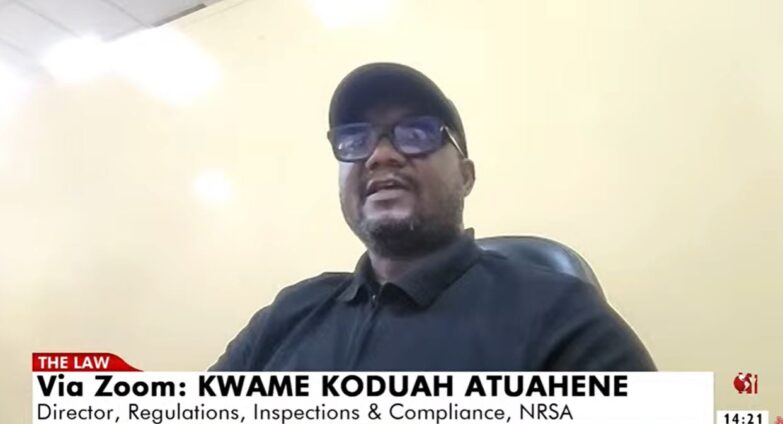
Director of Regulations, Inspections and Compliance at the National Road Safety Authority (NRSA), Kwame Koduah Atuahene, says motorists stopped by the police during traffic-related interactions have the right to record the encounter on their mobile phones, and such recordings may be admissible as evidence in court.
Speaking on JoyNews' The Law on Saturday, August 16, Mr Koduah Atuahene said motorists should be aware of their rights when interacting with police officers on the road.
He explained that when a police officer stops a motorist, the person can use a mobile phone to record the interaction.
According to him, such a recording could become important evidence if a dispute arises between the motorist and the police officer.
“If a police officer stops you, you can use your phone to record the interaction. That can be admitted in court as evidence,” he said.
He urged motorists who choose to record their interactions to continue documenting the encounter if they believe the officer is acting improperly.
He said motorists can inform officers that the law allows them to record the interaction and preserve the recording as evidence where necessary.
The use of technology in traffic enforcement, he added, would help strengthen the documentation of road offences and reduce disputes over what occurred during traffic stops.
He explained that automated traffic enforcement systems could also provide independent evidence by capturing vehicles involved in offences such as overspeeding and running red lights.
The system could record a vehicle’s registration number, identify its owner through a database and generate a notification containing details of the alleged offence.
Motorists could also be provided with access to video footage of the offence, allowing them to review the evidence.
Mr Koduah Atuahene said recorded evidence could improve accountability and transparency in traffic enforcement while helping both motorists and law enforcement officers establish what occurred during an incident.
He, however, stressed the need for police authorities to ensure that technology used for traffic enforcement is secure and that the public is properly informed about official traffic violation notifications.
He said this would help prevent fraudsters from sending fake messages and malicious links to motorists under the guise of traffic enforcement notices.
According to him, increased use of recorded and automated evidence could improve the enforcement of road traffic laws and strengthen the integrity of cases brought before the courts.
Latest Stories
-
A person stopped by police can record for evidence – NRSA
10 minutes -
New Road Traffic Law introduces separate licensing regime for commercial drivers
24 minutes -
Ghana must move beyond enforcement to tackle road deaths – Appiah Kusi Adomako
49 minutes -
Kusi Adomako calls for road crashes to be declared a public health emergency
57 minutes -
Ghana makes history with international karting debut
1 hour -
Playback: The Law discussed new road traffic rules
2 hours -
What’s driving men to get penis fillers, despite the risks?
2 hours -
The world’s oldest president left for a ‘brief stay’ in Europe, he hasn’t returned in two months
2 hours -
Trapped driver rescued after accident on Kintampo–Tamale highway
3 hours -
Civil Service must put citizens at centre of decision-making – Vice President
3 hours -
Firefighters battle blaze at Accra New Town apartment
3 hours -
Ghana receives five new envoys to strengthen diplomatic relations – Ablakwa
3 hours -
Europe’s tallest Virgin Mary statue unveiled in rural Poland
3 hours -
Sammi Awuku denies reports of EOCO arrest
3 hours -
Stonebwoy makes history at OVO Arena Wembley with monumental BHIM Festival
4 hours