

Audio By Carbonatix
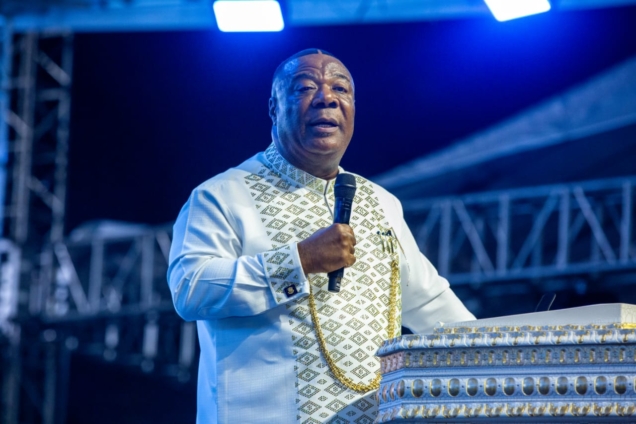
The General Overseer of Action Chapel International, Archbishop Nicholas Duncan-Williams, has linked Ghana’s illegal mining crisis to what he describes as a broader culture of indiscipline, poor compliance with laws and weak accountability in society.
He said the galamsey menace should not be viewed in isolation but as part of a wider national challenge in which laws and regulations exist but are often ignored or poorly enforced.
Speaking on Joy FM’s Super Morning Show on Monday, August 17, 2026, Archbishop Duncan-Williams said his observations during a recent visit to Kigali, Rwanda, had caused him to reflect on Ghana’s approach to discipline and compliance.
He cited the widespread use of helmets by motorcycle riders in Kigali as an example of how citizens could comply with regulations when there was a stronger culture of respect for rules.
According to him, Ghana’s challenge extends beyond illegal mining to a general failure to comply with rules designed to protect citizens and promote order.
“We are not compliance-driven people,” he said.
“There is a lot of indiscipline in the whole atmosphere in our upbringing.”
Archbishop Duncan-Williams said this culture of indiscipline was one of the reasons issues such as galamsey had become difficult to tackle, noting that illegal mining involved not only individuals but networks and interests that could resist enforcement.
He said some people engaged in illegal mining were armed and described the activities as involving what he characterised as a broader cartel.
“These people who are doing illegal mining are armed, and it’s a whole cartel to itself,f and it’s not just that,” he said.
The Archbishop also expressed concern that efforts to enforce the law could quickly become politicised when citizens failed to appreciate the importance of responsibility and accountability.
He argued that the fight against galamsey should therefore not be reduced to partisan politics but treated as a national responsibility requiring discipline from citizens, businesses and institutions.
“When people don't appreciate and understand that being responsible and accountable in what they are doing is necessary and important, that becomes another matter,” he said.
‘The problem touches everything’
Archbishop Duncan-Williams said changing Ghana’s culture of indiscipline would require sustained effort because the problem was deeply rooted in society.
He cautioned against expecting quick solutions to a challenge that affects multiple aspects of national life, from compliance with laws to attitudes towards public resources and the environment.
“It is a very serious issue that if we are going to tackle this it will take a lot of time and days because it touches everything,” he said.
He maintained that the responsibility for addressing the problem did not rest solely with government and law-enforcement agencies.
The Church, he said, also had a role to play by educating its members about responsible citizenship and the consequences of their actions.
“Education. That is why I am bringing up this subject,” he said when asked what the Church could do beyond prayer to address the galamsey crisis.
He said religious institutions had an important platform for influencing behaviour because their congregations were made up of citizens who participate in every aspect of national life.
“The people who come to church are the citizens. They do everything in the country. They run the country,” he said.
Galamsey as ‘self-destruction’
Archbishop Duncan-Williams said the consequences of illegal mining extend beyond the immediate financial gains, warning that the destruction of water bodies and farmland could have serious implications for future generations.
He described the continued degradation of the environment as an act of national self-destruction.
“I am telling the people that we need to pray to deal with whatever is responsible for the lawlessness, and I was giving them examples of the Bible perspective on how the enemy defeats people, works behind the scenes and gets people to self-destruct, because what we are doing is self-destruction and eventually it will have serious implications on future generations,” he said.
He stressed that his call for prayer should not be interpreted as opposition to law enforcement.
“So I am not saying that the law shouldn't be applied,” he said.
“I’m saying that we should pray for those who are enforcing the law to be empowered to do their job because it’s a very risky job.”
The Archbishop also called for greater public awareness of the environmental consequences of irresponsible mining, warning that the economic benefits of gold could ultimately prove meaningless if the natural resources and environment needed to sustain communities were destroyed.
He said citizens should be encouraged to pursue economic opportunities responsibly while considering the impact of their activities on the environment.
“Nobody is telling you don’t do this, but do it in the right way and be accountable, and not just by making money but also be concerned about the environment where you live in,” he said.
Archbishop Duncan-Williams urged Ghanaians to recognise that tackling galamsey requires more than arrests and enforcement, arguing that a lasting solution would also depend on changing attitudes towards discipline, responsibility, accountability and respect for the law.
Latest Stories
-
Egyapa Mercer donates hairdryers to graduating hairdressers in Sekondi
2 minutes -
Health Ministry hands 30 ambulances to National Security for refurbishment
6 minutes -
Republic Bank deepens commitment to homeownership with nationwide JoyNews Habitat Fair Partnership
11 minutes -
Archbishop Duncan-Williams links galamsey to Ghana’s wider culture of indiscipline
14 minutes -
India’s clean energy leadership in green hydrogen
23 minutes -
Ghana’s Road Safety Crisis: We must move from reaction to prevention
25 minutes -
Duncan-Williams urges Church to educate Ghanaians on dangers of galamsey and gold smuggling
35 minutes -
New Defence Minister pledges technology-led defence posture
41 minutes -
India and Africa: Relations beyond rhetorics
43 minutes -
Top Zambian opposition figures arrested days after presidential vote
44 minutes -
‘I’m not against enforcing the law’ – Archbishop Duncan-Williams defends call for prayer against galamsey, gold smuggling
49 minutes -
Tantalus or Triumph? Ghana and the Harvest of Economic Recovery
56 minutes -
Ghanaians have no idea how much foreigners make from galamsey – Archbishop Duncan-Williams
1 hour -
Today’s front pages: Monday, August 17, 2026
1 hour -
‘If you want to imprison me over my friendship with Bawumia, go ahead’ – Rev. Kusi Boateng
2 hours