

Audio By Carbonatix
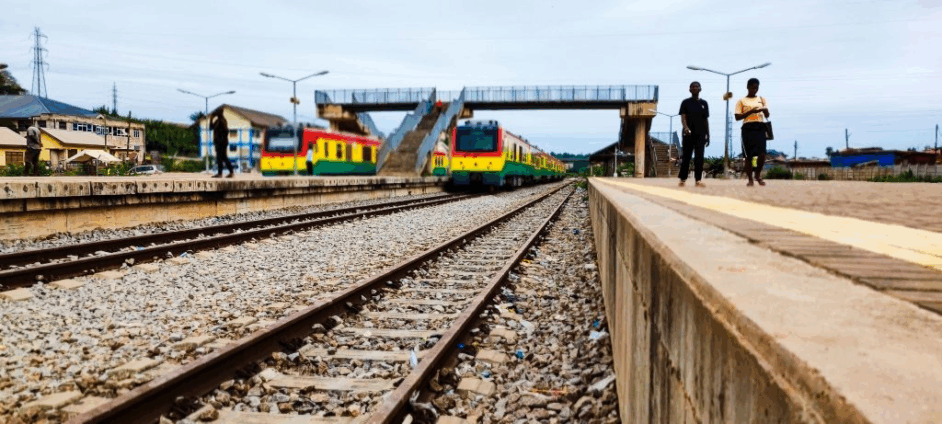
Ghana’s operational rail network has declined significantly over the past six decades, falling from 947 kilometres in 1960 to just 160 kilometres in 2020, the World Bank has disclosed.
The World Bank Division Director for Ghana, Liberia and Sierra Leone, Robert R. Taliercio, said the decline has contributed to weaknesses in Ghana’s transport system and limited the country’s ability to move people and goods efficiently.
Speaking at the launch of the World Bank’s *Tenth Ghana Economic Update* in Accra, Mr Taliercio said the rail sector was operating far below its potential and required urgent attention as Ghana seeks to improve connectivity and competitiveness.
“The rail network has effectively collapsed from 947 kilometres of operational rail in 1960 to just 160 in 2020, with population access dropping from nearly 30 percent to less than 1 percent,” he said.
Mr Taliercio said the decline highlights the need for Ghana to pursue a coordinated strategy to revitalise the transport sector, particularly rail infrastructure that can support the movement of freight.
He said the World Bank has identified freight-led rail revitalisation along the western and eastern corridors as one of six priority areas for transforming Ghana’s transport sector.
“This is not just an infrastructure story. It’s a growth story, competitiveness story, and a job story,” he said.
The other priorities include operationalising the *Road Maintenance Trust Fund*, developing a unified national transport sector strategy, treating road safety as a fiscal and public health emergency, adopting climate-resilient infrastructure standards and extending Ghana’s Digital Single Window to Takoradi and inland terminals.
Mr Taliercio said rebuilding Ghana’s transport infrastructure would be critical to improving economic competitiveness, creating jobs and connecting communities and businesses to markets.
He stressed that infrastructure investment must also be supported by stronger institutional coordination, effective maintenance financing and improved governance.
“Building roads without maintaining them simply accelerates the cycle of degradation that we are all trying to break,” Mr Taliercio said.
The World Bank is supporting Ghana’s transport infrastructure agenda through the $500 million Ghana Market Access and Connectivity Project, which includes funding to rehabilitate about 1,050 kilometres of feeder roads* under performance-based maintenance contracts.
Latest Stories
-
Principal Agent Theory can teach us a lot about the GoldBod $1.7 Billion Loss
2 minutes -
MFWA drags Controller and Accountant General’s Dept. to RTI Commission over ‘Mahama Cares’ deductions
6 minutes -
Police intensify crackdown on unauthorised sirens and strobe lights in Ashanti Region
13 minutes -
Tribunals Bill passed into law despite widespread opposition, Bawumia’s plea
18 minutes -
Court adjourns Hanan Abdul-Wahab’s trial to September 29, 30 after Dame submits medical excuse
33 minutes -
New KNUST-Led consortium aims to put climate health research into policy
41 minutes -
NSMQ 2026: Prempeh, Keta and National set for blockbuster quarterfinal battle
43 minutes -
Vigilante groups evolving beyond Act 999; security agencies must adapt – Security analyst
50 minutes -
Who paid for it? – NPP MP demands audit trail of Ghana’s South Africa evacuation
59 minutes -
Security analyst calls for review of Vigilantism Act to address emerging threats
1 hour -
Gillman & Abbey Funeral Service and Remembers Group partner to preserve legacies and expand funeral services in Ghana
1 hour -
NSMQ 2026: Ghana National College stays seeded as St Monica’s, Presby SHS fall in One-Eighth
1 hour -
Minority caucus demands full account of Ghana’s South Africa evacuation spending
1 hour -
Ghana’s rail network declines sharply over six decades – World Bank
1 hour -
NSMQ 2026: Prempeh College avenges 2018 defeat to WASS, storms into quarter-finals
1 hour