

Audio By Carbonatix
The World Bank is calling for far-reaching reforms to the Ghana Cocoa Board (COCOBOD) Act to promote market-based principles and reduce the financial risks associated with the cocoa sector.
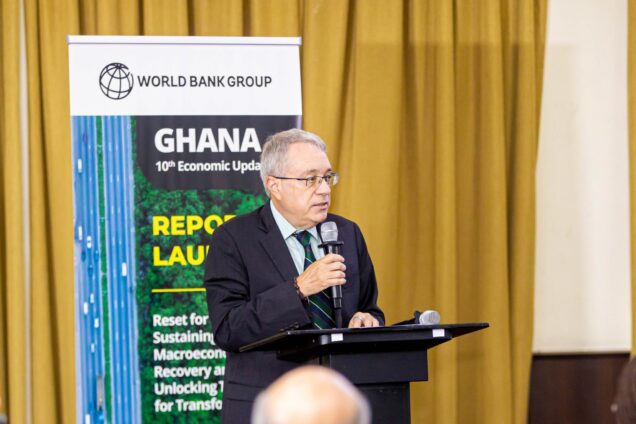
The World Bank Division Director for Ghana, Liberia and Sierra Leone, Robert R. Taliercio , said financial and operational inefficiencies within COCOBOD were placing a strain on farmers and the country’s public finances.
Speaking at the launch of the World Bank’s Tenth Ghana Economic Update in Accra, Mr Taliercio said reforms to the legal and operational framework governing COCOBOD were necessary to ensure the sustainability of the cocoa sector.
“We welcome continued discussion and debate on the Cocoa Board Act, and we suggest that far-reaching reforms of the Act are needed to promote market-based principles and minimise quasi-fiscal risks,” he said.
He said without decisive reforms in the cocoa and energy sectors, some of the fiscal gains achieved under Ghana’s economic reform programme could quickly be eroded.
The World Bank’s call comes amid concerns over the financial position of COCOBOD and the impact of its operations on the government’s finances.
Mr Taliercio said the cocoa sector’s challenges were among the key domestic risks that could undermine Ghana’s economic recovery if not addressed.
He further stressed the need for Ghana to strengthen its fiscal position and reduce reliance on measures that could create additional pressure on public finances.
The World Bank official said Ghana’s economic recovery remained “structurally incomplete” despite significant improvements in key macroeconomic indicators.

He noted that the country’s heavy dependence on cocoa and gold exports also exposes the economy to fluctuations in international commodity prices.
According to him, diversifying Ghana’s export base and implementing reforms that support market-based economic activity would be critical to building a more resilient economy.
The World Bank therefore urged the government to sustain the reform momentum and address structural weaknesses in the cocoa sector to protect fiscal gains and support long-term economic growth.
Latest Stories
-
Ghana explores centre of excellence for hearing, communication and cochlear implant care
59 minutes -
Schizophrenia-related disorders lead mental health cases recorded in Ghana
1 hour -
Dutch authorities enlist Ghana in hunt for fugitive drug lord Bolle Jos
2 hours -
Ghana housing finance conference adopts communiqué to improve affordable housing access
6 hours -
Special Initiatives Minister urges Wa Technical Institute to enrol more girls as EU-backed solar training lab opens
7 hours -
In the matter of my first year at the Bar
7 hours -
ActionAid Ghana calls for an end to child marriage, greater investment in girls’ rights
7 hours -
Newsfile to tackle World Cup visa scandal, beach demolitions, education strikes, BRICS bid
7 hours -
UK-Ghana Trade & Investment Summit: Trade Resource Centre to help businesses maximise UK-Ghana trade opportunities
8 hours -
Embassy of Denmark celebrates World Maritime Day
8 hours -
Linking LEAP to productive inclusion could cut extreme poverty by 2030 – UNICEF
9 hours -
Trade Ministry backs use of creative arts to rehabilitate prison inmates
9 hours -
Negotiations with government to continue despite strike suspension – GNAT
9 hours -
‘Ghana cannot afford to waste public resources; every cedi has a job’ – Ato Forson
9 hours -
Ghana expects economic boost as World Assemblies of God Congress brings 10,000 delegates to Accra
9 hours