


Audio By Carbonatix
The Chief Executive Officer of the Environmental Protection Authority (EPA), Professor Nana Ama Browne Klutse, says the Authority is undergoing a major institutional reset to build a stronger, more accountable and better-equipped regulator capable of responding to Ghana’s growing environmental challenges.
According to her, the transformation goes beyond administrative changes and is anchored in the Environmental Protection Act, 2025 (Act 1124), which has replaced the framework under the Environmental Protection Agency Act, 1994 (Act 490).
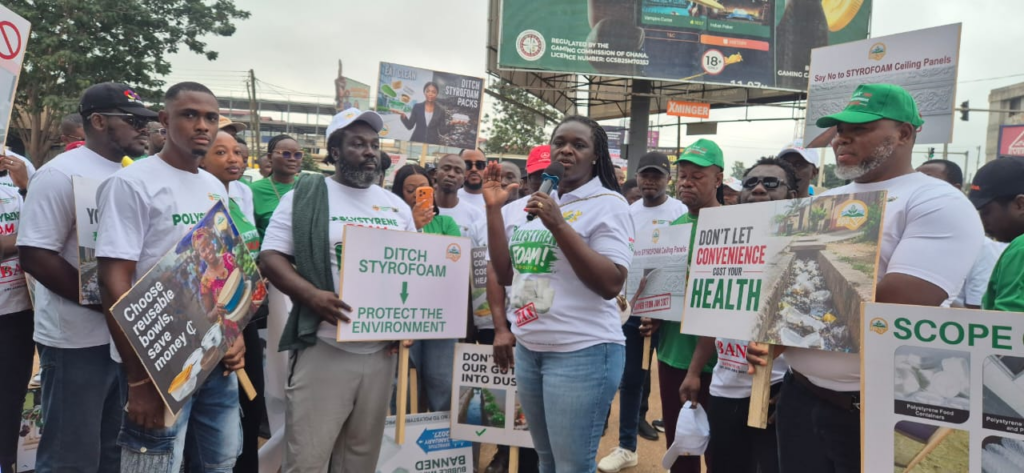
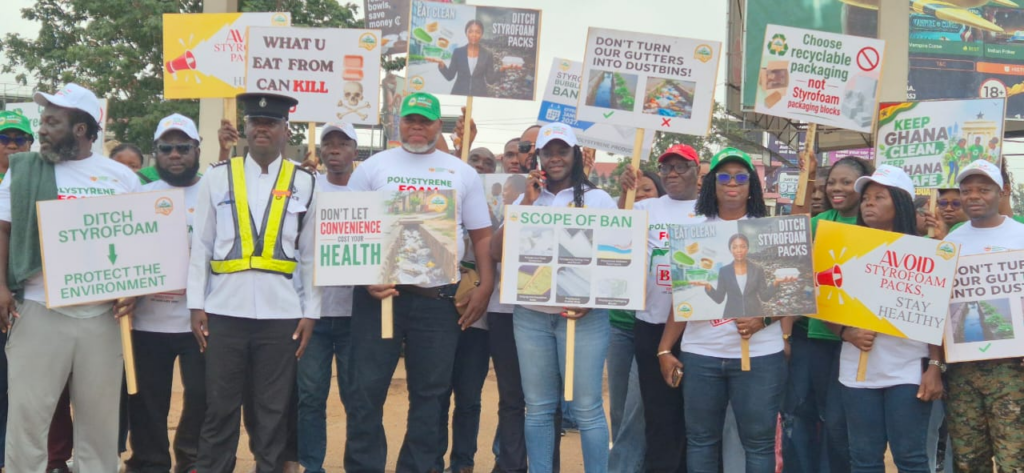
Speaking at an EPA in Focus engagement in Kumasi as part of the public awareness campaign on the impending ban on Styrofoam products, Prof. Klutse said the Authority inherited significant capacity and structural challenges but has since embarked on reforms to overhaul its systems, operations and regulatory processes.
“When we took over the EPA, we did not inherit a perfect system. We inherited an institution with enormous responsibility, but with significant capacity gaps. Our task was therefore not simply to manage the EPA, it was to reset it.”she said.
She said Act 1124 has transformed the EPA from an agency into an Authority with a broader mandate, stronger regulatory responsibilities and a modern framework for tackling emerging environmental challenges.
“This reset is not simply an administrative exercise. It is anchored in a new legal framework, the Environmental Protection Act, 2025, Act 1124,” Prof. Klutse said.
She said the reforms were already beginning to change Ghana’s environmental governance landscape.
“Today, I can confidently say that Ghana’s environmental story is changing, and changing for the better,” she said.
Prof. Klutse said the government, under President John Dramani Mahama, was resetting environmental governance, strengthening institutions and working to restore public confidence in systems responsible for protecting the environment.
She was, however, quick to acknowledge that major challenges remain, particularly illegal mining, environmental compliance and institutional capacity.
“We are not suggesting that every challenge has been solved. Far from it,” she said.
“But I can say with confidence that the direction has changed, the pace has changed, and the results are beginning to show.”
ILLEGAL MINING REMAINS MAJOR THREAT
Prof. Klutse identified illegal and poorly regulated mining as one of Ghana’s most serious environmental threats, insisting that economic activity must not come at the expense of environmental protection.
“When we assumed office, the mining-permitting and environmental regulatory system faced significant challenges,” she said.
She said the system required greater transparency, stronger oversight, faster decision-making and more effective enforcement.
“Our position was clear; environmental protection cannot be sacrificed in the pursuit of economic activity,” she stressed.
According to her, the EPA has since streamlined mining permitting, strengthened compliance monitoring and intensified enforcement.
She stressed, however, that the objective was not to halt responsible mining but to ensure that mining is conducted legally, sustainably and in accordance with the new environmental law.
“The objective is not to stop responsible mining. The objective is to ensure that mining is done responsibly, legally and sustainably according to the EPA’s new Act,” she said.
The reforms, she added, were also strengthening the Authority’s revenue base and improving its ability to finance environmental monitoring and enforcement.
But Prof. Klutse cautioned against any perception that the fight against illegal mining was over.
“Let me be clear, we are not declaring victory,” she said.
“Illegal mining remains a major threat to our water bodies, forests, farmlands and communities.”
She said the EPA would deepen monitoring, strengthen collaboration with other state institutions and tighten compliance with environmental obligations.
“Our approach is different; prevent environmental damage where possible, detect violations early, enforce the law decisively and hold polluters accountable,” she said.
95 VEHICLES, 50 MOTORBIKES ACQUIRED
Prof. Klutse said the EPA was also addressing longstanding weaknesses in environmental monitoring and enforcement capacity.
She cited inadequate logistics, limited presence in some districts, insufficient staffing, weak revenue capacity and inadequate institutional infrastructure as key challenges the Authority had faced.
“In the last one and a half years, we have deliberately expanded the Authority’s monitoring and compliance capacity,” she said.
She said the expansion was intended to strengthen regulation while enabling the Authority to respond more quickly to environmental threats at the local level.
“This is not simply an institutional expansion. It is an investment in jobs, local capacity and faster environmental response,” she said.
A major part of the intervention, she disclosed, has been the acquisition of 95 operational vehicles and 50 motorbikes through internally generated funds within the past one and a half years.
“On logistics, the Authority faced a serious shortage of operational vehicles,” Prof. Klutse said.
“In just one and a half years, we have procured 95 operational vehicles and 50 motorbikes through internally generated funds.”
She described the investment as evidence of how stronger financial management could improve the Authority’s operational capacity.
EPA MOVES FROM MANUAL TO DIGITAL PERMITTING
The EPA CEO also highlighted the digitization of the Authority’s permitting system, describing it as a major component of the institutional reset.
She said the largely manual system previously caused delays, increased administrative burdens and created opportunities for loopholes and abuse.
“It also made tracking applications difficult and limited the Authority’s ability to maximise revenue,” she said.
But Prof. Klutse said the paper-based system was now giving way to digital accountability.
“Today, manual permitting is becoming a thing of the past. We are replacing paper trails with digital accountability,” she said.
The new digital system allows applicants to submit and track applications electronically, while EPA officers can process applications through a more transparent system and management can monitor them in real time.
“The system reduces unnecessary human intervention and closes opportunities for manipulation,” she said.
Prof. Klutse disclosed that the EPA had so far processed more than 33,370 applications through the digital system.
“Going digital has also improved turnaround time and makes doing business with the EPA easier,” she said.
She said the system also gives the Authority a stronger audit trail, allowing it to track a permit from application through to approval.
“Most importantly, we can now follow the life of a permit from application to approval, creating a stronger audit trail,” she said.
The digitization, she added, would improve revenue assurance by making transactions easier to track while bringing Ghana’s environmental regulatory system closer to international best practice.
EPA REVENUE GENERATION EXCEEDS 125%
Prof. Klutse also pointed to significant improvements in the EPA’s financial position, saying financial sustainability was critical to the success of the institutional reforms.
“When we assumed office, the Authority faced significant financial constraints,” she said.
“We struggled to meet some financial obligations and had limited resources for expansion, logistics and institutional development.”
She said the situation had since changed, with the Authority’s revenue generation in its first year exceeding 125%, culminating in a GH¢20 million remittance to the Consolidated Fund in early 2026.
“Today, the numbers tell a different story. Our revenue generation for the first year exceeded 125 percent. In early 2026, the EPA remitted GH¢20 million to the Consolidated Fund,” Prof. Klutse said.
She said the Authority was now meeting its financial obligations, including salaries and statutory commitments, on time.
The improved financial position, she added, was also allowing the EPA to invest in office expansion, logistics, staff recruitment and development, technology and environmental monitoring.
“The objective is clear, a financially stronger EPA is an environmentally stronger EPA,” she said.
EPA'S GLOBAL OUTLOOK
Prof. Klutse said the institutional reset also had an international dimension, with the EPA seeking to position itself as a credible regulator and partner in global environmental governance, particularly on the African continent.
“Our reset is not limited to Ghana. We are repositioning the EPA as a credible environmental regulator and a serious partner in global environmental governance,” she said.
She said internationally recognised institutions were increasingly working with the EPA to strengthen environmental protection in Ghana.
One example, she cited, is the Clean Air Monitoring Initiative, which is strengthening the Authority’s capacity to generate reliable air-quality data and support evidence-based policymaking.
“These partnerships bring technology, expertise, financing and global best practices into Ghana’s environmental management system,” she said.
Prof. Klutse said Ghana’s ambition must extend beyond responding to environmental challenges to developing the capacity to anticipate and prevent them.
"Ghana must not only respond to environmental challenges; we must build the institutional capacity to anticipate and prevent them,” she said.
“We want Ghana to move from being a recipient of environmental support to becoming a credible partner in global environmental governance.
Despite the progress, Prof. Klutse admitted that the EPA continues to face resistance to change, operational challenges and capacity gaps.
“Let me be candid, institutional transformation is never without resistance,” she said.
“We continue to face internal resistance to change in some areas. We continue to confront the illegal mining menace.”
She said the Authority must also continue improving compliance across sectors and ensure that environmental degradation does not outpace regulatory action.
But she insisted that the response would be to strengthen the institution rather than retreat from the reforms.
“Our response will be to strengthen the institution, not retreat from reform,” she said.
“We will continue to invest in people, technology, logistics and data and strengthen enforcement.”
The EPA, she added, would deepen collaboration with state institutions, industry, traditional authorities, civil society and development partners while demanding greater environmental responsibility from businesses and individuals.
Prof. Klutse said the reforms were ushering in a new era for the Authority, moving it from an institution constrained by systems and capacity gaps to one that is more digital, decentralised, financially stronger and responsive.
“I am excited, as a physicist, that the EPA is being reset for a new era,” she said.
“We are moving from a regulator constrained by systems and capacity gaps to an institution that is more digital, more decentralised, better equipped, financially stronger and more responsive.”
She acknowledged the scale of Ghana’s environmental challenges but said the country could not afford to delay action.
“The Ghana we want tomorrow depends on the environment we protect today,” she said.
“And we are only getting started.”
In a strong message to those within the Authority who may seek to frustrate the reforms, Prof. Klutse said personal interests and institutional resistance would not be allowed to derail the transformation.
“The reset of the EPA is not a slogan; it is a commitment to building a stronger, more accountable and more effective institution capable of protecting Ghana’s environment for generations to come,” she said.
“We will continue to reform, digitise, decentralise and strengthen the Authority, and we will measure our progress by results, not rhetoric.”
“But let me be equally clear; there will be no going back.”
She said Act 1124 had given the EPA a modern mandate to regulate, protect and exercise oversight over Ghana’s environment and climate change affairs.
“Change will always attract resistance. But resistance cannot become a reason for institutional stagnation,” she said.
Prof. Klutse warned that staff who believe personal interests, institutional resistance or parochial agendas could derail the transformation should recognise that the institution’s mandate supersedes individual interests.
“Any staff who believes personal interests, institutional resistance or parochial agendas can derail this transformation path we are on should understand that the EPA is bigger than any individual, and its mandate is bigger than any personal interest,” she said.
She said management would remain willing to engage and make necessary reforms but would act against deliberate attempts to undermine the Authority’s mandate.
“We will engage, listen and reform where necessary, but where anyone deliberately seeks to undermine the Authority’s mandate or drag the institution back into old ways of doing things, we will act firmly, fairly and in accordance with the law,” Prof. Klutse said.
She said the ultimate goal was to build “a modern, professional, financially sustainable and globally respected Environmental Protection Authority”.
“And we will not compromise that future,” she added.
Latest Stories
-
Ghana’s debt sustainability challenges persisted for 12 years, breached DSA indicators over period – Opoku-Afari
2 minutes -
Black Stars will have a new coach before AFCON qualifiers – GFA promises
4 minutes -
Parents must take control of children’s digital habits – Abla Masoperh
7 minutes -
“Our commitment is to strengthen healthcare delivery in Ghana” — Adann Benjamin Diaz, CEO ADB Ghana Medicals
11 minutes -
Nalerigu youth give Health Minister two weeks to resolve nursing college principal’s suspension
21 minutes -
Supreme Court to rule on Skytrain trial injunction bid August 31
24 minutes -
Kenya police fire tear gas to disperse traders protesting import duty hike
27 minutes -
Abanga promises massive youth votes for Bawumia in 2028 if elected NPP Youth Organiser
29 minutes -
2026 U20 WWC: Black Princesses to face Mexico in pre-tournament friendly
41 minutes -
Ghana has the expertise for BRT, what’s missing is political will – CSIR
42 minutes -
Trump signs order to rename Lake Ontario as Lake America
49 minutes -
Family appeals for gov’t help to repatriate remains of Ghanaian woman who died in China
55 minutes -
Political priorities, lack of continuity holding back Ghana’s public transport plans – Dr Arkhurst
59 minutes -
Oti Regional Health Committee pushes for medical store in Worawora to support Free Primary Healthcare
1 hour -
We cannot keep expanding roads to address congestion – CSIR Deputy Director
1 hour