

Audio By Carbonatix
The Oti Regional Health Committee is mobilising stakeholders to support the establishment of a regional medical store in Worawora as part of efforts to make Free Primary Health Care accessible and sustainable across the region.
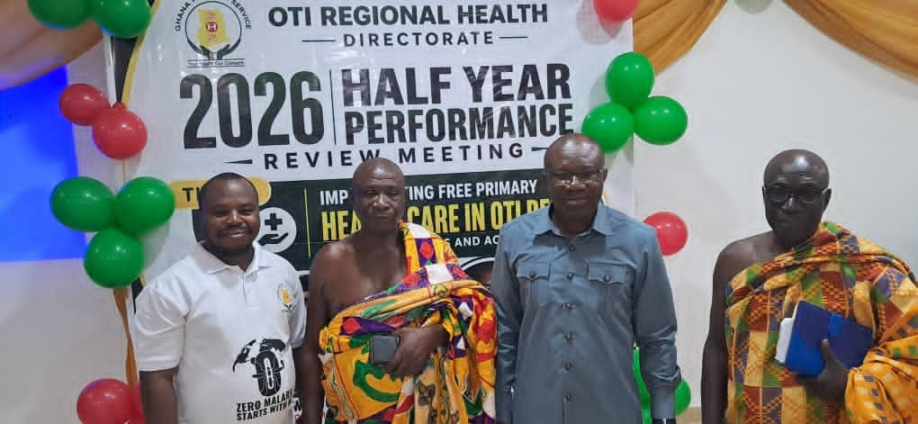
Chairman of the Committee, Prof Mark Appiah, announced the initiative at the 2026 Half-Year Performance Review Meeting of the Oti Regional Health Directorate held in Worawora.
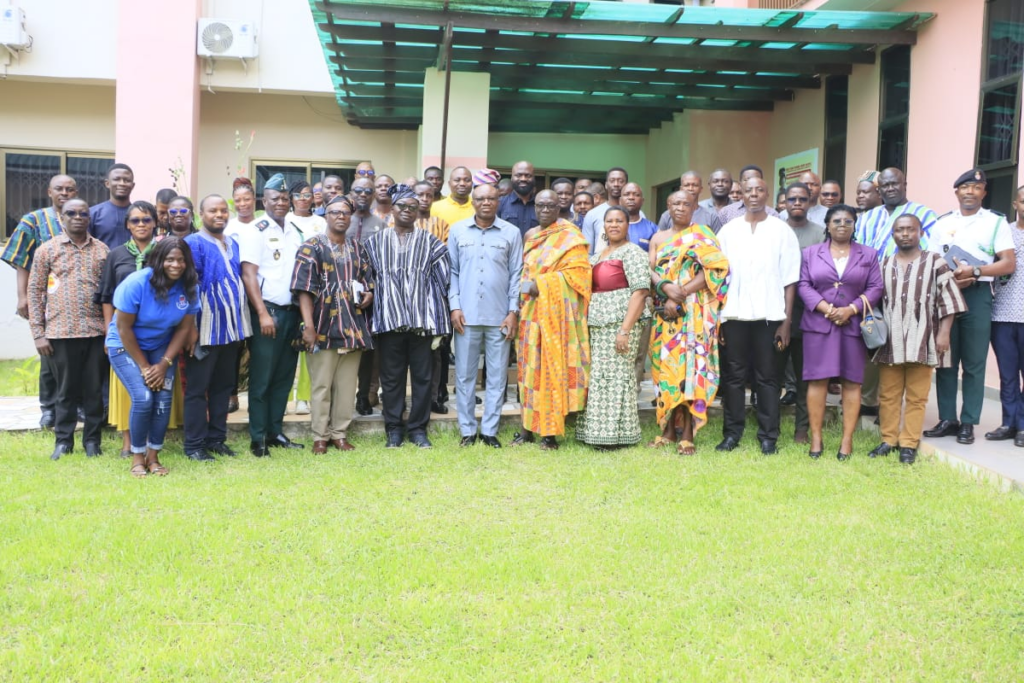
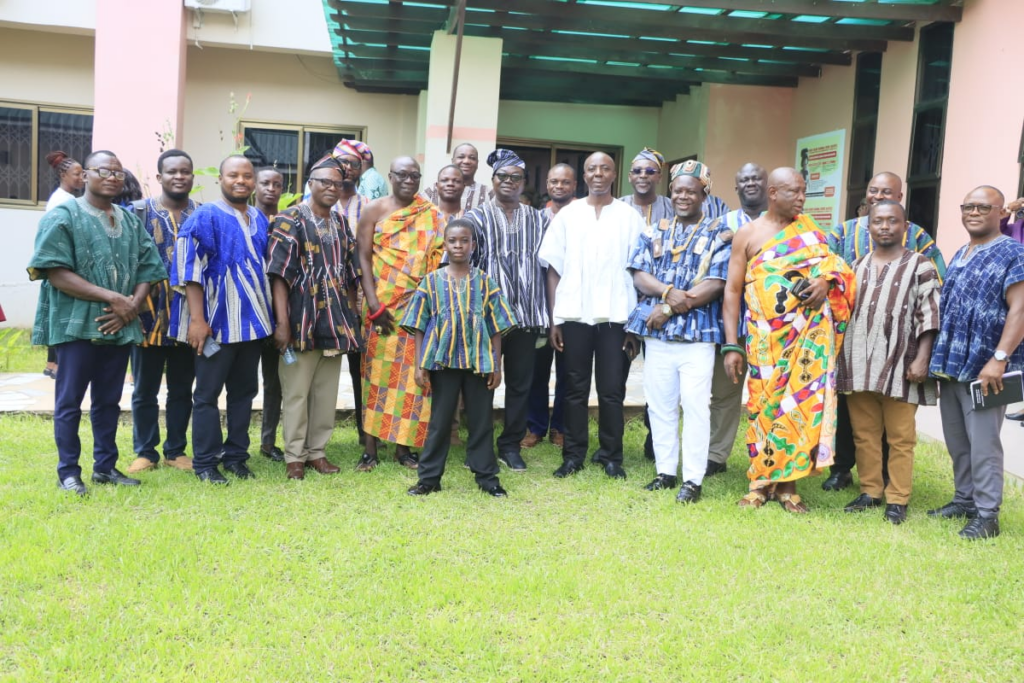
The meeting, held under the theme, “Implementing Free Primary Health Care in Oti Region: Where Resources and Activities Meet,” brought together officials of the Ghana Health Service, District Directors of Health Services, heads of departments and agencies, development partners, traditional leaders and members of the Regional Health Committee.
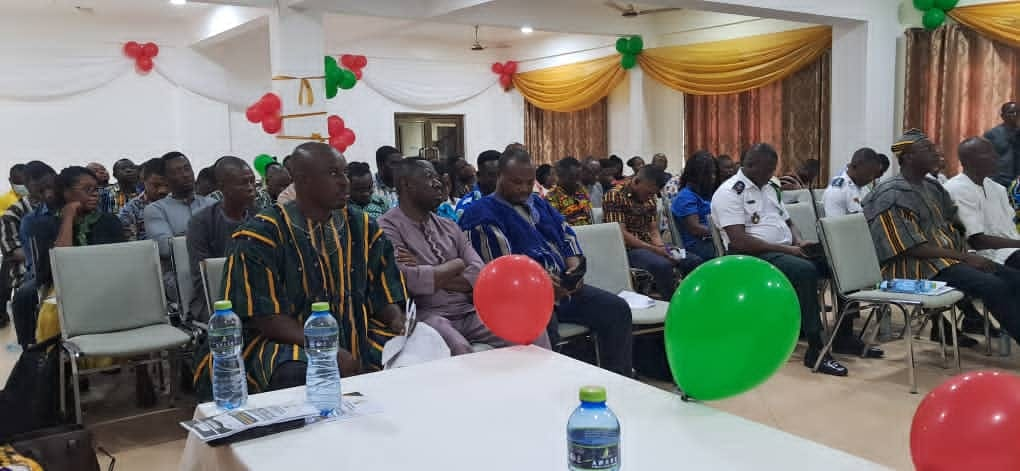
Prof. Appiah said the review meeting provided an opportunity to assess progress, identify gaps, and agree on practical measures to improve healthcare delivery in the region.
He stressed that primary healthcare remained the foundation of a strong health system, but its effectiveness depended on how well resources were deployed to communities.
“We must therefore ask ourselves: Are our resources reaching the communities that need them most? Are our activities producing measurable results? And are we making healthcare more accessible and equitable for the people of the Oti Region?”
He noted that distance, transportation difficulties, poverty, and inadequate infrastructure continued to pose significant barriers to healthcare access, particularly for people in remote communities.
According to him, Free Primary Health Care must translate from policy into a tangible experience for ordinary citizens.
“A mother should be able to access essential maternal and child health services. A child should receive appropriate care without financial barriers. An elderly person should not have to travel unnecessarily long distances for basic healthcare. And when people arrive at our health facilities, the necessary personnel, medicines, and equipment should be available,” he said.
Medical store a priority
Prof. Appiah said the Committee had identified the persistent shortage and delayed distribution of medicines and essential supplies as a major challenge and was therefore prioritising the establishment of a regional medical store in Worawora.
He said a reliable storage and distribution system would ensure that health facilities across the region received essential medicines and supplies promptly.
“In healthcare, having the prescription is not enough — the medicine must also be available,” he stressed.
The proposed facility, he said, would strengthen the region’s capacity to store and distribute medicines and other essential health commodities, reducing delays and dependence on supplies from other regions.
GHS lands to be secured
Beyond the medical store, Prof. Appiah disclosed that the Committee had begun an initiative to properly document, demarcate, and secure legal title to lands belonging to the Ghana Health Service in the Oti Region.
He said the exercise would begin from Worawora and involve collaboration with the Lands Commission, traditional authorities, and district assemblies.
The process would include regularising ownership, processing indentures, and securing title certificates to protect health-sector lands from encroachment and future disputes.
“We can not be building hospitals and other health facilities today and tomorrow be asking, ‘Who actually owns the land?’ We must secure what belongs to the health sector today so that future generations can benefit from it,” he said.
3,592 health workers needed
The Oti Regional Director of Health Services, Dr Kofi Amo-Kodieh, welcomed the Committee’s initiative, describing the proposed medical store as potentially transformative for the region, which has operated without its own central medical storage facility.
Dr Amo-Kodieh said the Directorate remained committed to implementing Free Primary Health Care but faced significant resource constraints, particularly in human resources.
He disclosed that the region had a shortfall of 3,592 health workers required for the optimal operation of health facilities across its nine districts and municipalities.
He said the shortage was affecting service delivery, especially at hard-to-reach CHPS compounds and health centres, while placing considerable pressure on the available workforce.
According to him, the absence of a regional medical store also affected the timely distribution of medicines and consumables, with the region depending on supplies from other regions. This, he said, sometimes resulted in delays and stock-outs.
Dr Amo-Kodieh, therefore, expressed his strong support for the Committee’s initiative to establish a regional medical store and appealed to stakeholders to support its realisation.
He called on well-meaning natives of the Oti Region, both at home and abroad, corporate organisations, development partners, and philanthropic institutions to support the initiative when the Committee formally reaches out to them.
He said support could come in various forms, including funding, building materials, logistics, and technical assistance.
“Government alone cannot shoulder the task. A collective effort will accelerate the realisation of the medical store and help entrench Free Primary Health Care as a lasting legacy for the people of Oti Region,” he said.
Progress despite challenges
Dr Amo-Kodieh said that despite the challenges, the region had recorded progress in maternal and child health, immunisation coverage, and disease surveillance.
He called for stronger collaboration among the Ghana Health Service, Metropolitan, Municipal and District Assemblies, development partners, traditional leaders, and communities to sustain the gains and address remaining gaps.
Prof. Appiah, in his closing remarks, assured the Directorate of the Committee’s continued support and urged participants to ensure that the outcomes of the review translated into measurable improvements in healthcare delivery.
“Our success should not be measured simply by the number of activities undertaken or reports produced. It should be measured by the lives we improve, illnesses we prevent, and barriers to healthcare we remove,” he said.
Latest Stories
-
GACL to hold full-scale emergency simulation exercise on October 15
33 minutes -
327 entries submitted for 30th GJA Media Awards
47 minutes -
Mahama proposes rent-to-own scheme for unfinished houses
49 minutes -
Mahama wants banks to introduce affordable housing loans within six months
50 minutes -
Photos from National Conference on Housing Finance
53 minutes -
Italy, Ghana unite 40 artists for ‘Beyond Creation’ exhibition at Accra Art Centre
1 hour -
Premature to call for Sports Minister’s removal while CID probe is ongoing – Ernest Norgbey
2 hours -
NPP mourns Samuel Arthur Odoi-Sykes
2 hours -
Stay out of World Cup visa probe to avoid interfering with CID investigations – Ernest Norgbey to politicians
2 hours -
Bono East Minister inspects ‘Big Push’ roads; contractor on Tankor-Fiema-Busunya road ahead of schedule
2 hours -
Scrutiny is not disloyalty – Chief of Staff defends serious journalism at 30th GJA Awards launch
2 hours -
Abuse case: Nana Akua’s husband Harold unable to appear in court after hospital admission – Police
2 hours -
Mahmud Kabore picks NDC Ashanti Regional Communication Officer nomination forms
2 hours -
KNUST Career Services pioneer Selina Doe Angmor named among 2026 40 Under 40 honourees
3 hours -
Nana Akua domestic abuse case: Police to arraign husband after hospital discharge
3 hours