

Audio By Carbonatix
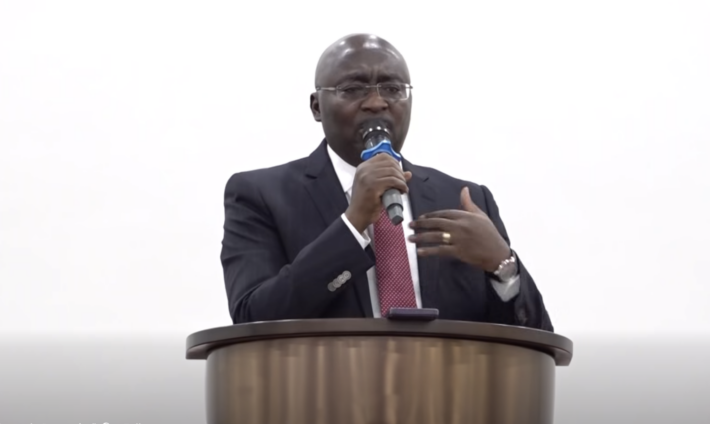
Flagbearer of the New Patriotic Party (NPP), Dr Mahamudu Bawumia, has credited Ghana’s Gold-for-Oil and Gold-for-Reserves programmes with helping to build the country’s foreign exchange reserves and stabilise the cedi.
According to him, the programmes enabled Ghana to acquire about $5 billion worth of gold within two years, strengthening the country’s reserve position at a time when access to foreign exchange was constrained.
Dr Bawumia said the idea for the gold reserves programme emerged in 2021, when Ghana had only about 8.7 tonnes of gold reserves, despite being Africa’s leading gold producer.
“Since independence to 2021, 65 years, we only had 8.7 tons. I said this cannot be right,” he said.
He explained that Ghana could leverage its domestic gold production by using cedis to purchase gold locally, rather than first having to generate foreign exchange to acquire the precious metal on international markets.
“We had bought about $5 billion worth of gold in just two years,” he stated.
IMF restriction
Dr Bawumia also linked the accumulation of reserves to the removal of an IMF-related restriction on the Bank of Ghana’s foreign exchange market interventions.
He said the Bank of Ghana had previously been restricted to a maximum intervention of $80 million per month.
“In January 2025, that restriction — because we had built up the foreign exchange reserves — was removed,” he said.
According to Dr Bawumia, the Bank of Ghana has since been able to intervene with significantly larger amounts.
“Since then, the Bank of Ghana has been able to put at least $1 billion a month into the market. From $80 million maximum to $1 billion a month,” he said.
Cedi appreciation
Dr Bawumia attributed the subsequent appreciation of the cedi to the increased supply of foreign exchange made possible by the stronger reserve position.
“What does economics tell you? When you have an increase in supply, what will happen to price? It comes down,” he said.
“There’s no rocket science to it. It is just simple demand and supply.”
He argued that the approach allowed Ghana to build reserves while creating greater capacity for the central bank to support the local currency when necessary.
“We have built a free market which allowed us to build reserves and then be able to put those reserves to support the currency,” he added.
The comments form part of Dr Bawumia’s defence of the economic policies implemented under the previous administration, particularly measures aimed at addressing Ghana’s foreign exchange constraints and strengthening the country’s reserve buffers.
Latest Stories
-
Bolgatanga Girls restores boarding status of student allegedly defiled by watchmen
3 minutes -
Dzifa Gomashie is my aunt but Tourism Ministry must be dissolved – Shatta Wale
12 minutes -
NSMQ 2026: Achimota School retain seeded status, shut out Accra rivals
22 minutes -
Water supply disrupted in parts of Western Accra after pipeline damage
22 minutes -
Autopsy shows National Guard fatally shot Memphis man in the back
22 minutes -
Keta Municipal Hospital marks 100 years of continuous healthcare service
27 minutes -
BCI urges women to prioritise breast health to reduce cancer cases and deaths in Ghana
49 minutes -
Give us a share of state security’s uniform contracts – Northshore Apparel CEO tells gov’t
53 minutes -
Jobs, not guns, are the most durable answer to insecurity in Northern Ghana — Northshore CEO
56 minutes -
Northshore Apparel plans fabric mill, cotton outgrower scheme as part of expansion – CEO
57 minutes -
Bawumia defends Gold-for-Reserves programme as answer to Ghana’s forex crisis
1 hour -
NSMQ 2026: Boa Amponsem pulls off late heist to unseed Abetifi Presby and storm quarterfinals
1 hour -
World’s youngest reigning traditional monarch dies aged 34
1 hour -
Akosua Manu pushes for national emergency response to maternal deaths
1 hour -
Bawumia feared Sri Lanka-style food crisis as Ghana battled forex shortages
1 hour