

Audio By Carbonatix
Security agencies have called on residents of border communities to volunteer timely and credible information to help prevent crime and counter the growing threat of violent extremism.
The security agencies included the Ghana Police Service, Ghana Immigration Service, Bureau of National Intelligence, National Commission on Small Arms and Light Weapons, and Narcotics Control Commission.
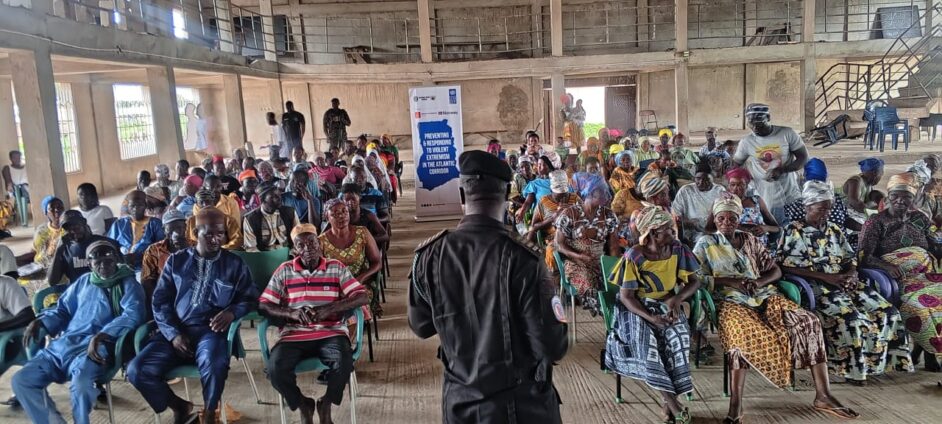
They made the call during a Civilian-Security Dialogue organised by the National Peace Council for over 100 residents of Naaga and surrounding communities in the Kassena Nankana Municipality.
The engagement formed part of the Atlantic Corridor Project dubbed "Preventing and Responding to Violent Extremism in the Atlantic Corridor,” and it was funded by the governments of Denmark and Norway through the United Nations Development Programme (UNDP).
Assistant Commissioner of Police (ACP) Daniel Anane Amoah, the Navrongo Divisional Police Commander, said information was critical to the prevention and combating of crime and that civilians were better positioned to provide valuable information to the security agencies.
He said residents lived and interacted within their communities and were, therefore, often the first to notice suspicious activities or individuals.
“Peace is priceless and could only be maintained through deliberate efforts, coordination, and collaboration between civilians and security agencies, so we urge you not to remain silent when you observe activities that could threaten the peace we are enjoying,” he added.
Assistant Superintendent of Immigration (ASI) Jerry Attipoe, the Municipal Commander of the Ghana Immigration Service, said inadequate personnel, coupled with the porous nature of the country’s borders, made civilian participation crucial in preventing the activities of violent extremist groups.
He said violent extremist attacks in neighbouring countries, including Burkina Faso and Niger, had created security concerns for Ghana, particularly communities along the country’s borders, adding that the ripple effects of instability in the sub-region could put additional pressure on already limited social amenities and resources in border communities.
ASI Attipoe, therefore, urged residents to support security agencies by providing information on suspicious movements and activities.
Victor Ame-Abo Akanbonga, the Upper East Regional Programmes Officer of the National Commission on Small Arms and Light Weapons (NACSA), said the activities of violent extremist groups were often fuelled by the availability and use of illicit firearms.
He said such weapons could enter criminal networks through trafficking, illegal cross-border movements, theft, diversion, and other unlawful transfers.
He said although security agencies investigated the sources of recovered weapons and worked to dismantle the networks that supplied them, information from civilians remained crucial to those efforts.
“The ability of civilians to volunteer information will be valuable to our investigations, and we urge you to do so,” he said.
Marshal Abuchow, the Upper East Regional Deputy Commander of the Narcotics Control Commission (NACOC), also linked drug abuse to violent extremism and other serious crimes.
He explained that the use of illicit drugs could alter people's state of mind and potentially influence their behaviour, making some individuals more susceptible to engaging in violent and criminal activities.
He urged residents, particularly young people, to avoid substance abuse and support efforts to identify and address drug-related activities in their communities.
Damien Asobayire, the Upper East Regional Executive Secretary of the National Peace Council, said the dialogue formed part of efforts to build trust and strengthen interaction between communities and security agencies.
According to him, the Council had earlier engaged the communities on online violent narratives and recognised the need for a face-to-face platform where residents and security personnel could interact.
Mr Asobayire said the dialogue was, therefore, intended to create an avenue for residents to better understand their role in preventing violent extremism and other threats while enabling security agencies to appreciate the concerns of the communities.
Latest Stories
-
Ghana’s Constituency Games at a governance crossroads
3 minutes -
CSSPS placement results to be released tomorrow – Education Ministry
21 minutes -
His Excellency Professor Yaw Safo Boafo
21 minutes -
NSA Board Dissolution: Olympic, Paralympic representation expected to remain on new board
32 minutes -
When English became the safest Ghanaian language
45 minutes -
Nurses and midwives indispensable to resilient health system – Bawumia
48 minutes -
About 565,000 BECE candidates qualify for SHS placement – CSSPS
49 minutes -
Virtual InfoSec Africa renews partnership with Cyber Security Authority
53 minutes -
TMA is highest authority in Tema, TDC must comply with its regulations — President
1 hour -
Cyanide, unregistered cigarettes hidden under bags of millet, soya beans in major highway bust in Techiman
1 hour -
Security agencies call on civilians to volunteer information to combat crime
1 hour -
New maternal units commissioned in North Tongu to improve access to care
1 hour -
Enterprise Insurance reaffirms industry leadership with 4 wins at 6th CIIG
2 hours -
GES release national harmonised prospectus for 2026/27 SHS admissions
2 hours -
Presidency orders TMA, TDC to end dispute over Tema development authority
2 hours