

Audio By Carbonatix
For some children, the day begins not with the sound of a school bell but with the demands of hard labour on dangerous waters, farms, streets, in homes, and other places where their safety, education, and future are put at risk.
A young boy may wake before dawn to work on a canoe, hungry, exhausted, and sometimes afraid, while his peers prepare for school. A young girl sent away with promises of education or a better life may instead find herself trapped in domestic work, street hawking, or other forms of exploitation.
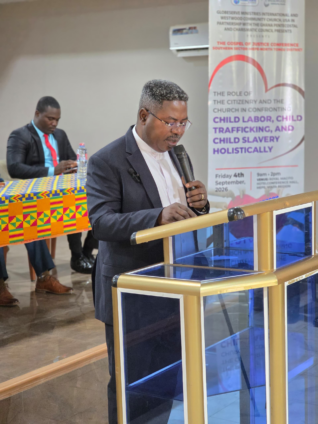
Rev. Samuel Anthony Kofi Dunya of GlobeServe Ministries International says such realities require urgent and collective action from citizens, parents, traditional authorities, churches, and state institutions to protect children from labour, trafficking, and slavery.
He made the call at a Southern Justice Conference in the Mepe North Tongu District held under the theme “The Role of the Citizenry and the Church in Confronting Child Labour, Child Trafficking, and Child Slavery Holistically.”
Rev. Dunya said society must stop treating child exploitation as a private family matter, stressing that every citizen has a responsibility to speak up when children are subjected to abuse, hazardous work, or conditions that deprive them of their childhood.
He said child labour should not be confused with age-appropriate responsibilities but becomes exploitation when work compromises a child's health, education, safety, development, dignity, or childhood.
According to him, children trafficked for exploitation may be subjected to dangerous work, violence, neglect, sexual abuse, and other forms of mistreatment, with lasting consequences for their physical and psychological well-being.
“A child is not an economic tool. A child is not a commodity. A child is not a debt to be paid,” Rev. Dunya stressed, calling for greater protection of children who are vulnerable because of poverty, school dropout, broken homes, migration, and lack of economic opportunities.
He urged citizens to pay attention to warning signs, including children being kept out of school, working in dangerous conditions, being moved suspiciously between communities, selling late into the night or displaying signs of fear and abuse.
Parents cautioned.
Rev. Dunya also cautioned parents and guardians against handing over children to individuals on the basis of promises of education, apprenticeship, employment, or a better life without properly verifying the arrangements.
He urged parents to establish where their children are going, who will be responsible for them, whether they will remain in school, and how regular contact with them will be maintained.
“No family should surrender a child into uncertainty,” he said.
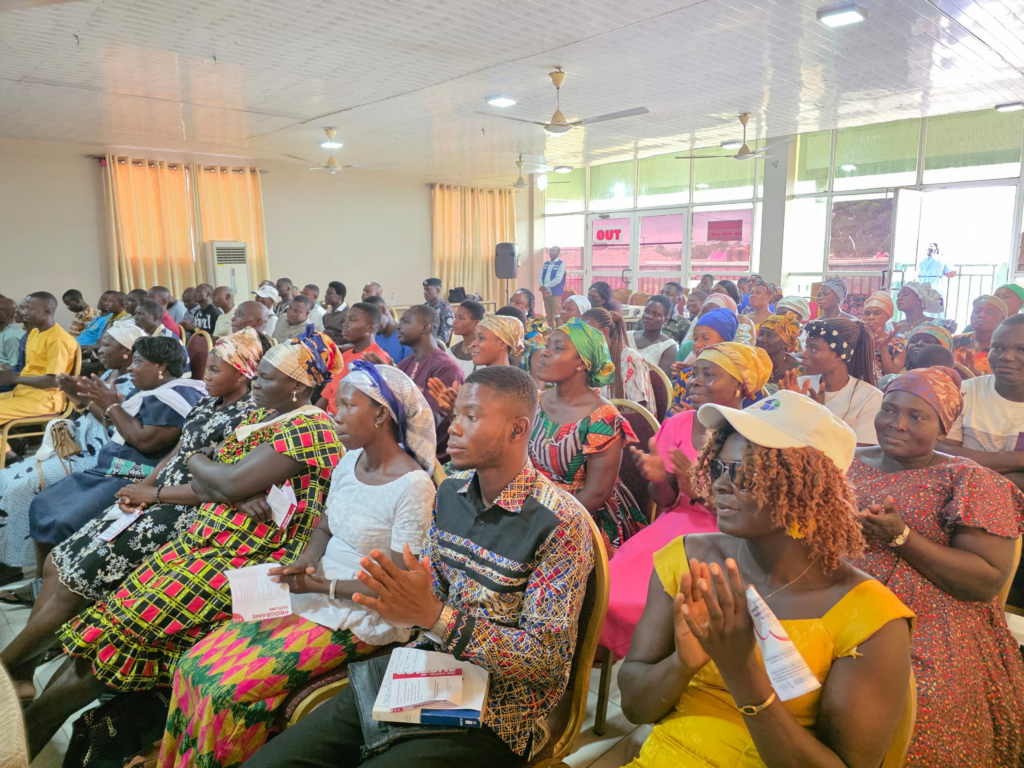
He further called on chiefs, queen mothers, elders, and community opinion leaders to use their influence to challenge practices that expose children to exploitation and to strengthen community-based child-protection systems.
Rev. Dunya also advocated stronger collaboration among social welfare officers, schools, health workers, police, traditional authorities, faith leaders, civil society organisations and local government institutions to identify vulnerable children and provide timely protection and support.
He stressed that rescuing children from exploitative situations must be accompanied by rehabilitation, psychosocial support, education, family strengthening, and long-term follow-up.
Church must do more
Rev. Dunya challenged the Church to move beyond praying about child exploitation and take practical steps to prevent and respond to abuse.
“The church must be more than a place that prays for suffering. The church must become a place that interrupts suffering,” he said.
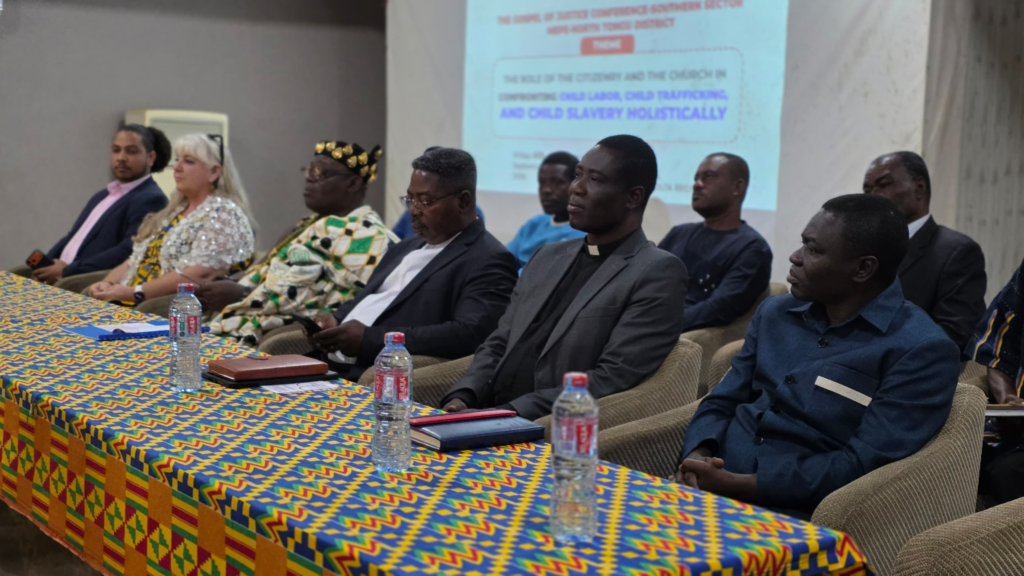
He urged churches to establish child-protection systems, provide safe reporting channels, train church leaders to identify signs of abuse and exploitation, and collaborate with relevant authorities to protect vulnerable children.
He also called for churches to provide safe and supportive environments for survivors rather than subjecting them to stigma, blame, or shame.
Rev. Dunya insisted that perpetrators of child trafficking and exploitation must be held accountable regardless of their wealth, influence, family connections, or religious affiliations.
He said communities must refuse to remain silent when children are being exploited, warning that protecting perpetrators or concealing abuse only perpetuates the problem.
He called on Ghanaians to collectively build communities where children are protected, educated, and given the opportunity to grow in safety and dignity.
“The measure of a community is not only the size of its buildings, the wealth of its people, or the beauty of its celebrations. It is also how it treats its children,” Rev. Dunya said.
Latest Stories
-
‘Fake memo’ fabricated to smear me – Patricia Appiagyei
12 minutes -
ATLF206: Culture, investment and tourism take centre stage as Africa’s tourism leaders gather in Polokwane
43 minutes -
TI-Ghana and GACC demand full disclosure over alleged GH¢70,000 Appointments Committee payment
60 minutes -
UN approves resolution in support of map that shows Africa’s true size
1 hour -
Spring Agro Industries urges Ghanaians to choose local rice as imports dominate market
1 hour -
Youths in Oti push for stronger policies on SRHR and gender-based violence
1 hour -
Rev Samuel Anthony Kofi Dunya calls for stronger action against child labour and trafficking
1 hour -
Where the bins are missing: How poor waste management is affecting Ghanaian communities
1 hour -
Joy FM Back-to-School Fair 2026 draws shoppers as Day One winds down
1 hour -
AfriYAN Ghana calls for greater youth participation in local governance
2 hours -
MTN Ghana, University of Ghana seal pact to Drive Digital Future.
2 hours -
Give time some time
2 hours -
Volkswagen board approves plan to cut another 50,000 jobs
2 hours -
Police arrest mother and son over suspected drugs in Dormaa Ahenkro
2 hours -
NSMQ 2026: Inside the profiles of this year’s three grand finalists chasing glory
2 hours