

Audio By Carbonatix
Ghana is considering the establishment of a specialised Electric Vehicle (EV) Capacity Building Centre to train mechanics in the maintenance and repair of electric vehicles as the country prepares for the growth of the emerging industry.
The proposed centre is part of efforts to equip Ghanaian mechanics and other technical professionals with the specialised skills required to diagnose, service and repair next-generation electric vehicles entering the Ghanaian market.
Minister for Lands and Natural Resources Emmanuel Armah-Kofi Buah said the initiative had become necessary as countries around the world increasingly shift from conventional fossil-fuel-powered vehicles to cleaner alternatives.
He said Ghana must begin preparing its technical workforce for the transition by developing the human capital needed to support the growth of electric mobility.
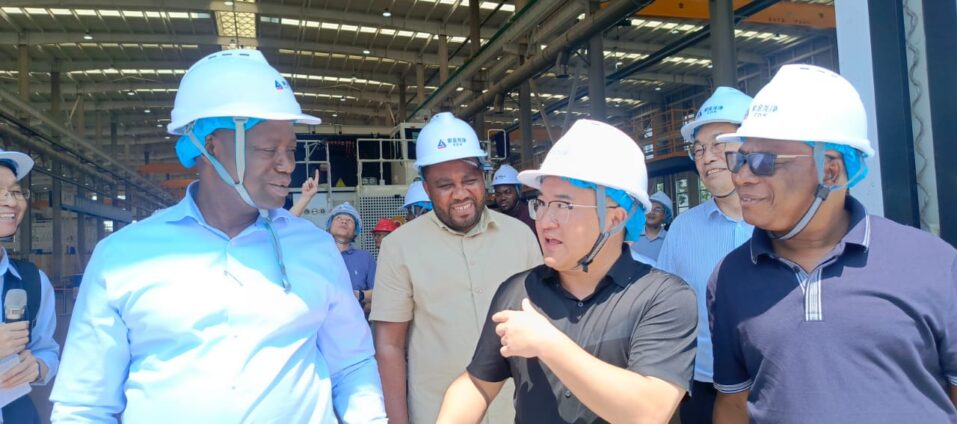
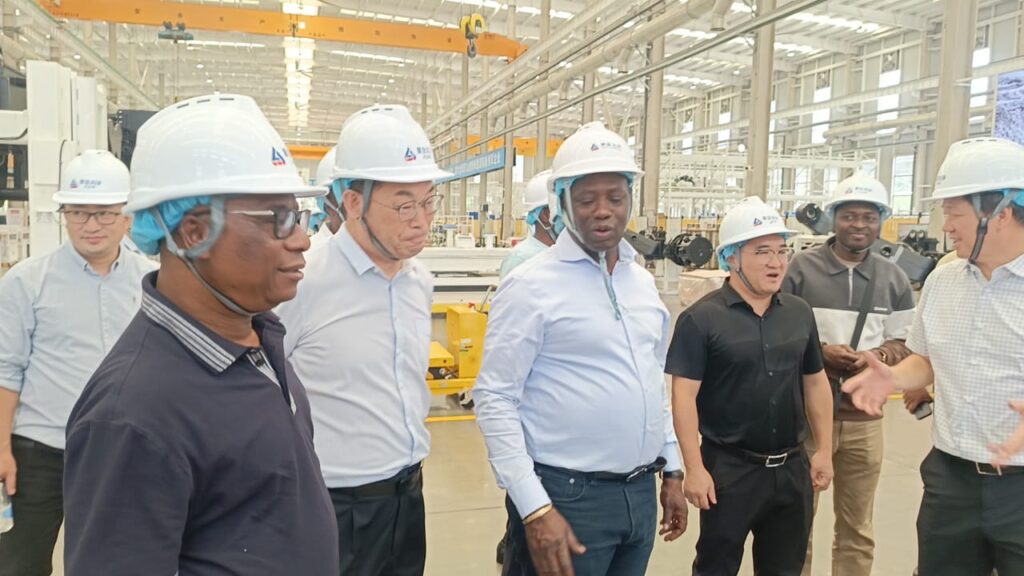
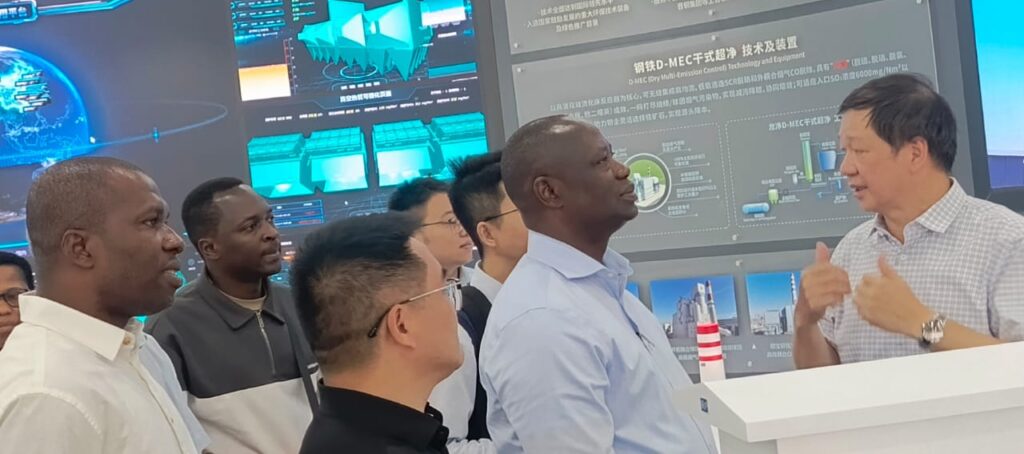
The Minister made the proposal in an interview with journalists after touring the showroom and operations of Longking, a Chinese manufacturer of electric vehicles, as part of his official engagements in China.
Ghana must prepare for EV transition
Mr Armah-Kofi Buah stressed the need for a coordinated national effort to define an appropriate role for the electric-vehicle industry in Ghana while developing the technical expertise required to sustain it.
He said local mechanics would need specialised training to safely and effectively maintain electric vehicles, whose systems and components differ significantly from those of conventional internal-combustion vehicles.
The Minister also suggested that China could play an important role in helping Ghana develop the required technical capacity, given the country’s rapid growth in electric-vehicle manufacturing and technology.
According to him, Ghana should not only position itself as a market for imported electric vehicles but also develop the local skills and infrastructure needed to maintain and support them.
China’s electric heavy-truck market expands
China’s development of electric vehicles extends beyond passenger cars, with electric heavy-duty trucks increasingly being deployed in sectors such as mining, ports, factories and short-haul freight.
The shift is particularly significant for industries that have traditionally relied heavily on diesel-powered trucks.
Recent industry data indicate that electric heavy trucks accounted for about 44% of new heavy-truck sales in China in June 2026, although they represented about 4% of the country’s total heavy-truck fleet.
New-energy heavy-truck sales have also been growing rapidly, with reports indicating a year-on-year increase of about 45% in the first quarter of 2026 to approximately 44,000 units.
For Ghana, Mr Armah-Kofi Buah said the development could have particular relevance to the mining, haulage and logistics sectors, where heavy-duty vehicles are essential for transporting minerals, equipment and other commodities.
Battery swapping reduces downtime
One technology helping to accelerate the adoption of electric heavy trucks in China is battery swapping.
Instead of keeping a truck stationary for several hours to recharge, the vehicle can enter a specialised station where an automated system removes the depleted battery and replaces it with a fully charged one.
The technology can significantly reduce downtime, making it potentially attractive to commercial operators whose vehicles are required to remain in service for extended periods.
China’s large manufacturing base for lithium-ion batteries and electric vehicles has also contributed to the development of supply chains and technologies supporting the expansion of electric mobility.
Building local EV expertise
The capabilities of electric heavy trucks are also improving, with newer models able to travel hundreds of kilometres on a single charge, depending on factors such as payload, terrain, weather and driving conditions.
The International Energy Agency (IEA) estimates the current average range of battery-electric trucks at around 300 kilometres, making short-haul operations one of the strongest early markets for the technology.
China’s approach also extends beyond manufacturing electric vehicles to the development of charging infrastructure, battery-swapping stations and other supporting systems.
Mr Armah-Kofi Buah said Ghana could learn from China’s experience as it prepares for the transition to electric mobility.
He said the proposed EV Capacity Building Centre could form part of Ghana’s preparations by equipping mechanics, engineers and other technical professionals with the skills required to maintain electric vehicles locally.
The initiative, he added, would help ensure that Ghana’s transition to electric mobility is supported not only by the importation and use of electric vehicles but also by the development of local technical expertise to service and maintain them.
Latest Stories
-
Republic closes case against Kwabena Adu-Boahene and two others
3 minutes -
Afrodancehall prodigy TMBwoy debuts new album “Chapter one”
16 minutes -
Chance for Childhood calls for increased funding for inclusive education in Ghana
16 minutes -
Twelve girls participate in Egli Studios’ maiden Besties Camp
22 minutes -
MFWA launches GH¢544,000 Legal Support Fund for journalists facing SLAPPs in Ghana
29 minutes -
Ho tricycle riders defy Assembly’s directive not to charge new fares
34 minutes -
North Korea and Russia open first road bridge linking both countries
34 minutes -
Sadio Mane, Achraf Hakimi make 2026 Ballon d’Or shortlist
46 minutes -
John Boadu best positioned to return NPP to power in 2028 – Wontumi campaign
56 minutes -
B5 Plus urges import bans on goods Ghana can produce
57 minutes -
Ballon D’or: Three Africans make 2026 Men’s Goalkeeper of the Year shortlist
1 hour -
Tuesday downpour causes extensive damage to properties in Berekum Municipality
1 hour -
Music Beef: When rivalry sells, fans fight, and the industry pays
1 hour -
Mahama calls for stronger support for women’s football
1 hour -
‘No Ghanaian should pay’ – Health Minister warns health workers against charging for Free Primary Healthcare
1 hour