

Audio By Carbonatix
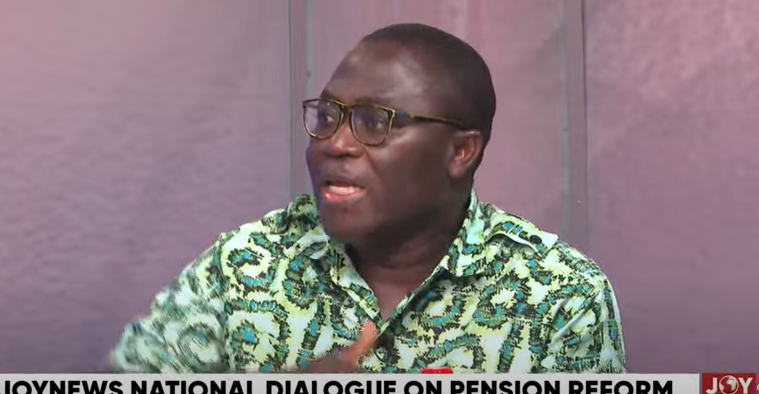
Deputy Secretary General of the Trades Union Congress (TUC), Dr Kwabena Nyarko Otoo, has attributed part of Ghana’s persistent energy-sector challenges to the contractual arrangements with Independent Power Producers (IPPs).
Speaking on JoyNews’ Newsfile, Dr Otoo also questioned the decision by the government to rely on an assessment of the Electricity Company of Ghana (ECG) conducted by the International Monetary Fund (IMF), particularly at a time when organised labour is opposed to proposals for private-sector participation in the company.
He said he found it “difficult and strange” that government would ask the IMF to undertake an assessment of ECG, arguing that the Fund has consistently advocated reforms involving greater private-sector participation in state-owned entities.
“I even find it difficult and strange that the Ghana government will ask IMF to do this, the IMF that wants to see all public state entities privatised,” he lamented.
Dr Otoo said the concerns of organised labour were particularly important in assessing ECG because workers and their representatives have first-hand knowledge of the operational challenges facing the company.
He questioned why the IMF assessment was conducted without consultations with ECG workers or the TUC.
“The IMF is pushing for the privatisation of ECG and at a time when TUC and all organised labour groups are against it, you go and ask the IMF to do an assessment of ECG, and they did not even talk to the workers of ECG; they did not even talk to the TUC,” he said.
Dr Otoo argued that discussions about the difficulties facing Ghana’s energy sector must go beyond ECG’s performance and examine the contractual framework governing power generation.
He identified the structure of agreements with IPPs as one of the factors contributing to the sector’s financial challenges.
“The IPP contractual arrangement is part of the problem we are facing in this country when it comes to the energy sector,” he said.
The TUC and other organised labour groups have expressed opposition to privatisation, while the government has argued that reforms are necessary to address persistent inefficiencies and financial losses in the energy sector.
For Dr Otoo, however, any assessment of ECG and proposed reforms should take into account the perspectives of workers and organised labour, as well as the wider contractual and financial arrangements that have shaped Ghana’s energy sector.
He maintained that focusing solely on ECG risks overlooking other structural factors contributing to the sector’s difficulties, particularly the agreements with IPPs that have generated significant financial obligations for the state.
Latest Stories
-
ECG procurement is where politicians ‘milk’ the company – Ben Boakye
10 minutes -
IPPs’ contractual arrangements partly to blame for energy sector problems – TUC’s Dr Otoo
21 minutes -
Like Benzema & as good as Haaland – Alonso on Joao Pedro
24 minutes -
Check out 41 countries Ghanaians can visit without a visa on ordinary passports
34 minutes -
I disrupted pre-season travel plans to prepare players – Arteta
42 minutes -
Richarlison’s move to Vasco da Gama falls through
53 minutes -
Dictator meme shows lack of human awareness – Mbappe
55 minutes -
2030 World Cup: Moroccan official told to stop making 2030 final promise
1 hour -
Mourinho compares Mbappe and Vini Jr to fruit trees after boos
1 hour -
Lewis Hall signs new contract with Newcastle until 2031
1 hour -
Signed instead of Rashford, Gordon is proving worth at Barca
1 hour -
2026 BECE automatic placement rate hits 87.3%, highest since 2021 — CSSPS data
1 hour -
Ghanaian youngster Zayan Omar joins Spanish side Málaga
1 hour -
New Man City signings desperate to win – Dias
2 hours -
Morocco rejects Spain blame game, warns against using kingdom as political pawn
2 hours