

Audio By Carbonatix
A majority of Ghanaians who believe the double-track System has reduced the quality of Senior High School (SHS) education support the government’s proposal to borrow funds to construct additional schools and phase out the system, a poll by the Institute of Economic Affairs (IEA) has found.
According to a report issued by the IEA on Tuesday, September 15, 60.8 per cent of respondents who said the double-track system had reduced education quality support government borrowing to construct additional SHS infrastructure.
However, 38.4 per cent of respondents in the same group oppose the proposal, reflecting concerns over Ghana’s public debt burden.
The IEA said the findings suggest that while many Ghanaians see infrastructure expansion as necessary to improve the quality of secondary education, there are also concerns about the financial implications of using borrowed funds.
“This finding suggests that a significant proportion of those dissatisfied with the quality of education see expanded infrastructure as an important means of improving the quality of secondary education,” the IEA said.
The institute, however, noted that those opposed to additional borrowing would prefer other ways of financing the construction of schools.
“For these respondents, expanding SHS infrastructure through additional borrowing could further increase pressure on public finances.
"They would therefore prefer the government to explore alternative financing mechanisms for the construction of additional school infrastructure,” it said.
The findings form part of a nationwide IEA poll on public perceptions of the double-track system and the government’s plan to borrow to construct additional SHS infrastructure and ultimately eliminate the system.
Overall, 64.7 per cent of the 1,062 respondents surveyed across all 16 regions said the double-track system had contributed to a decline in the quality of SHS education.
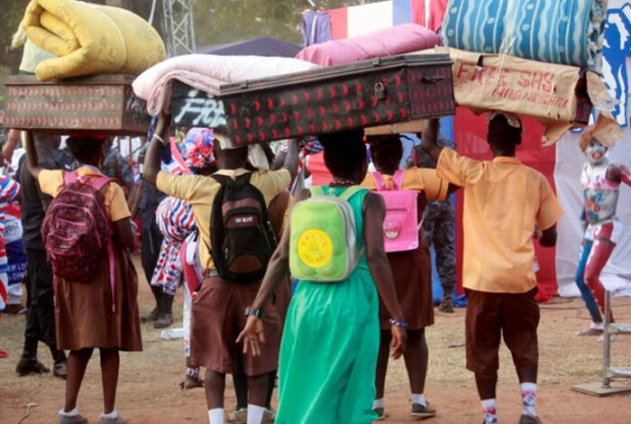
The system was introduced in 2018 after the implementation of the Free SHS policy led to a sharp increase in enrolment and placed pressure on existing school infrastructure.
Under the arrangement, students were divided into two groups that take turns attending school to enable more students to be accommodated within available facilities.
The IEA said the overall findings point to a public preference for expanding SHS infrastructure, but stressed the need for the government to carefully consider the fiscal implications of financing the expansion through borrowing.
Latest Stories
-
Gov’t to unveil 1.5GW renewable energy pipeline to cut power costs for industries
1 second -
Bullet TV, Atinka journalists allegedly assaulted while covering Laboma Beach demolition
49 seconds -
COVID-19 fumigation gap raises questions about Auditor-General’s work – Senanu
10 minutes -
How TRAFFITECH-GH will detect traffic offences, issue fines and penalise defaulters
12 minutes -
Mahama cuts sod for Sentuo Group’s Airport Garden City project, over 3,000 jobs anticipated
16 minutes -
Most Ghanaians who fault double-track back new schools, 38.4% reject borrowing – IEA poll
26 minutes -
Sentuo Airport Garden City project will help bridge Ghana’s housing deficit – Housing Minister
35 minutes -
NSA distances itself from $623,000 World Cup visa allegations
36 minutes -
Offinso Traditional Council seeks support to fight unemployment and underdevelopment
40 minutes -
54.3% Ghanaians support gov’t borrowing to build more SHS infrastructure – IEA survey
57 minutes -
NDC orders members to halt premature parliamentary campaigns or face sanctions
1 hour -
Gov’t to ensure Ghanaian businesses benefit from Sentuo Airport Garden City project – Ofosu-Adjare
1 hour -
Nana Oye Bampoe Addo leads female government delegation to Asantehemaa
1 hour -
GES declares September 25 National Continuous Professional Development Day
1 hour -
64.7% of Ghanaians say double-track system has worsened SHS education – IEA poll
1 hour