

Audio By Carbonatix
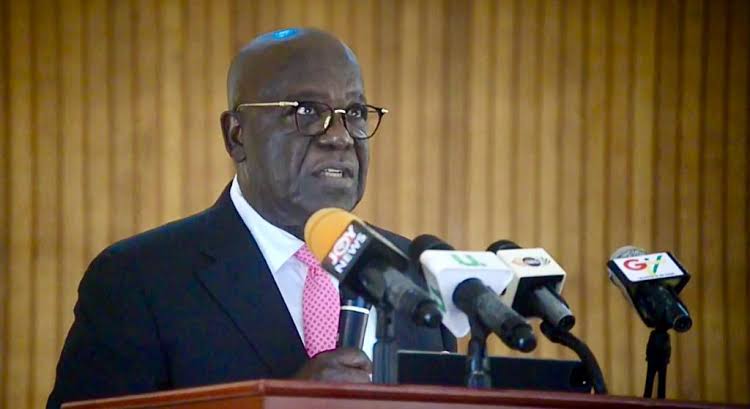
The Chancellor of the University of Cape Coast (UCC), Sir Samuel Esson Jonah, has called for a more contextual assessment of Kwame Nkrumah’s constitutional legacy, particularly the controversial Preventive Detention Act.
Speaking at the opening of the 15th Kwame Nkrumah Memorial Lectures, Sir Jonah acknowledged that the law remains one of the strongest points of criticism against Ghana’s first President, but said its historical circumstances should also be considered.
“The Act was passed in 1958 by a state barely a year old, which had already lived through political bombings and a violent secessionist agitation in Ashanti, and which within months would uncover a plot against the government inside its own army.”
He recalled several attempts on Nkrumah’s life, including the 1962 Kulungugu grenade attack, which killed a schoolgirl standing beside the then-President.
He also cited the 1964 shooting at Flagstaff House by a constable serving as part of Nkrumah’s guard.
Sir Jonah drew parallels with measures adopted by other countries during periods of perceived national security threats.
He cited Britain’s internment of citizens under Regulation 18B during World War II, the suspension of habeas corpus under US President Abraham Lincoln during the American Civil War, and the Patriot Act enacted in the United States after the September 11, 2001 attacks.
“None of this makes preventive detention a good thing. It makes it a human thing – a thing to be weighed in context, not condemned in caricature,” he stated.
Sir Jonah said this historical context should inform how Nkrumah’s constitutional record is assessed, while acknowledging the problematic nature of preventive detention.
He argued that Nkrumah’s wider contribution to Ghana’s constitutional development should also be considered, including the establishment of the country’s first republican constitution in 1960.
Sir Jonah further pointed to Ghana’s subsequent constitutional history, noting that the country has now lived under a written constitution for 34 years.
His remarks form part of a broader reflection on Nkrumah’s political and intellectual legacy at the 15th Kwame Nkrumah Memorial Lectures, where questions surrounding his governance, constitutionalism and vision for Ghana and Africa are being revisited.
Latest Stories
-
Bono FDA seizes 57,000 pieces of unregistered baby diapers at major markets
3 minutes -
World Cup: Kofi Adams rejects claims of visa overstays by Ghana delegates
10 minutes -
Residents and chiefs of Jema protest over detention of Techman nurse; demands her release
24 minutes -
“Sometimes it’s deliberate to allow the cedi to depreciate a little” – Governor assures of control
30 minutes -
One million tonnes of waste to be evacuated from Agbogbloshie in 90 days – Mahama
31 minutes -
UCC confers honorary doctorate on Kwesi Pratt Jnr
38 minutes -
Inheritance is not succession: REBRAND Masterclass ’26 to challenge founders on legacy
41 minutes -
Young entrepreneurs urged to use digital platforms to cut business start-up costs
41 minutes -
If GBA can’t comment on perception of partisanship, our democracy is in trouble – NPP communication member
42 minutes -
One Family, Many Farewells – At Lashibi Funeral Homes
47 minutes -
Mahama orders immediate dissolution of National Cathedral Board of Trustees
52 minutes -
CRC recommendations: Dr Asah-Asante calls for early preparation of gov’t team, rejects five-year term
53 minutes -
My support for SHS students goes beyond kindness; it’s a dream come true – Gideon Boako
57 minutes -
President Mahama declares war on filth, says “Ghana must be clean again”
60 minutes -
Tourism Federation woos diaspora investors to Ghana
1 hour