
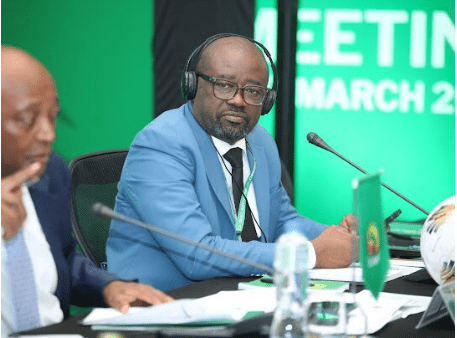

Audio By Carbonatix
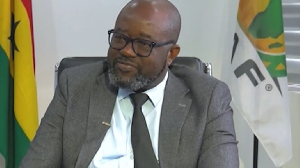
"When I am gone, just like Kwame Nkrumah, people will appreciate."
Kurt Okraku says it with the calmness of a man already looking beyond the noise of the present.
His black flying tie rests across his stomach to the left. His right leg sits neatly across the left. A wry grin follows. Then the nod -- the kind that accompanies a statement he appears convinced time will vindicate.
There is a pause.
"People will not only appreciate but people will remember the good things that we did for Ghana football."
There are some comparisons that demand a second look.
Then there are comparisons that demand that we stop, take a breath and ask: Are we really talking about the same scale of achievement?
Kurt Edwin Simeon-Okraku has made one such comparison.
The Ghana Football Association (GFA) president believes that, when his time in office is over, Ghanaians will remember him much as they remember Ghana's first president, Kwame Nkrumah.
It is a revealing statement.
Not necessarily because Okraku believes he has become Nkrumah. Rather, because it tells us something about how he views leadership: as a contribution to history whose value may only become apparent after the leader has left the stage.
That part is fair. But history is a merciless accountant.
And when the accounts of Nkrumah and Okraku are placed beside each other, the difference in scale becomes difficult to ignore.
A president can describe his own chapter. He can point to the projects, the numbers, the victories and the reforms. He can explain the circumstances in which decisions were taken.
But he cannot write the verdict. That belongs to time. And time is a particularly unforgiving editor.
Kurt Okraku has every right to believe his administration has done good things for Ghana football.
Indeed, it would be unfair to pretend otherwise. There are tangible achievements.
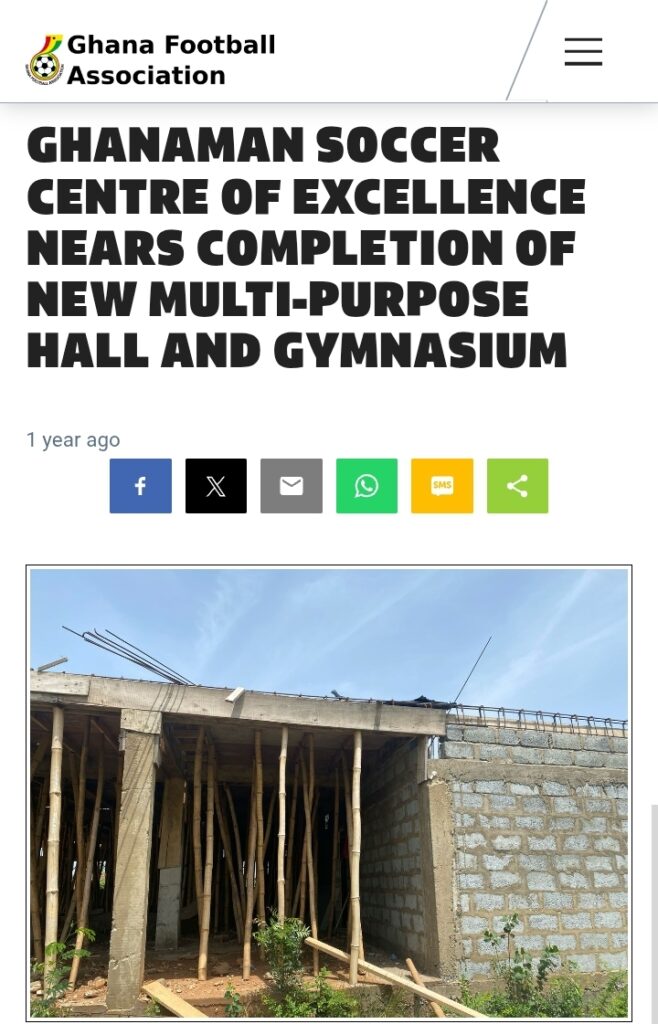
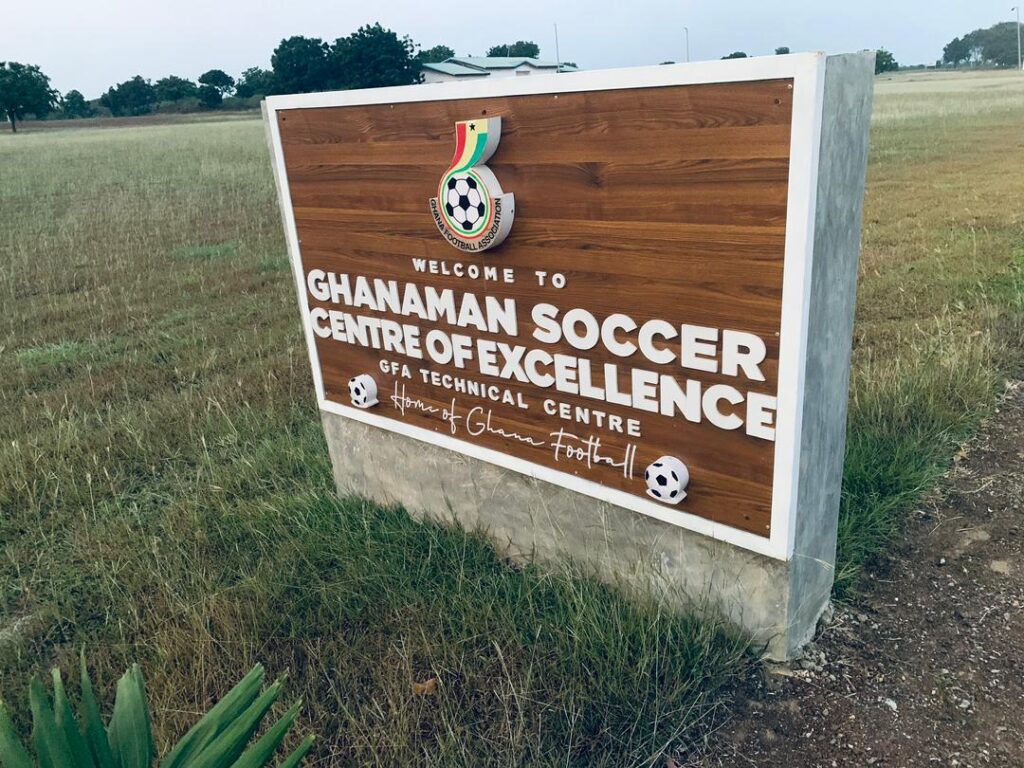
The Ghanaman Soccer Centre of Excellence at Prampram is in considerably better shape than it was when this administration assumed office. Floodlights have been installed, the facility has undergone significant upgrades, and further developments have included a gymnasium, multipurpose facilities and new playing surfaces. FIFA itself has described the modernisation of the centre as part of an effort to make it a benchmark in the region.
There is also the 40-bed accommodation facility at Prampram.
It is part of the GFA's World Cup legacy project, funded from proceeds associated with Ghana's participation at the 2022 FIFA World Cup, with the intention of creating a residential base for Ghana's national teams. The project is designed to reduce the association's dependence on external accommodation while creating an asset that could eventually generate revenue.
Those are worthwhile projects. They should be acknowledged.
So should the GFA's youth successes, its commercial partnerships and the effort to improve the association's administrative and technical infrastructure.
But do these achievements merit a comparison to Kwame Nkrumah, a man who helped create the political conditions under which modern Ghana was born.
Has Kurt Okraku created anything remote in the football industry?
The football empire Mr Okraku occupies was Nkrumah's creation. He was deliberate about what football as a tool could be used to achieve.
After leading the Gold Coast's independence movement and became the country's first prime minister at independence in 1957, before becoming president, he built a football industry that transcended Africa.
That aside, his government pursued an ambitious programme of industrialisation, education and infrastructure, while he simultaneously pushed the idea of African political unity onto the international stage.
His vision was famously larger than Ghana.
He wanted political independence to become the beginning, not the end, of African liberation. Look around Ghana and Nkrumah's fingerprints are difficult to miss.
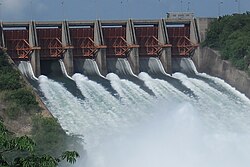
The Volta River project, which eventually produced the Akosombo Dam, was conceived as a major engine for industrialisation. Nkrumah saw electricity not simply as a utility but as the foundation for an industrial economy. Contemporary US government records show that his government regarded the project, together with the aluminium smelter, harbour and railway infrastructure, as part of a broader economic transformation.
Then there was Tema.
The new port and the industrial complex around it were part of the same grand ambition: to move Ghana beyond dependence on a largely cocoa-based economy and build productive capacity at home.
Education was another pillar.
Nkrumah's government placed extraordinary emphasis on expanding access to education. In a 1958 conversation with US President Dwight Eisenhower, Nkrumah highlighted Ghana's education spending and the country's determination to expand both educational and economic opportunities.
And beyond bricks, dams and classrooms, there was an idea.
Ghana must matter. Africa must matter.
Nkrumah became one of the principal voices of Pan-Africanism and was instrumental in the formation of the Organisation of African Unity (OAU), the predecessor of today's African Union (AU).
That is why his name survived governments, coups, political controversies and generations.
Nkrumah's legacy is therefore not simply a list of projects. It is a mixture of political independence, national identity, economic ambition, institutional creation and continental influence.
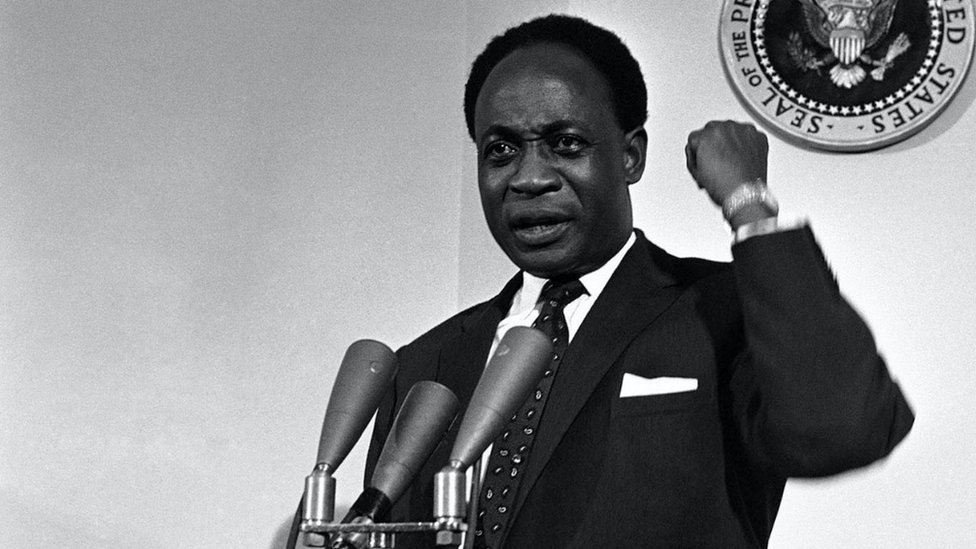
His record was not perfect. Far from it.
His government per many historians and critics became increasingly authoritarian, political freedoms were curtailed, and his economic policies eventually produced severe strains.
But even his failures became part of the historical argument around him.
That is the difference between being remembered and being immortalised.
So, where does Kurt Okraku fit? Just like Nkrumah, he has his own infrastructure to look at.
But football is not merely infrastructure. Football is what happens on the pitch. And, perhaps more importantly, football is what happens in the minds of the people watching it.
Do they believe? Do they trust? Do they want to return next weekend?
Do they believe the result before a ball is kicked? That is where the Okraku administration faces perhaps its most difficult examination.
Kurt Okraku inherited a Ghanaian football administration emerging from the wreckage of the Number 12 corruption scandal and the collapse of Kwesi Nyantakyi's 13-year presidency.
He arrived promising to be a “Game Changer”.
"I stand here today colleagues, with a very simple message", he said on October 25, 2019, during the FA elections.
“A message of hope, a message to lead and to repair our dear football fraternity and take it to the promised land – the Ghana Football Association is at its all-time crossroads and we need a pragmatic leader.
"A leader with feasible policies, a leader with a good record of transporting or transforming our local products to be the target of envy. A leader that will ensure that our football industry embraces all the good principles of corporate governance.
"A leader that would ensure that we can change the bad perception that has completely shattered our desired product."
One attempt to draw people close to game was the slogan, #BringBackTheLove.
The rhetoric was ambitious: restore credibility, professionalise the association, rebuild relationships and make Ghanaian football commercially attractive again.
Administratively, there is a credible argument that some of that work has been done.
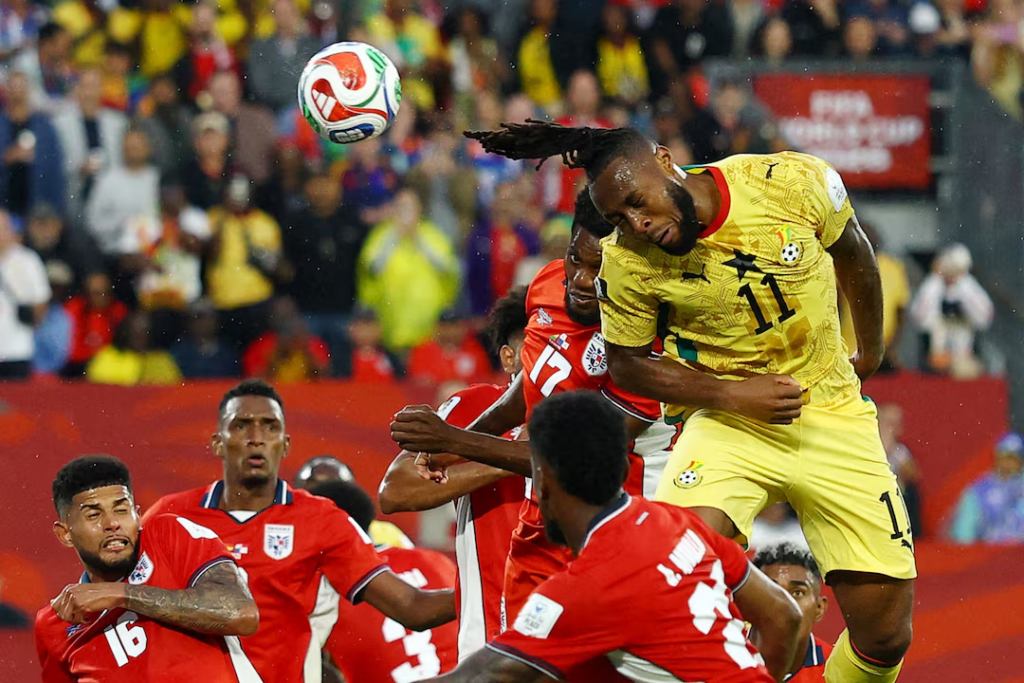
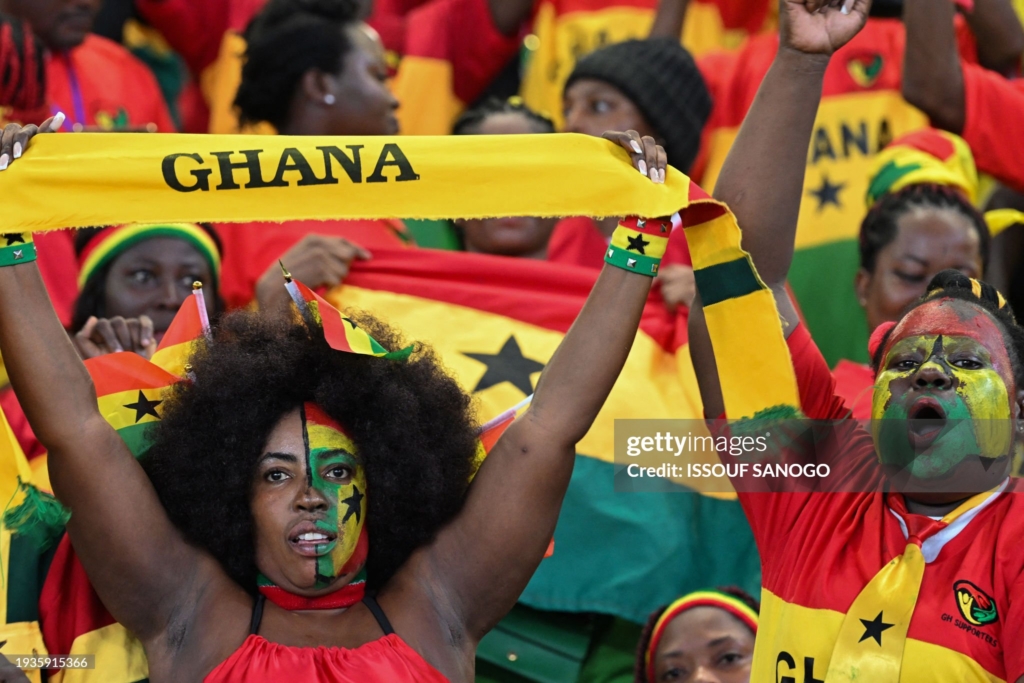
Ghana qualified for two consecutive World Cups during his presidency in Qatar 2022 and USA, Mexico, and Canada 2026. The Black Satellites won the WAFU and Africa U-20 titles in 2021 and took gold at the 2023 African Games. The Black Queens finished third at the Women's Africa Cup of Nations in Morocco 2025. Dreams FC reached the semi-finals of the CAF Confederation Cup in 2024.

Dreams' success was the first time a Ghanaian club was here since Hearts of Oak in 2000.
Economically, Okraku has also overseen a period of renewed commercial activity around the GFA.
The FA under his leadership secured GHC 1 million for each Premier League club before the commencement of a new season for the secod consecutive time, and has raised prize money of league winner to GHC 3 million effective end of 2026/27 campaign.
That financial support, per Aduana Stars CEO, Collins Atta Poku caters for a quarter of the financial strain clubs endure throughout a season.
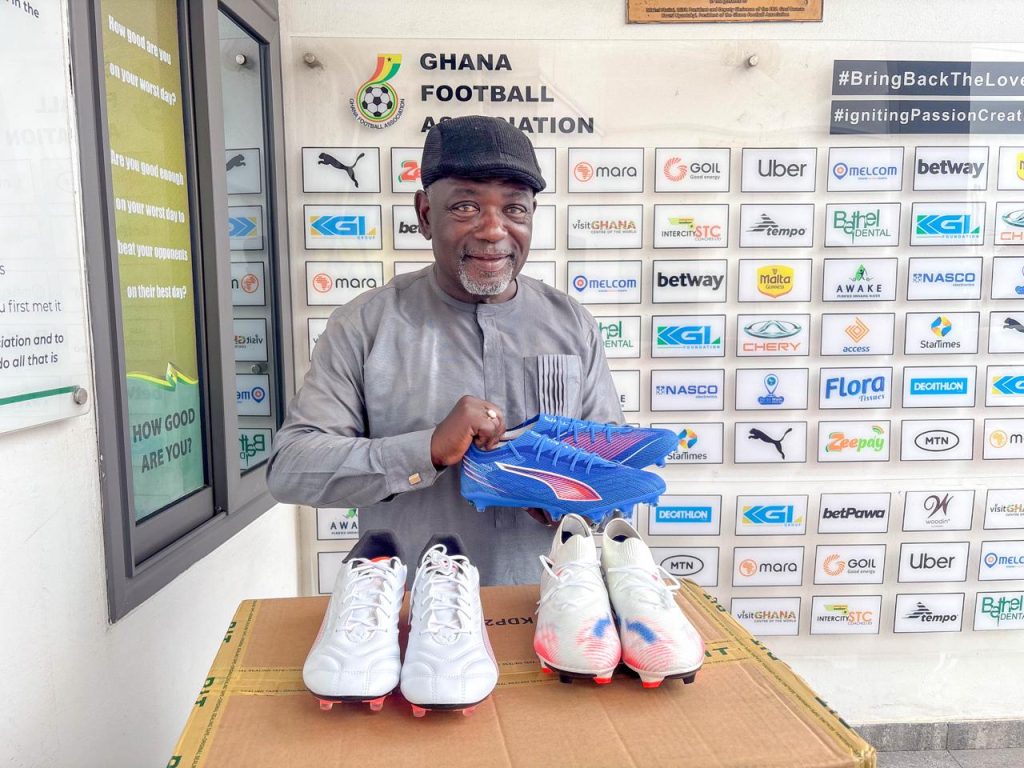
Also, cubs have consistently received boots and footballs, some lower tier clubs have received County buses, while Regional Football Associations (RFAs) have received pick ups.
Those are not imaginary achievements.
But they exist alongside an uncomfortable sporting reality.
The Black Stars missed the 2025 AFCON -- Ghana's first absence from the tournament in two decades.
The previous two AFCON campaigns had already been historically poor. Ghana failed to win a match at both tournaments, while the national team's FIFA ranking deteriorated significantly during Okraku's tenure.
Black Maidens were banned alleged age- cheating. U-20 and U-17 continue to struggle for a place on the continental and global level.
The domestic league also continues to struggle with attendance, commercial appeal and fan engagement. Ghana's CAF club ranking also declined substantially before recovering, helped by Dreams FC's remarkable continental run.
And then there is the revolving door of coaches.
The Okraku administration has gone through multiple Black Stars coaches, with the cost of severance packages alone put at more than $1.1 million.
This is where the comparison with Nkrumah becomes problematic.
Legacy is not a slogan
Okraku is right about one thing: time is the ultimate judge of leadership.
Nkrumah himself is proof.
His legacy has survived because the things associated with him became larger than his tenure. Independence became a national fact. Akosombo became physical infrastructure. Tema became an industrial and commercial centre. His Pan-African vision became part of Ghana's political identity.
For Okraku to be remembered in similar terms, his contribution to football would have to become similarly enduring.
The real question is whether, decades from now, Ghanaian football will be demonstrably different because Kurt Okraku occupied the GFA presidency.
Will Ghana have a thriving domestic league?
Will the Black Stars have regained their place among Africa's elite?
Will Ghanaian clubs consistently compete deep into CAF competitions?
Will youth development produce a sustainable pipeline of world-class players?
Will the GFA's commercial model be strong enough to survive individual administrations?
Those are the questions history will ask.
And history will not be sentimental.
Perhaps the comparison is not entirely wrong. At least for now.
There is a more charitable interpretation of Okraku's words.
Perhaps he was not comparing the magnitude of his achievements with Nkrumah's.
Perhaps he was comparing the idea of leaving something behind.
On that narrow point, he has every right to aspire.
Every leader wants to believe that the work done under his watch will outlive him.
But Nkrumah's name became synonymous with the birth and direction of a nation.
Okraku's name will ultimately be judged by what happened to Ghanaian football between 2019 and whenever his tenure ends.
And that distinction matters.
Because Nkrumah left Ghana with monuments that could be seen, institutions that could be felt and an ideology that crossed borders.
Nkrumah became history because Ghana changed fundamentally while he was at the centre of it.
Kurt Okraku still has time to determine what his chapter in Ghanaian football history will say. Ghanaian football has spent years battling allegations of match manipulation and betting-related misconduct.
In 2021, the GFA itself took the extraordinary step of reporting allegations surrounding the AshantiGold-Inter Allies match to the Police CID. The match became notorious after two bizarre own goals by Inter Allies defender Hashim Musah, triggering an investigation into alleged manipulation. The GFA's own disciplinary process subsequently found AshantiGold guilty of match manipulation and imposed sanctions.
This was not an abstract problem. It went to the heart of the product.
Because once supporters begin asking whether a football match is genuine, the damage is greater than the result of one game.
It damages the relationship between the league and its audience.
And the questions have not disappeared.
In 2025, Okraku himself acknowledged the continuing concerns around betting and match-fixing, saying the GFA was pursuing legal action against companies unlawfully taking bets on domestic competitions.
The GFA has every right to defend the integrity of the competition.
But the uncomfortable truth is this:
A league cannot be commercially attractive if its customers do not completely trust what they are watching.
You can sell sponsorship. You can unveil a new logo. You can increase prize money.
You can distribute equipment. But if a supporter sits in the stands wondering whether the match has already been decided somewhere else, the product has already suffered.
This is perhaps the most important question Okraku's administration must answer before speaking too confidently about legacy:
Did Ghanaian football become more trusted under his watch?
That question cannot be answered by a balance sheet. It must be answered by the supporter.
And then there are the 83 pitches, w number that deserves more than a passing mention.
83.
FIFA's official Forward profile for Ghana currently lists 83 pitches under infrastructure projects, alongside three technical centres.
That is a remarkable figure. And it should be celebrated if we can see the legacy.
But here is the obvious question:
Where are the 83 pitches?
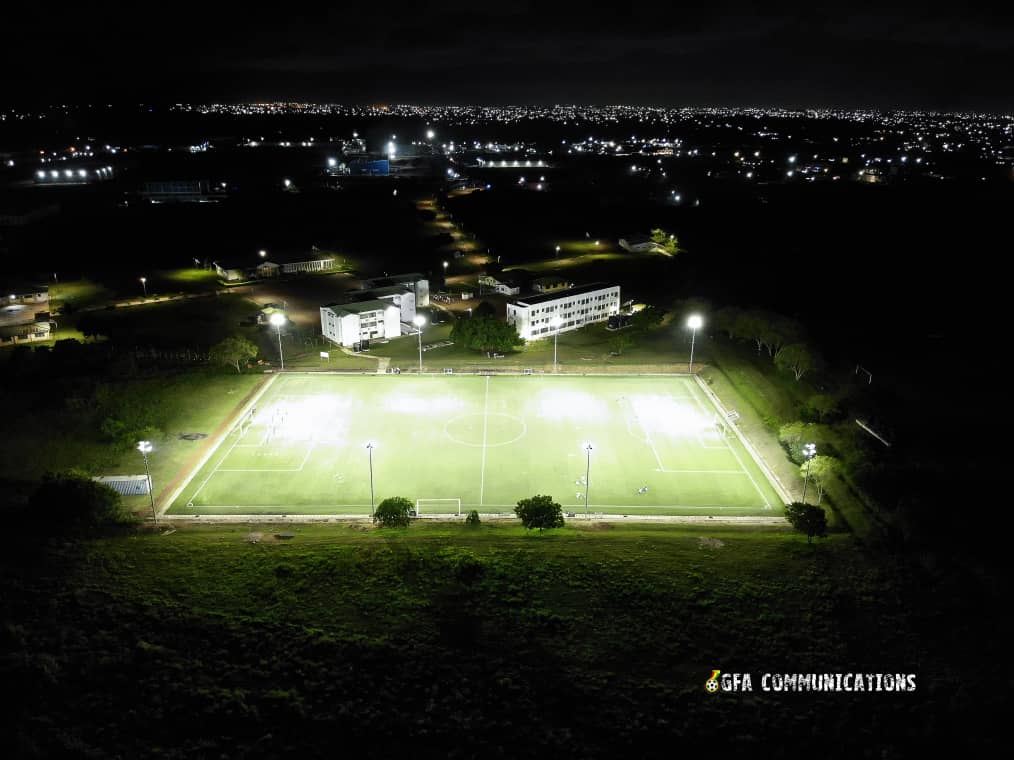
Where exactly are they? Which communities received them? Which clubs use them? Which schools use them? How many are operational? How many meet an acceptable playing standard? How many are maintained?
And how many can a young Ghanaian walk onto today and genuinely say: this is the pitch that FIFA money and Ghana football built for us?
These are not hostile questions. They are accountability questions.
If 83 pitches have been constructed, the GFA should be able to produce a clear public inventory: location, cost, date of completion, contractor, current condition and beneficiary.
That would turn a statistic into evidence. Because numbers are powerful. But numbers without locations are just numbers.
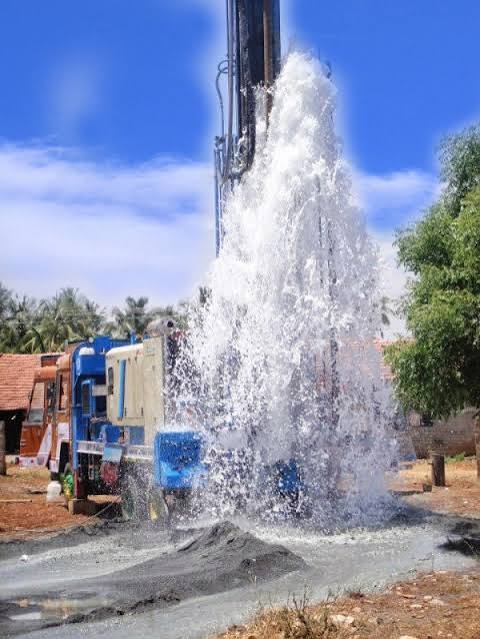
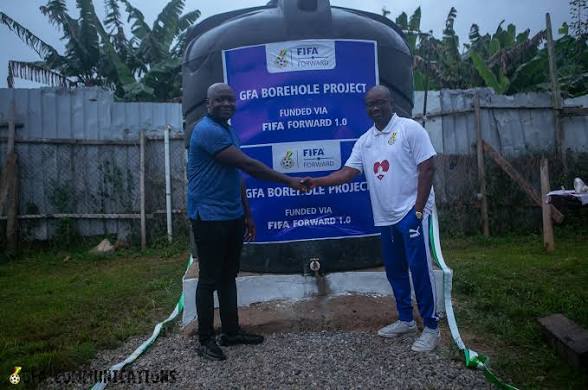
Then comes another uncomfortable chapter. The GFA embarked on a nationwide borehole strategy specifically to improve the watering of football pitches.
The association initially announced an investment of $280,000 under FIFA Forward 1.0 for mechanised boreholes at football centres around the country. The project was intended to improve the quality of Premier League, Division One, Women's Premier League and regional pitches.
The GFA later said 63 boreholes had been constructed out of 80 planned at one stage of the project.
The logic was sound.
Better access to water should mean better pitches. Better pitches should mean better football. Better football should mean a better league.
But what happens when the infrastructure designed to improve the pitches does not produce the expected transformation?
That is the question.
The GFA has defended the project, stressing that the FIFA grant was specifically for boreholes and water reservoirs rather than maintenance of national stadium pitches, after JoySports revealed the humongous amount received for pitch maintenance following CAF’s decision to ban the country from hosting matches after Ghana vs. Angola AFCON 2025 qualifier at the Baba Yara Stadium.
However, there are worrying examples on the ground.
In Sunyani, the Bono Regional Director of the National Sports Authority said one of the GFA-funded boreholes at Coronation Park was so shallow that clay came out when it was pumped, making it ineffective for watering the pitch.
And that should concern everyone.
Because the point of spending money on football infrastructure is not to produce infrastructure.
The point is to produce football.
If money is spent on a borehole, the question is not whether a borehole was commissioned.
The question is whether water comes out.
If water comes out, the next question is whether the pitch is watered. If the pitch is watered, the next question is whether the surface improves.
And if the surface improves, the final question is whether the football improves.
That is the chain of accountability.
Break one link and the entire argument begins to collapse. The pitch tells its own story. Perhaps the most devastating assessment of Ghana's playing surfaces did not come from a politician or an opposition figure.
It came from a football coach.
Asante Kotoko head coach Eric Tinkler recently complained about the standard of Ghanaian pitches, saying the conditions make it difficult for players to develop and for teams to implement a possession-based style.
"How are you going to improve a footballer on a pitch like this?" he asked.
There is something painfully revealing about that question. Because Tinkler was not talking about abstract football policy.
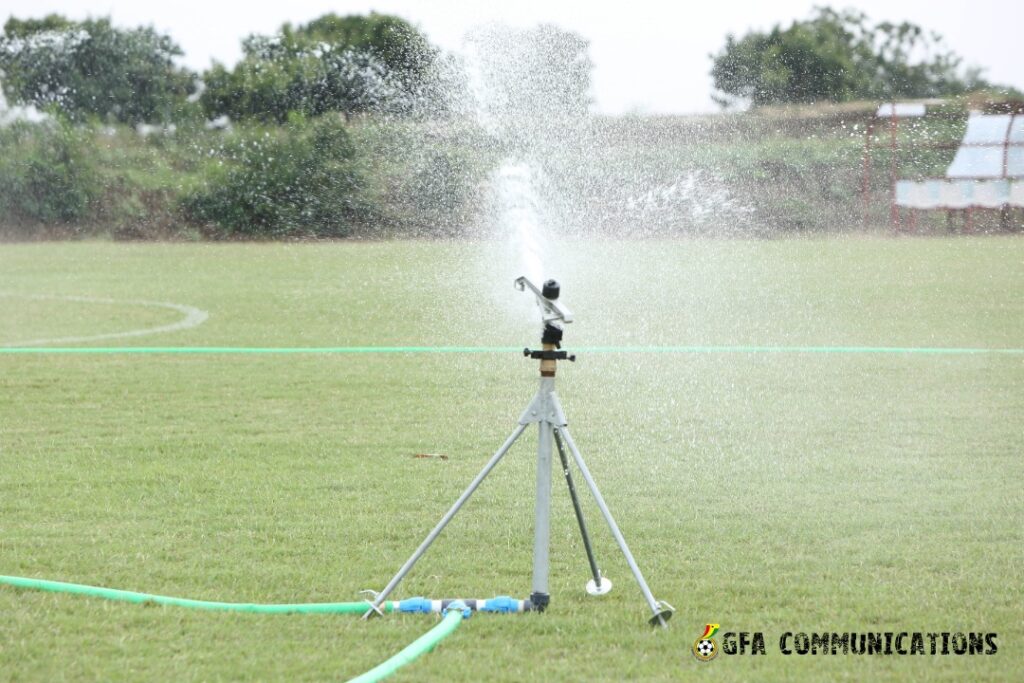
He was talking about the grass. The soil. The bounce of the ball. The player's first touch. The quality of the spectacle.
The environment in which Ghana expects its footballers to develop. And this is where the argument about 83 pitches becomes unavoidable.
If Ghana has indeed benefited from 83 FIFA-listed pitches, yet coaches are still publicly lamenting the quality of playing surfaces, then the country must examine not simply how many pitches were built, but what happened to them afterwards.
Construction is only the first half of infrastructure. Maintenance is the other half. A football pitch does not remain good because a ribbon was cut on it.
It remains good because somebody maintains it. Legacy is more than what can be photographed. This is where I return to Kurt Okraku's comparison.
Perhaps he did not mean that his achievements are equal in scale to those of Kwame Nkrumah.
Perhaps he meant something simpler.
That leaders are often understood more clearly after they leave.
That is true.
But there is a danger in speaking about legacy while still in the middle of the experiment.
Because the jury is still sitting.
Perhaps, most importantly many supporters no longer seem emotionally invested in the domestic product in the way previous generations were.
That is the real battlefield. Not Congress.
Not the microphones. Not the press conference. The stadium.
What will remain when the applause disappears? One day Kurt Okraku will leave the GFA presidency. Another person will sit in that chair.
Another administration will inherit the buildings, the contracts, the pitches, the partnerships, the national teams and the problems.
And then the real examination will begin.
What did he leave behind? A renovated technical centre? A 40-bed facility at Prampram?
Potentially, yes.
More infrastructure?
Certainly, if the FIFA figures are matched by evidence on the ground. Commercial partnerships? But will he leave behind a league that people trust? Will he leave behind pitches good enough to develop the next Mohammed Kudus?
Will he leave behind clubs capable of consistently competing in Africa?
Will Ghanaian supporters return to stadiums because they believe the domestic league belongs to them again?
Will the GFA's infrastructure investments remain functional ten years after the ceremonies?
Will the football ecosystem be stronger without him than it was before him?
Those are the questions that matter.
Because legacy is not what a president says he has built.
Legacy is what survives the president.
It is what still works when his name is no longer on the plaque. It is what the next generation inherits.
It is what supporters remember without being reminded.
And, most importantly, it is what people are willing to defend when the man who built it is no longer there to defend himself.
So, Dear Kurt Okraku, perhaps you are right.
Perhaps one day people will appreciate the things your administration has done.
Perhaps they will look back at Prampram, at the infrastructure, at the commercial growth, at the national-team successes and say: he left Ghana football better than he found it.
But that verdict cannot be delivered today.
You can build the centre. You can build the pitch. You can build the borehole. You can build the 40-bed facility. You can even build 83 pitches.
But you cannot build your own legacy.
You can only build the things from which legacy might eventually emerge.
The rest belongs to time. And time has no loyalty to presidents. It remembers what worked. It remembers what failed.
It remembers what changed people's lives.
And it remembers what was promised but never delivered. So, Mr Okraku, keep building. Keep improving. Keep answering the difficult questions. And perhaps, when the years have passed and the noise has disappeared, history will indeed be kind.
But remember this:
The chapter is not written by the author.
It is written by the years that follow.
And, eventually, by the people who remember.
Latest Stories
-
Trump confirms meeting with Anthropic’s Amodei, repeats dismissal of AI fears
26 minutes -
China pushes back against US on Iran and Cuba in UN speech
35 minutes -
OpenAI, Anthropic CEOs called to appear at Australian AI probe
56 minutes -
T-bills auction: Government exceeds target marginally; yield on 91-day bill remains unchanged
4 hours -
GPL 2026/27: 10-man Aduana hand Kotoko defeat in Kumasi
4 hours -
GPL 2026/27: Medeama ease past Basake Holy Stars
5 hours -
Appiah Adomako writes: Why DVLA must stop treating every expired licence holder as delinquent
5 hours -
Tuchel rues ‘big mistakes’ – did Manchester City charges have impact?
5 hours -
Localization must transfer decision-making power, not just project responsibilities
5 hours -
Modernising Ghana’s traditional markets through the 24-Hour Economy markets initiative
5 hours -
New economy will boost local production and create jobs – Finance Minister
5 hours -
Manchester City chairman confident club will prove innocence
5 hours -
Republic of Ireland ‘raised awareness worldwide’ in Israel game
5 hours -
Germany still winless under Klopp after loss to Greece
5 hours -
Ronaldo on bench as Portugal beat Norway
5 hours