

Audio By Carbonatix
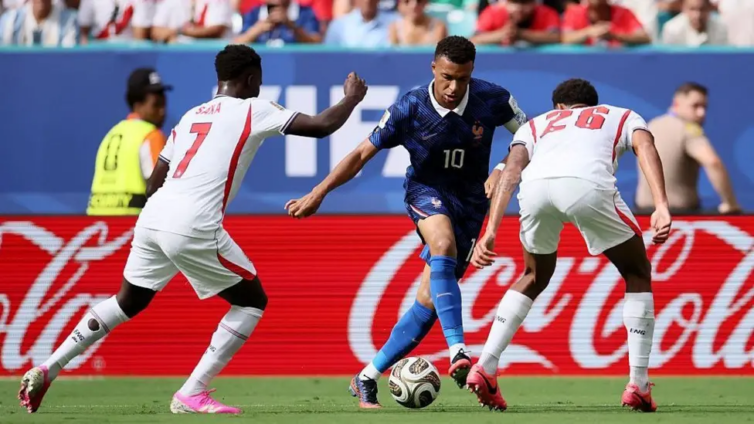
Football fans were subjected to a "constant bombardment" of advertisements for junk food and drinks during matches at the 2026 FIFA World Cup, according to a new study.
Researchers at the University of Bristol and University of Oxford created an AI tool to analyse ads which were visible to television viewers during live play in the tournament's 104 matches, mostly displayed on pitchside advertising boards and around stadiums in the USA, Canada, and Mexico.
They found that logos and products from brands that produce junk food and drinks, defined by the UK government as high in fat, salt, or sugar, were displayed 65,722 times in total.
And the study also found that those adverts were visible for 28.1 hours across the tournament, or just over 16% of the total time matches were being played.
The ads were all shown on the international feed of matches during play, meaning they were visible to every viewer in every country broadcasting the matches, and do not include ads shown during pre-match coverage, half-time commercial breaks, or the controversial in-match hydration breaks.
The model used by the researchers estimated that an average of 576 visible ads for junk food and drink were shown during each match.
Coca-Cola had the highest number (21,893), followed by McDonald's (13,915), Powerade (12,777), and Lay's - the crisps manufacturer known as Walkers in the UK - (12,087).
All four brands are official partners of the world football governing body, FIFA, with the Powerade energy drink owned by The Coca-Cola Company.
In response to the findings, FIFA argued that the vast majority of its revenue is reinvested in football, including in projects promoting health and well-being in which thousands of people participate.
A Fifa spokesperson said: "Fifa works with a broad, global portfolio of partners, all of which are subject to its governance and compliance frameworks.
"FIFA's social impact campaigns, including Be Active, delivered messages of unity, inclusion, health and friendship to audiences on an unprecedented scale throughout the World Cup".
BBC Sport also contacted Coca-Cola, McDonald's and PepsiCo - which owns Lay's - but did not receive a reply.
Junk food promoted 10 times more than gambling
The report also analysed other forms of "potentially harmful" advertising, and found that junk food and drink promotion was far more prevalent.
Junk food and drink logos were recorded around seven times more often than those for alcohol and prediction market brands, 10 times more often than those of gambling firms, and almost 25 times more often than cryptocurrency.
"Repeatedly connecting unhealthy food and drink brands with football, excitement and national identity can make these brands familiar and normalise their consumption," the researchers argue.

Since October 2025, foods such as burgers, chips, crisps and drinks with added sugar have been included in a ban on junk food advertising on TV before 9pm in the UK.
But because the advertising shown during matches appears on hoardings, and is at an international event, it falls outside the legislation.
That means viewers seeing ads for burgers, crisps and fizzy drinks during the hours they are theoretically banned, and calls have grown for a more global approach.
"It is definitely a loophole," Greg Fell, president of the Association of Directors of Public Health, told BBC Sport.
"There is acres of evidence demonstrating that governments around the world are legislating very hard at the moment to limit advertising of junk food.
"It requires worldwide collaboration because obesity is a problem everywhere. Advertising is one of the key mechanisms by which harm from obesity happens.
"Obesity is almost the new tobacco - there isn't much difference with the methods the tobacco industry used before they were excluded from advertising.
"A lot of this is targeted at children, because these companies want to grow their markets, and children are the future market."
The UK government recently announced sweeping changes to school dinner rules, banning deep-fried food and increasing the inclusion of fruit, vegetables, fibre and wholegrains, in attempt to tackle childhood obesity.
According to the NHS, data from 2024 showed that 15% of children in the UK were obese, and 26% were overweight.
"We are facing a global crisis of childhood obesity and diet-related disease, yet the world's biggest sporting event is saturated with marketing for unhealthy food and drinks", said Dr Elisa Becker, one of the report's co-authors.
"Sport should be part of the solution to poor health – not one of the world's most powerful advertising platforms for the products driving it."
Latest Stories
-
GH₵30bn ‘Big Push’ programme deserves strong support, but financing architecture must be sufficiently resilient – CIPAC
2 minutes -
Agribusinesses must invest across entire value chain, not just land and machinery – Gladys Sampson
5 minutes -
BHOBU Games marks 10th edition in grand style
6 minutes -
GPRTU insists on 25% transport fare hike ahead of final talks with government
10 minutes -
Parliament’s Energy Committee tours TOR, GOIL and Sentuo Refinery to assess operations and fuel supply
11 minutes -
Parents, students continue to queue at school placement resolution centre in Kumasi
12 minutes -
Review salaries alongside transport fares to cushion commuters – COPEC
13 minutes -
The Emergency was real, the System was not!
18 minutes -
Agbodza inspects neglected Kwabenya-Berekuso-Kitase road, says funding not protests drives projects
21 minutes -
Tensions intensify in Middle East amid high-stakes UN General Assembly
21 minutes -
COPEC backs possible transport fare increase but warns of impact on commuters
28 minutes -
Dr. Nyaaba calls for sustainable transport and organic inputs to support farmers
40 minutes -
MTN Ghana to extend earnings into second-half of 2026; share price going for GH₵6.69
43 minutes -
Bono Region faces doctor shortage as only 7 of 20 posted doctors report – Deputy Health Minister
50 minutes -
Mahama to cut sod for 160-bed referral hospitals in Oti, Savannah and Western North
52 minutes