

Audio By Carbonatix
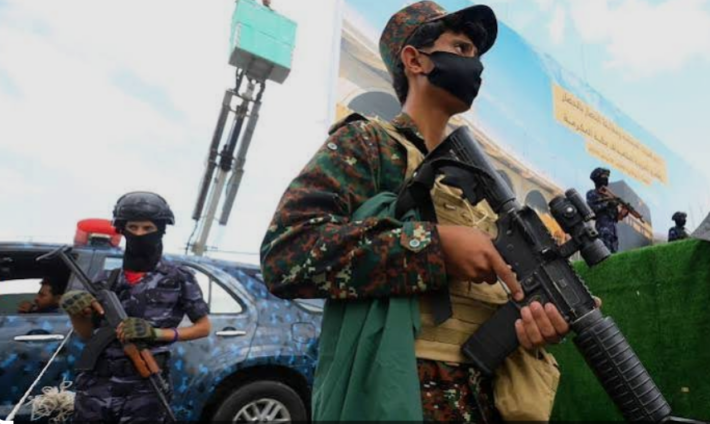
Foreign ministers representing the Group of Seven nations issued a joint directive demanding that Tehran halt its military assistance to Houthi rebels in Yemen as global diplomatic tensions reach a critical juncture on the eve of the annual United Nations General Assembly in New York. The coalition specifically urged Iran to end its arming of and support for the insurgent faction, warning that current escalations jeopardise international stability. Iranian President Masoud Pezeshkian is scheduled to address the global assembly amid this heightened diplomatic pressure.
Strategic Maritime Chokepoints and Regional Security Threats
The renewed hostility centres heavily on Yemen's vital coastline along the Red Sea. Recent insurgent advances have secured strategic territory near the Bab al-Mandab Strait, a crucial maritime gateway connecting the Indian Ocean to global shipping lanes. The G7 explicitly condemned in the strongest terms Houthi attacks on Saudi Arabia and international shipping routes. Ministers warned that these actions risk exacerbating the conflict, undermining international trade, and creating global economic instability.
Allegations of Material Support and Tehran's Position
Western powers and United Nations panels continue to document extensive military transfers to the insurgent movement. A panel of UN experts concluded in 2024 that the Houthis had been transformed into a powerful military organisation due to the transfer of materiel, assistance and training from Iran's Revolutionary Guards, Hezbollah and Iraqi specialists. UK and Western naval forces have repeatedly intercepted illicit shipments bound for Yemen. Tehran has consistently denied these allegations, maintaining that its backing of the group is strictly political.
Direct Appeals and International Diplomatic Demands
The diplomatic coalition outlined strict behavioural requirements for the insurgent leadership. "We call on the Houthis to immediately cease all military actions, all threats and attacks against civilian shipping, and to return to the political process in good faith," stated the foreign ministers of the UK, Canada, France, Germany, Italy, Japan and the United States. Furthermore, the alliance emphasised its enduring diplomatic stance regarding the war-torn nation. "Looking forward, we will continue to support the legitimate Government of Yemen and reaffirm our strong commitment to the unity, sovereignty, independence, and territorial integrity of Yemen," the ministers added.
Military Retaliation and Devastating Humanitarian Impact
On-the-ground conditions continue to deteriorate rapidly for civilians caught in the crossfire. More than 120,000 Yemenis have been displaced by the sudden surge in fighting along Yemen's Red Sea coast, according to recent United Nations estimates. Saudi-led coalition forces have responded with hundreds of retaliatory air strikes, including recent bombings in the strategic port city of Mokha that reportedly killed at least six people. The wider civil war, which began when the Houthis ousted the government from Sanaa in 2014 and drew a regional intervention in 2015, has completely unraveled a four-year informal ceasefire that stalled in July.
Allied Military Responses and Global Strategic Adjustments
Foreign governments are actively recalibrating their security commitments in response to the widening regional crisis. Prime Minister Andy Burnham announced that the UK will provide defensive air-to-air refuelling support for Saudi Arabia, utilising a single British Voyager aircraft based in Cyprus. France has also pledged support and says it is ready to work on securing Saudi energy infrastructure via a strictly defensive approach, according to diplomatic sources. Meanwhile, United States leadership weighs broader strategic moves. President Donald Trump has wavered for weeks over whether to act on a Saudi request for help in fighting the Houthis, telling reporters he remains in deciding mode regarding ongoing security policy in the Middle East.
Navigating a Fragile Regional Horizon
As diplomatic manoeuvres intensify in New York and military escalations persist across the Red Sea, the path toward a sustainable resolution remains narrow, requiring simultaneous adherence to international maritime law, protection of civilian infrastructure, and a renewed commitment to inclusive political dialogue.
Latest Stories
-
Protect the customer by changing who owns the loss
3 minutes -
Counterfeit currency syndicates used churches to hide printing operations – National Security Council Secretariat
12 minutes -
NPP press conference on drug busts should be treated with contempt – NDC
12 minutes -
Don’t abandon working policies because of politics – Asiedu Nketiah
18 minutes -
National Security arrests 16 and seizes millions in counterfeit currency and printing equipment
18 minutes -
NPP links resurgence of drug trafficking cases to NDC’s return to power
19 minutes -
KGL Foundation and GNPC Foundation partner to expand educational scholarships for Ghanaian students
19 minutes -
Asiedu Nketiah urges journalists to report fairly at all times, and not based on politicians’ complaints
24 minutes -
Finance Ministry to write off $120m of TOR’s $400m legacy debt – MD reveals
31 minutes -
Mahama: MiDA is Ghana’s gateway to global philanthropy
33 minutes -
NPP alleges illicit drug-processing laboratories operating at Ghana’s main ports
35 minutes -
‘A serious country cannot start afresh every four years’ – Asiedu Nketiah
36 minutes -
National Horticultural Seed Roadmap launched to strengthen Ghana’s vegetable seed sector
49 minutes -
NPP accuses Mahama government of allowing Ghana to become drug transit hub
50 minutes -
Wontumi Exim Bank case adjourned over amended charge
52 minutes