

Audio By Carbonatix
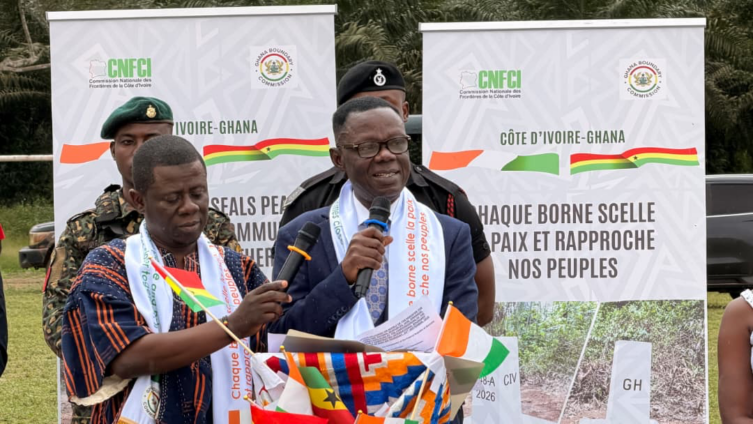
Ghana and Côte d’Ivoire have jointly commissioned 37 newly constructed international boundary pillars, marking the successful completion of Phase 1 of the Joint Ghana-Côte d’Ivoire Land Boundary Reaffirmation Exercise.
The exercise, supervised by the Ghana Boundary Commission, covered a total distance of 150 kilometres.
The 37 pillars comprise one Terminus Pillar, 12 Main Pillars, 20 Intermediate Pillars and four Border Crossing Pillars.
The project was fully funded by the German Agency for International Cooperation (GIZ) and the African Union Border Programme, with the 48 Engineer Regiment of the Ghana Armed Forces serving as the project contractor.
Two ceremonies were held to mark the milestone.
The first took place at New Town in the Jomoro Municipality of the Western Region, where the Terminus Pillar was commissioned.
The pillar marks the end of the Ghana-Côte d’Ivoire international land boundary and the beginning of the international maritime boundary between the two countries.
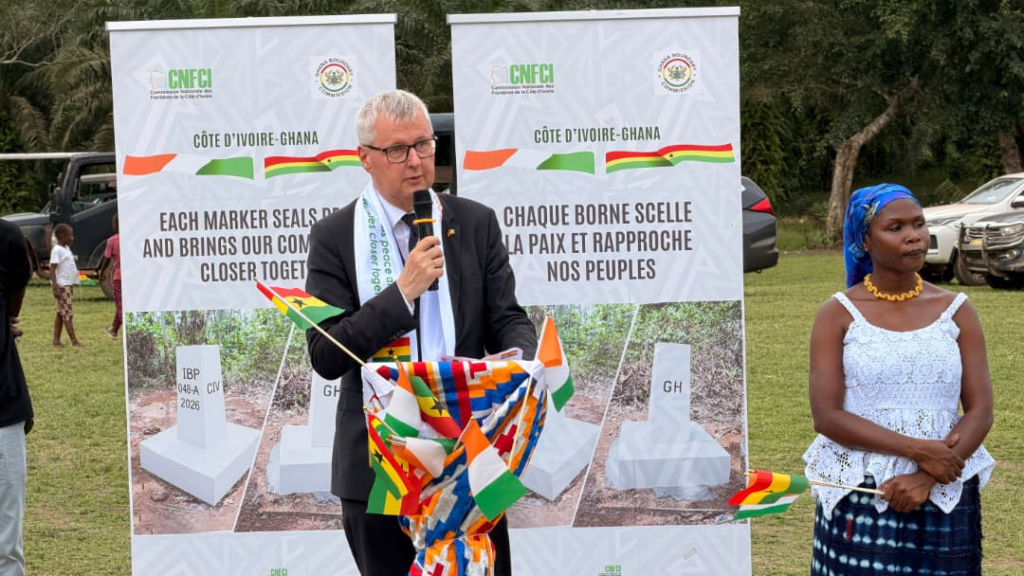
The second ceremony was held at Diby, an Ivorian border community adjacent to Yaakase in the Enchi area, where IBP48 was commissioned. The pillar serves as both a Main Pillar and a Border Crossing Pillar.
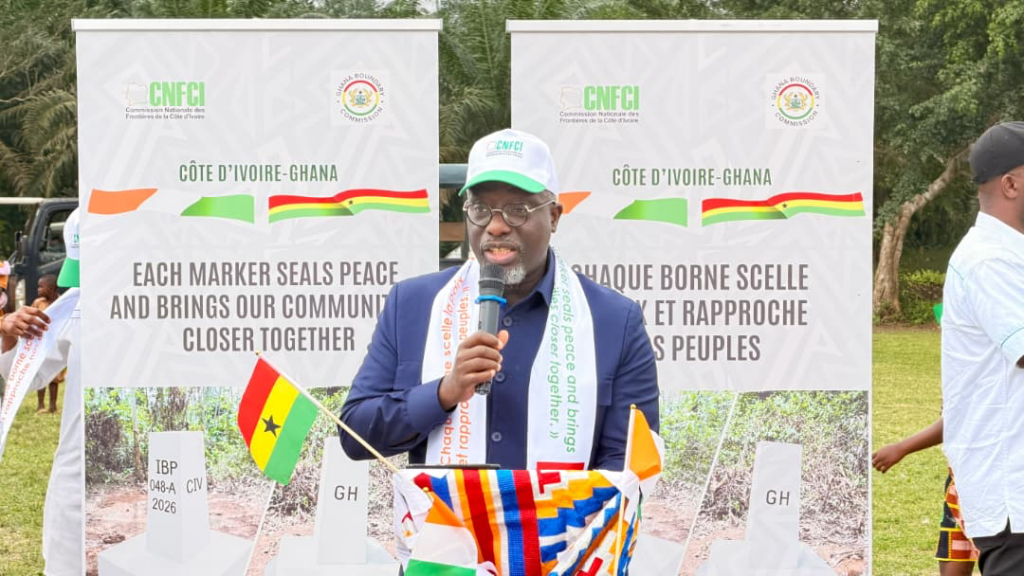
Speaking at the events, Commissioner General of the Ghana Boundary Commission, Major General Anthony Ntem, said the newly constructed pillars reinforce the African Union’s vision of a Borderless Africa.
He stressed that clearly defined and mutually respected boundaries are essential to cooperation, regional integration and peaceful coexistence.
“A Borderless Africa does not mean an Africa without clearly defined boundaries. Rather, it is an Africa in which clearly defined and mutually respected boundaries facilitate the free movement of people, goods and services, encourage legitimate trade and interaction, and create the certainty necessary for deeper regional integration.
"It is an Africa where boundaries connect rather than divide, and where clarity over territorial jurisdiction provides a foundation for cooperation from communities living along the boundary to the highest levels of government,” the Commissioner General noted.
Major General Ntem added that certainty, trust and cooperation among sovereign states were critical to Africa’s integration.
“The strength of a united and integrated Africa depends on certainty, trust and cooperation among sovereign states, which clearly defined and mutually respected boundaries, established through delimitation, demarcation and reaffirmation, provide.”
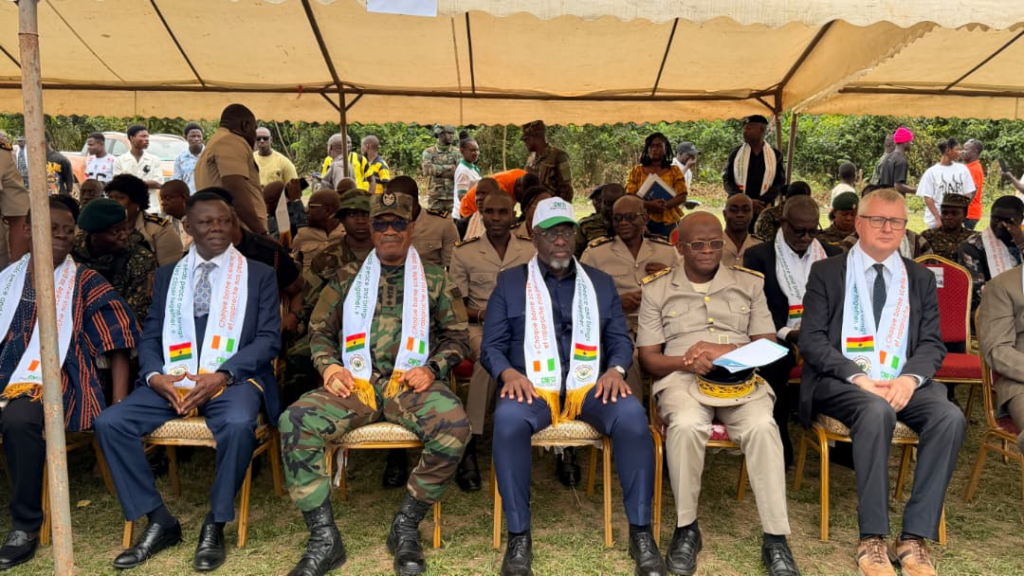
He urged stakeholders to regard the new pillars as markers of certainty, cooperation and peaceful coexistence.
Executive Secretary of Côte d’Ivoire’s National Boundary Commission, Dr Diakalidia Konate, said the reaffirmation exercise was intended to make the international boundary line more visible.
He expressed appreciation to members of the Joint Land Boundary Technical and Sub-Technical Committees for their work during Phase 1 and urged them to maintain the same commitment as Phase 2 approaches.
Phase 2 of the reaffirmation exercise is expected to begin later this year.
German Ambassador to Côte d’Ivoire, Matthias Veltin, reaffirmed Germany’s support for initiatives promoting African integration and cooperation.
He said Germany had partnered with the African Union Border Programme through GIZ to support African countries in demarcating, reaffirming and managing their common boundaries.
“GIZ’s support in this respect aims to prevent conflict along the borders,” he said.
Mr Veltin also stressed that African boundaries should serve as points of connection and collaboration rather than separation.
Speaking on behalf of the Minister for Lands and Natural Resources, Emmanuel Armah Kofi-Buah, the Western North Regional Minister, Wilbert Petty Brentum, said the new pillars symbolised the joint efforts of Ghana and Côte d’Ivoire to fulfil commitments made in 1964 by African states to maintain inherited boundaries.
He said Ghana prioritises boundary reaffirmation and management because it provides government with clarity to govern responsibly and inclusively.
Mr Brentum urged stakeholders, particularly leaders and residents in border communities, to protect the pillars and promote peace, cooperation and good neighbourliness between the two countries.
The completion of Phase 1 paves the way for Phase 2, which will cover an additional 400 kilometres under the supervision of Côte d’Ivoire’s National Boundary Commission.
Latest Stories
-
GTA calls for ultra-modern Cocoa Museum in Western North
1 minute -
NPP says concerns over delegates’ register addressed ahead of October 3 polls
2 minutes -
PwC Ghana appoints George Arhin as Country Senior Partner
6 minutes -
New Economy will turn imports into opportunities for Ghanaian production – Ato Forson
6 minutes -
Two Ada SHS students convicted, placed on 12-month good behaviour bond
10 minutes -
Samson’s Take: Verify the badge – and verify the story
11 minutes -
Treasury bill demand rebounds as investors submit GH¢3.66bn in bids
14 minutes -
Listing 10 SOEs will strengthen governance, limit political interference – Mahama
18 minutes -
Mahama announces 1,200MW state-owned gas power plant deal by end of 2026
19 minutes -
COCOBOD sets up Cocoa Capital PLC to raise GH¢16.3bn for cocoa sector
20 minutes -
Former NPP MMDCEs from Akufo-Addo era demand terminal benefits
23 minutes -
NPP to simulate national elections at Baba Yara Stadium ahead of October 3 polls
28 minutes -
NDC Akatsi South suspends campaign activities following organiser’s death
29 minutes -
Afoakwa reports alleged EOCO assault to police after High Court incident
32 minutes -
He lived his life in preparation for the hereafter – Dr Bawumia pays touching tribute to late Dagomba Chief of Accra
33 minutes