

Audio By Carbonatix
The Kofi Annan International Peacekeeping Training Centre (KAIPTC) and the National Peace Council (NPC), with support from the Embassy of Spain in Ghana, have launched a multi-stakeholder regional engagement aimed at rebuilding trust between civilians and state security agencies.
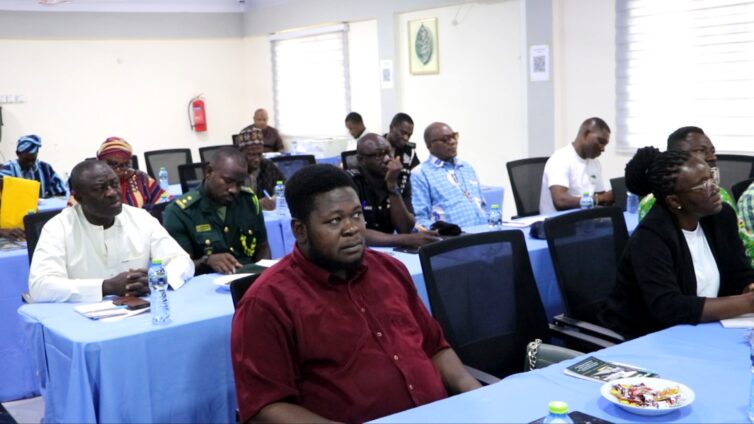
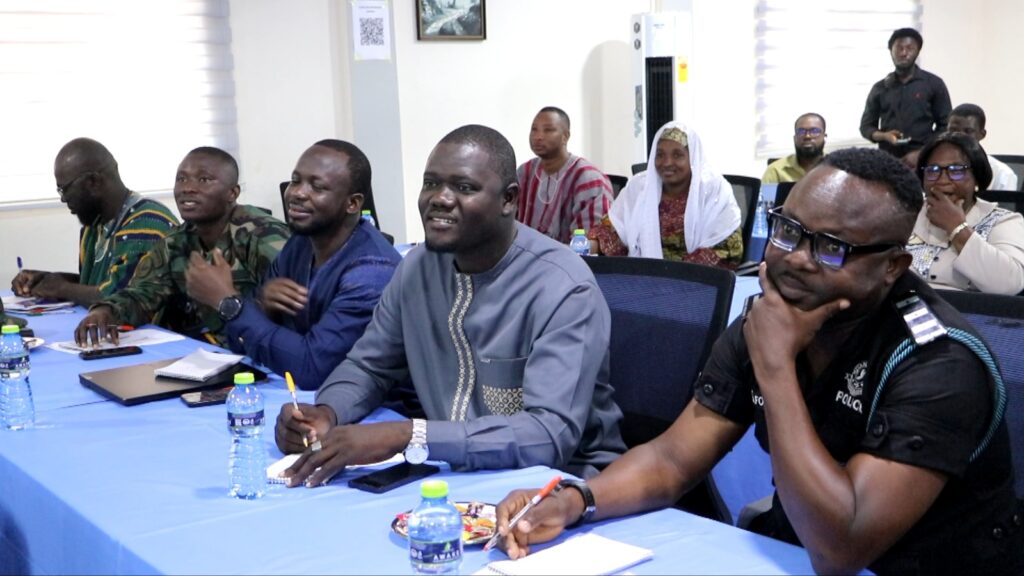
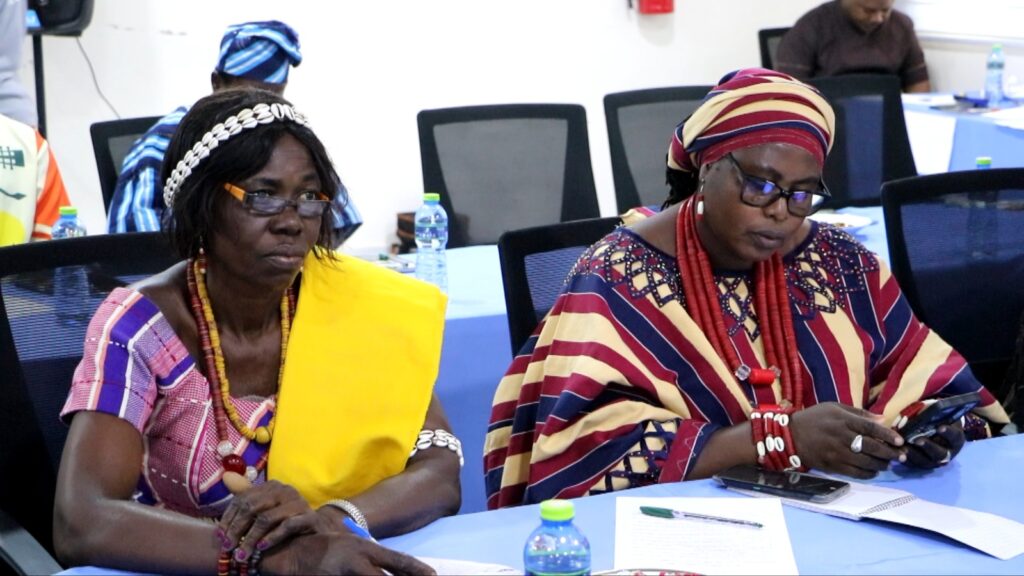
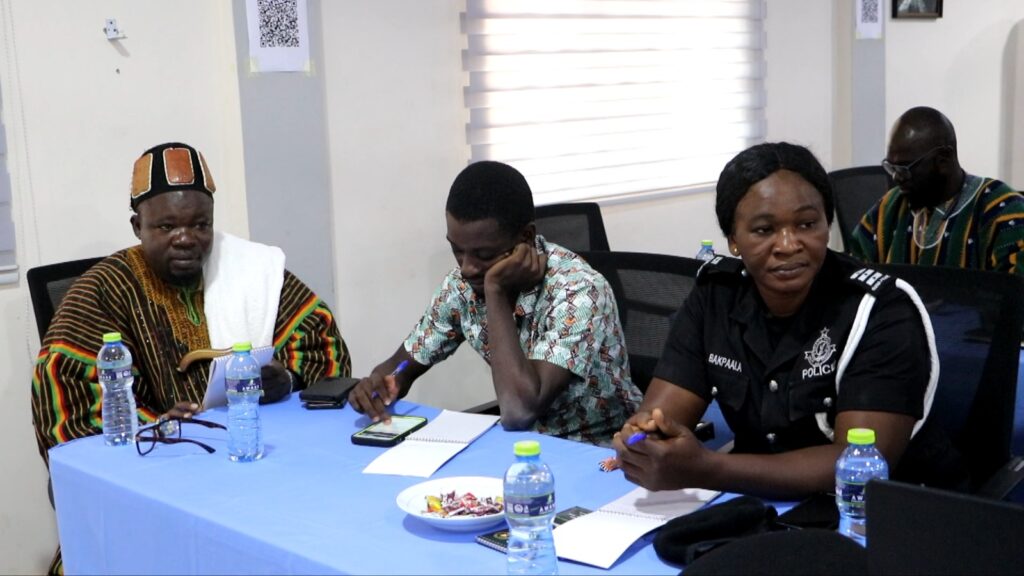
The workshop, held under the project “Strengthening Civilian-Security Trust and Community Resilience for Preventing Violent Extremism Programme,” brought together 45 participants from diverse backgrounds in Wa.
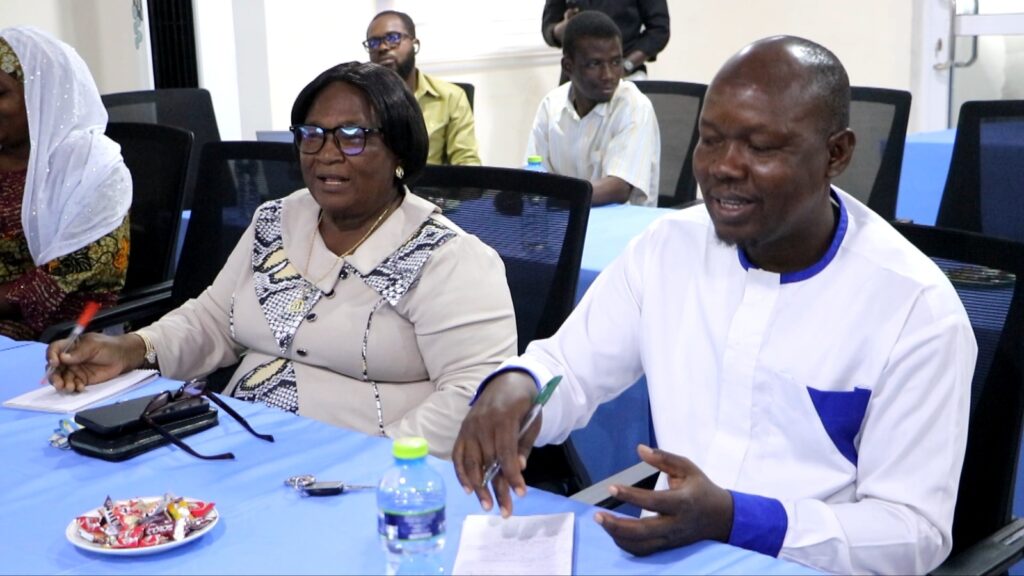
Participants included officers from state security agencies, local government officials, traditional rulers, religious leaders, civil society organisations, youth groups, persons with disabilities and representatives from the Fulbe community.
The initiative comes at a critical juncture, with spillover threats from neighbouring Burkina Faso, Mali and Togo highlighting the vulnerability of border communities in northern Ghana.
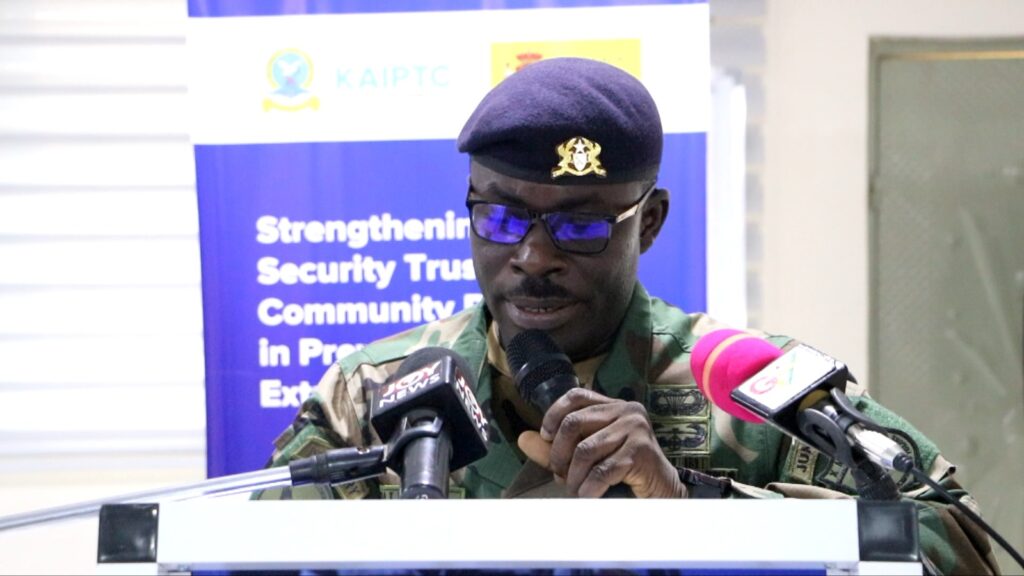
Delivering opening remarks on behalf of the Commandant of KAIPTC, the Commanding Officer of the 10 Mechanised Battalion, Lt. Col. James Bampoe Palmer, underscored that military hardware and technical training alone cannot safeguard the peace.
“Training and technical capacity are important, but they are not enough. Effective prevention depends fundamentally on relationships,” Lt. Col. Palmer noted.
“It depends on whether communities trust the institutions responsible for their protection, whether citizens feel able to share information, and whether both sides see security as a shared responsibility rather than the burden of one institution alone.”
Lt. Col. Palmer noted that sustainable prevention takes root when communities develop resilience against extremist narratives, when youth have faith in state institutions, and when marginalised groups are actively included in local decision-making.
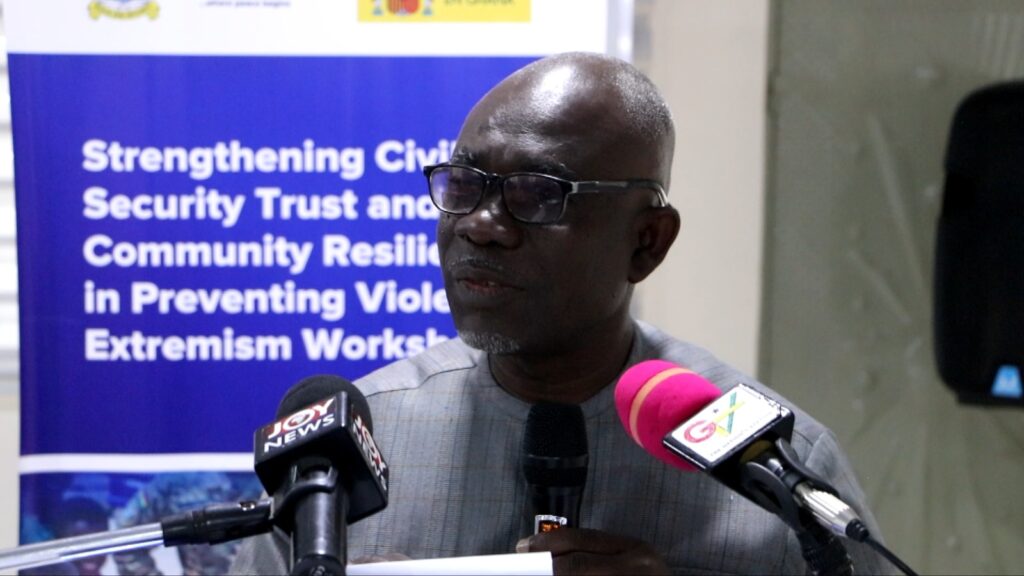
Backing this call, the Director of Conflict Management and Resolution at the National Peace Council, Frank Wilson Bodza, pointed out that the civilian population serves as a frontline intelligence asset for the security apparatus.
“Security is not only in the hands of the uniformed personnel, but also in the civilians who serve as the ears and the mouth within the communities. Through them, security agencies gather intelligence, analyse data, and take informed actions,” Mr Bodza stressed.
Mr Bodza outlined three core deliverables expected from the rollout, which will span the Upper West, Savannah, North East and Upper East Regions. These include training cohorts capable of facilitating local community engagements, crafting localised regional security action plans, and entrenching a lasting preventive mechanism.
“By the strength of our strategic policies and collaboration between government, security agencies, and civilians, thank God, we have been able to prevent any attacks so far. We believe this preventive stage must remain forever; we should never move beyond it,” Mr Bodza added.
The dialogue quickly transitioned into a candid appraisal of operational realities on the ground, with community representatives challenging security commanders over alleged misconduct, procedural negligence and broken whistleblower protections.
A participant raised concerns over border management at Dikpe, an approved crossing point along the Black Volta in the Lawra Municipality. She recounted witnessing an unassisted, fatigued immigration officer allegedly asleep on duty while commuters crossed unvetted on boats over neglected access roads.
A representative of the local Fulbe community alleged persistent extortion of cattle traders by highway police patrols along the Jirapa–Han route. He stated that pastoralists returning from livestock markets had been coerced into surrendering sales proceeds, deterring members of the community from trusting or sharing intelligence with the police.
In another submission, Ibrahim Sani, an informant living with a physical disability, shared how his cover was compromised after he reported an illegal firearm dispute at Fongu to military personnel.
Mr Sani stated that despite initial military intervention, a police CID investigator subsequently divulged his identity to the suspect's family, placing him at immediate risk.
Other participants cautioned against the cultural misuse of the local maxim “Ti Zaabu Yeni” (“we are one”), which community influencers frequently invoke to shield criminal suspects from prosecution.
Addressing the assembly, commanders and agency leads responded directly to the infractions raised.
Regional Public Relations Officer of the Ghana Immigration Service, Ibn Yussif Duranah Seidu, condemned sleeping on duty as an indefensible breach of professional ethics and assured participants that disciplinary sanctions would apply.
While rejecting claims of systemic single-officer deployments, he urged citizens to utilise the “See Something, Say Something” framework to report dormant posts directly to sector commanders.
On Fulbe outreach, he affirmed the GIS's readiness to engage pastoralists, clarifying that the service had previously declined an engagement requested under a partisan political banner rather than a community-wide coalition.
Staff Officer to the Upper West Regional Police Commander, DSP Michael Toya, alongside senior command officers, expressed dismay over the extortion allegations along the Jirapa–Han corridor.
They emphasised that extortion carries immediate dismissal and referral to the Police Intelligence and Professional Standards (PIPS) Bureau under the direction of Regional Commander DCOP Francis Yiribaare.
DSP Toya urged motorists and traders to note the embossed name tags of offending officers to enable swift administrative sanctions.
Addressing Ibrahim Sani's ordeal, the military command extended an apology for inappropriate remarks made by patrol personnel during the Fongu intervention, explaining that operational frustrations over false alarms often prompt unguarded statements.
Both police and military heads pledged closer scrutiny of investigators' conduct and urged whistleblowers to safeguard operational secrecy.
ASP Alhaji Seidu reassured residents that concerns over serial murders in the municipality had been resolved following the arrest, prosecution and life imprisonment of the culprit responsible for the Wa and Savannah Region homicides.
He added that early business curfews on mobile money vendors were temporary, consultative safeguards introduced while night patrols were scaled up.
Concluding the deliberations, the Executive Director of the Centre for Capacity Enhancement and Community Support (CAPECS Ghana), Abu Alhassan, called for formalised, institutionalised early warning networks.
Mr Alhassan noted that chieftaincy disputes, land disagreements and hate speech often simmer openly before turning violent.
“What works is institutionalising robust community early warning structures. With donor-backed tracking systems, trained community monitors can spot emerging conflict triggers early enough for peace councils and law enforcement to intervene before situations escalate,” Mr Alhassan noted.
The workshop concluded with commitments to draft a localised Upper West Regional Action Plan to formalise intelligence sharing, protect whistleblowers and reinforce civilian resilience against extremist radicalisation.
Latest Stories
-
Emmanuel City crowned champions of maiden Global Game Scouting Tournament
4 minutes -
Thomas Partey loses father Jacob Teye Partey
17 minutes -
Martin Kpebu explains when EOCO can arrest Manhyia South MP after securing court warrant
35 minutes -
EOCO’s reasons for seeking Manhyia South MP arrest warrant not justified – Kpebu
38 minutes -
MTN Ghana warns SMEs against sharing PINs amid digital fraud risks
40 minutes -
Yendi nursing students warn restricted access to skills lab could affect their training
40 minutes -
Minority awaits formal notice of arrest warrant for Manhyia South MP – Annoh-Dompreh
43 minutes -
LTIF announces 2026 Pan-African edition in Accra from October 6-7
43 minutes -
Mfantsipim needs broader funding partnerships to bridge infrastructure gap – Prof Baiden
44 minutes -
MP status must not shield anyone from law enforcement – Kwakye Ofosu
53 minutes -
EOCO had tactical team ready to arrest Baffour Awuah – Felix Kwakye Ofosu
1 hour -
Afoko can unite NPP’s factions, says Charles Owusu Juanah
1 hour -
Guardiola backing Man City after guilty verdicts
2 hours -
Annoh-Dompreh questions EOCO’s claim that Manhyia South MP was unavailable for questioning
2 hours -
Djokovic wins first match since Wimbledon at China Open
2 hours