

Audio By Carbonatix
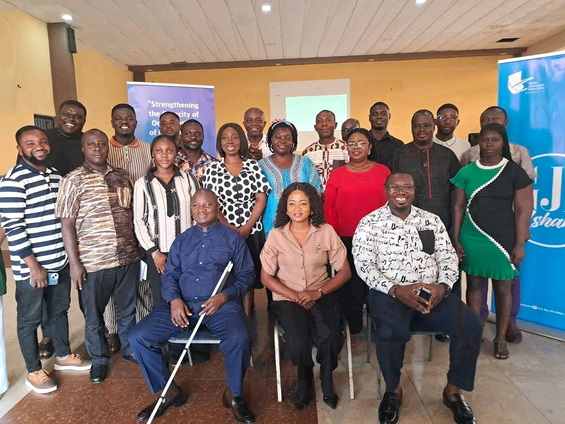
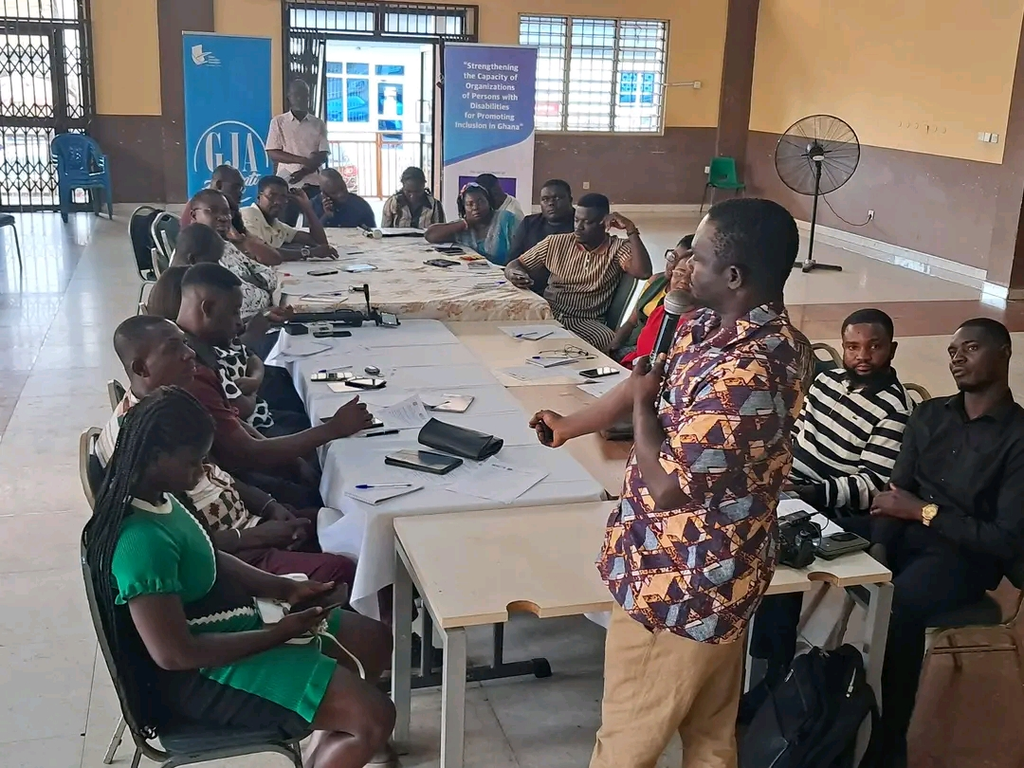
The Mental Health Society of Ghana (MEHSOG) and the Ghana Federation of Disability Organisations (GFD) have held a media capacity-building workshop aimed at promoting effective and inclusive reporting on disability.
The workshop, supported by the Ashanti Regional branch of the Ghana Journalists Association (GJA), was held under the theme "Effective Media Reporting on Disability: Promoting Economic Justice and Inclusion through Responsible Journalism." It forms part of the project "Strengthening the Capacity of Organisations of Persons with Disabilities for Promoting Inclusion in Ghana," which is funded by the European Union.
The Executive Director of the Ghana Federation of Disability Organisations (GFD), Peter Anomah-Kordieh, underscored the critical role of the media in advancing the welfare and rights of persons with disabilities.
According to him, the media remains a strategic partner in advocating for inclusion, as it helps to amplify the concerns of persons with disabilities and educate the public on the need to remove barriers that hinder their full participation in society.
"The media plays a very critical role in our work. They amplify the issues of persons with disabilities in the country, so we always encourage and partner with them to project our issues," he said.
He explained that such partnerships are essential to highlight pressing challenges, including the high number of persons with disabilities who remain out of school, face discrimination in the job market, or struggle to access inclusive and accessible health services.
Mr. Anomah-Kordieh noted that sensitising employers, health facilities and other public institutions on disability inclusion is crucial to achieving economic justice and equal opportunities.
He said while the media generally reports with good intentions, the inappropriate use of language often undermines the dignity of persons with disabilities.
He explained that person-first language has become the global standard in disability reporting. Terms like "disabled people" or "disabled person" are discouraged because they define individuals solely by their disability, while "persons with disabilities" is preferred because it recognises their humanity first.
"We are human beings first before our disability, so we prefer to be called 'persons with disabilities'," he said.
He further clarified that the phrase "persons living with disabilities" is inaccurate because disability is not a disease or medical condition one lives with, and that the use of "normal people" to describe persons without disabilities is inappropriate because it implies persons with disabilities are abnormal.
He therefore urged journalists to be more conscious of their choice of words and to adopt inclusive, respectful and dignified terminologies in their reportage.
The workshop was structured to deliver six key outputs, including deepening understanding of rights-based and disability-inclusive reporting, encouraging the use of appropriate disability terminology, and highlighting economic justice concerns affecting persons with disabilities.
It was also expected to provide participants with a practical understanding of the Guidelines for Media Reporting on Disability in Ghana.
Addressing participants, the Chairman of the Ashanti Regional Ghana Journalists Association, Mr. Kofi Adu Domfeh, said the training was crucial to move the conversation on inclusion from rhetoric to practical action.
He noted that the media has the power to either reinforce negative stereotypes about persons with disabilities or to challenge them by highlighting their dignity, abilities and contributions to society.
The Chairman of the Ashanti GJA observed that disability is often portrayed through charity, vulnerability and dependency, rather than from a rights-based perspective that focuses on opportunity, participation and equal citizenship, underscoring the need for a paradigm shift.
He urged journalists to be more intentional about inclusivity, including in policy reporting, and to ensure that persons with disabilities are featured not just as subjects but as active voices and expert sources in stories that affect them.
"The Ghana Journalists Association therefore encourages media practitioners to give greater visibility to the voices and experiences of persons with disabilities. We must ensure that they are not merely subjects of stories, but active participants in the conversations that affect their lives," Mr Domfeh emphasised.
He said the workshop offers an opportunity for journalists to re-examine their language choices, adopt person-first and rights-based terminologies, and ensure that media coverage promotes dignity, respect and inclusion for all.
He therefore called on disability organisations to strengthen their engagement with the media by providing credible data, compelling human-interest stories and access to their members.
"This also requires building the capacity of journalists to report disability issues responsibly. We need more accurate, inclusive and solutions-oriented reporting that examines barriers to education, employment, healthcare, political participation, accessibility and economic empowerment"
He pledged the commitment of the Ashanti GJA to working with relevant stakeholders to promote journalism that advances inclusion, dignity and social justice.
Mr. Domfeh said the Association will continue to collaborate with disability organisations, civil society and development partners to ensure that media practice in the region contributes to building an inclusive society where no one is left behind.
A Senior Lecturer at the Department of Health Promotion, Education and Disability Studies at the Kwame Nkrumah University of Science and Technology (KNUST), Dr. Enoch Acheampong, led a session on participation barriers, focusing on health and social inclusion.
He said persons with disabilities continue to face significant communication, attitudinal and physical barriers that hinder their access to healthcare, education and public infrastructure.
According to him, many health facilities in the country are not disability-friendly, leaving persons with disabilities to struggle to access essential services.
"When you go to the hospital with your condition, there is often a communication barrier between you and the health practitioner. For instance, if you are deaf, how do you communicate when there is no sign language interpreter available?" he asked.
He cited the example of visually impaired persons who are unable to read handwritten dosage instructions, such as 0-0-0 or 1-0-1, commonly written on drug envelopes, a situation he said could have serious health implications.
"As a country, we need to take a critical look at our healthcare system. The communication barriers and physical barriers that persons with disabilities face must be addressed," he said.
Dr. Acheampong further noted that inaccessible physical infrastructure, including buildings without ramps and information not available in accessible formats, continues to exclude persons with disabilities from full participation in society.
He also addressed harmful misconceptions about the sexuality and reproductive rights of persons with disabilities, including the false belief that they are asexual or incapable of having relationships.
He said such misconceptions not only deny persons with disabilities their right to love, marriage and family life but also contribute to their exclusion from sexual and reproductive health information and services.
He therefore urged journalists to use their platforms to help demystify these misconceptions, challenge stigma and educate the public on the rights of persons with disabilities to marriage, family life and full social inclusion.
Organisers and facilitators of the training expressed optimism that the workshop will enhance accurate, inclusive and solutions-oriented reporting on disability issues in Ghana.
They noted that equipping journalists with the right knowledge and terminologies will help challenge stereotypes and improve the quality of reportage, while deepening collaboration between the media and disability organisations to advance economic justice and full inclusion.
Latest Stories
-
Mahama recounts ‘exhausting and frustrating’ struggle to find home as young spouse
5 minutes -
‘Take damaged banknotes to commercial banks for replacement’ – BoG warns against repairing cedi notes for resale
12 minutes -
Lebanon’s Hezbollah gets $200 million from Iran to help displaced, sources say
12 minutes -
Bisa Kdei to launch annual Highlife music event ‘The Convention’
13 minutes -
BoG cautions public against digital financial fraud, ‘double-your-money’ schemes
13 minutes -
WPL 2026/27: Ampem Darkoa Ladies to start title defence against Northern Ladies
25 minutes -
WPL 2026/27: Hasaacas Ladies face Army Ladies in opening round as GFA announce Southern Zone fixtures
37 minutes -
Eduwatch calls for urgent resolution of teachers’ strike and reforms
38 minutes -
Media worker, journalist remanded over alleged GH¢800k fraud
40 minutes -
Safeguard all personal, financial information, including Mobile Money PINs, ATM PINs – BoG to general public
42 minutes -
Gov’t launches roadmap to implement Social Protection Act, Regulations and Affirmative Action Regulations
42 minutes -
Photos: Pete Edochie meets GoldBod CEO Sammy Gyamfi over African youth mentorship initiative
44 minutes -
Black Maidens: Ghana’s envious record at U-17 Women’s World Cup ahead of seventh appearance
56 minutes -
BoG cautions public against 20 unlicensed mobile loan apps
1 hour -
Mahama urges tougher enforcement of building regulations over recent collapses
1 hour