

Audio By Carbonatix
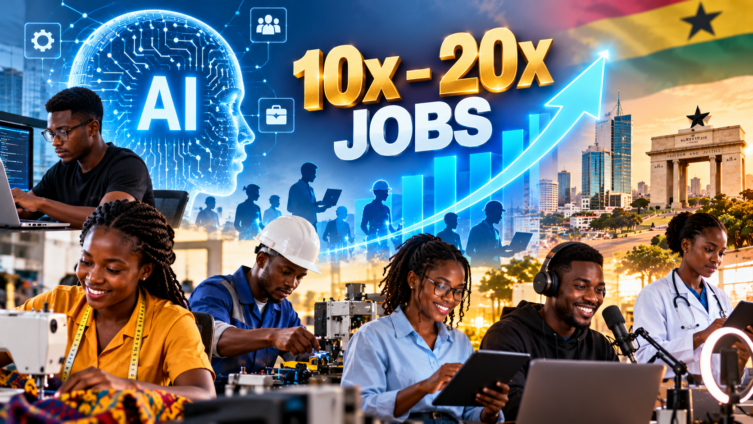
The Chief Executive Officer of Hubtel, Alex Bram, has projected that artificial intelligence (AI) could eventually create 10 to 20 times more jobs, despite growing concerns about the technology displacing workers and making it harder for young graduates to secure employment.
He believes the current disruption to businesses and the labour market will be temporary, arguing that human creativity, changing consumer demands and companies' desire to expand will create new employment opportunities as the technology becomes more widely adopted.
“It's temporary, I think. It's very temporary. We're going to end up creating 10 times, 20 times more jobs,” he predicted.
Speaking in an interview ahead of the second episode of the Digital Economy Forum, Mr. Bram acknowledged that AI is already affecting recruitment and forcing businesses to reconsider how they operate.
He warned that graduates entering the job market could face particular difficulties because AI systems can now perform some of the routine, knowledge-based tasks traditionally assigned to entry-level employees.
“So, yes, some people are going to find it very difficult to find work, especially entry-level jobs in very formal environments,” he said.
He explained that information acquired through formal education is increasingly accessible through AI systems, allowing employers to undertake certain tasks without necessarily recruiting additional workers.
However, the Hubtel CEO maintained that the resulting disruption should not be mistaken for a permanent decline in employment opportunities.
“I think in the end AI is going to create a lot more jobs. The reason I say that is three things. The first thing is that as humans, we are extremely creative,” he explained.
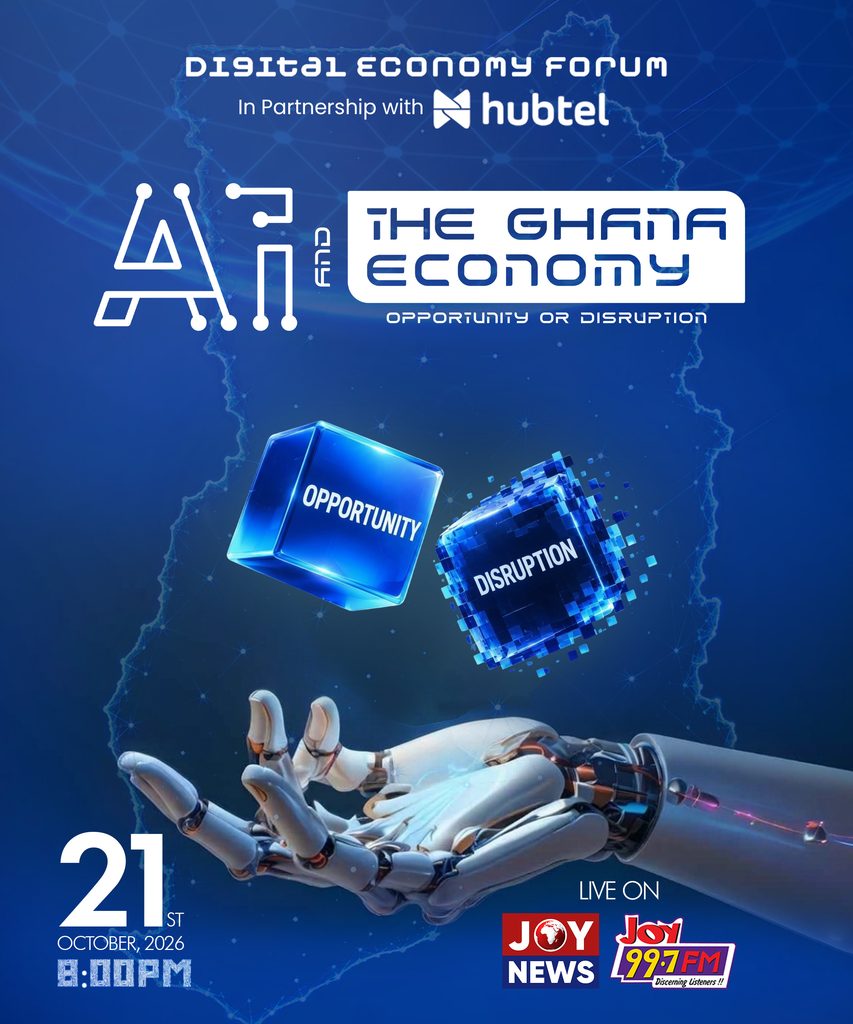
The opportunities and potential disruptions associated with artificial intelligence will form part of discussions at the second episode of the Digital Economy Forum, under the theme “AI and the Ghana Economy: Opportunity or Disruption?”
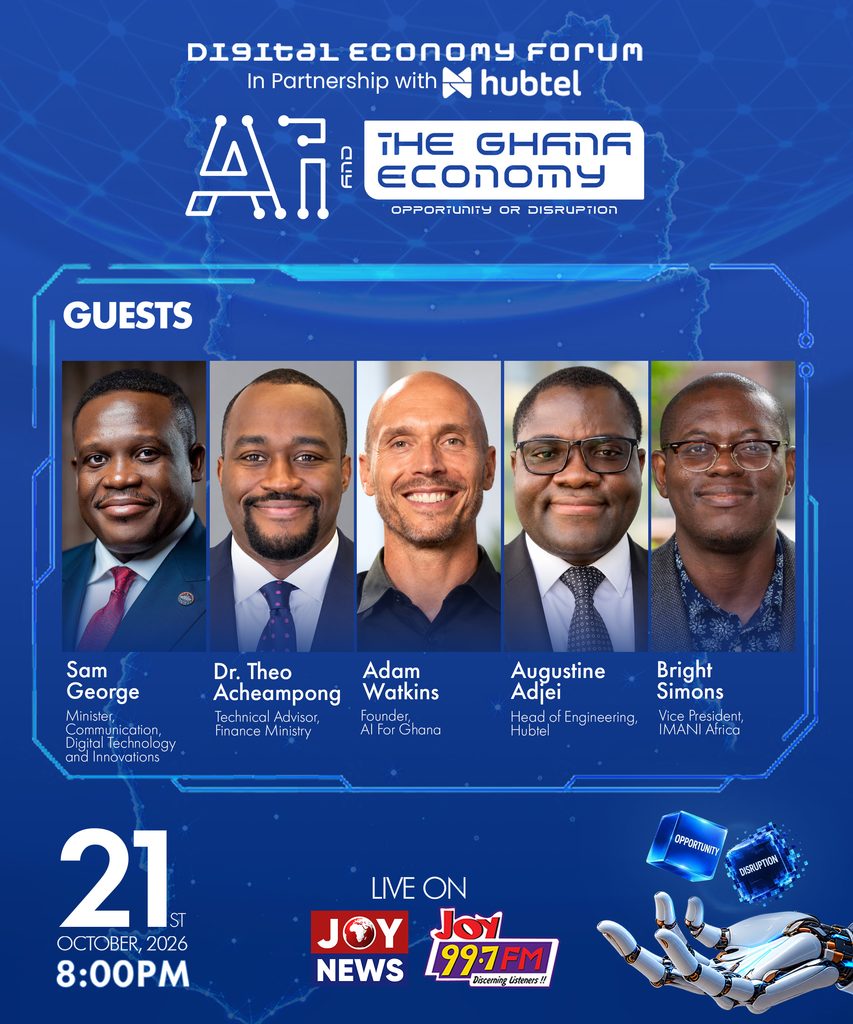
The forum, held in partnership with Hubtel, will feature the Minister for Communication, Digital Technology and Innovations, Sam George; Technical Advisor at the Finance Ministry, Dr Theo Acheampong; Founder of AI for Ghana, Adam Watkins; Head of Engineering at Hubtel, Augustine Adjei; and Vice President of IMANI Africa, Bright Simons.
It will air live on JoyNews and Joy 99.7 FM on Wednesday, October 21, 2026, at 8 p.m.
Hubtel feels the disruption
Drawing on his company's experience, Mr. Bram disclosed that Hubtel, which employs approximately 700 people, has not recruited new staff for nearly a year as it restructures its operations to take advantage of artificial intelligence.
The company began experimenting with AI in 2022 and established an AI laboratory in 2023. Since then, the technology has significantly influenced its operations.
“We haven't recruited any new staff for about almost a year now. We're restructuring quite a number of things because we can do certain things faster, better, when we are augmented with AI,” he revealed.
Mr. Bram acknowledged that the changes could create uncertainty among employees as the company reviews existing processes and the responsibilities of its workforce.
He explained that Hubtel is working to help employees adjust to the changing workplace, including changes within its engineering operations to focus more on productivity.
“People need to change their roles, what they do on a day-to-day basis. We need to help people transition into this new era,” he said.
While the company has experienced a slowdown in recruitment, Mr Bram did not disclose any layoffs resulting from AI adoption.
He insisted that businesses would ultimately find new opportunities to expand their operations as the technology improves productivity.
Why AI could create more jobs
Explaining his optimism, Mr. Bram identified three factors he believes will sustain employment creation in an AI-driven economy.
The first is human creativity, which he argues will continue to produce new ideas, products and services that technology alone cannot exhaust.
The second is the continuous evolution of human needs and consumer preferences.
“We have enormous and endless desires as humans, which is like we're never satisfied,” he explained.
He argued that these changing demands would encourage entrepreneurs and businesses to develop new products and services, creating further economic opportunities.
His third argument is that successful businesses are primarily motivated by growth, profitability and market expansion rather than simply reducing their workforce.
“Every company I know competes on how much profit you can make, how many more people you can serve, how much dominance you can exercise on the market. You want to win. Every company is strategising to win,” he said.
Mr. Bram used Hubtel as an example, arguing that drastically reducing its workforce would not necessarily position the company to become a dominant digital services provider.
He believes that although some organisations may initially reduce costs or restructure their operations, the long-term economic opportunities presented by AI could encourage businesses to expand into new areas.
The CEO did not provide a specific timeline or supporting employment projections for his expectation that AI could create 10 to 20 times more jobs. The figure reflects his outlook on the technology rather than an independently established forecast.
Workers must adapt
Despite his optimism, Mr. Bram cautioned that workers and professionals would have to reconsider how they deliver value as artificial intelligence becomes more accessible.
He identified doctors, lawyers and accountants among professionals whose traditional ways of working could be significantly affected.
According to him, AI is making specialised information more widely available, meaning professionals can no longer rely exclusively on knowledge that clients previously found difficult to access.
He argued that the emphasis must increasingly shift towards using that knowledge to deliver better outcomes for clients.
For example, he suggested that lawyers could focus more on reviewing agreements, offering expert guidance and representing clients, even as AI tools make it easier for individuals to prepare basic legal documents.
He believes businesses must also redesign their processes to allow employees to work effectively alongside AI rather than treating the technology solely as a replacement for human labour.
Opportunities for Ghana
Looking ahead, Mr. Bram expressed confidence that Ghana could benefit considerably from artificial intelligence if the country develops the necessary skills, infrastructure and policies.
He envisages a future in which young Ghanaians use AI to improve manufacturing, agriculture, design and other productive sectors.
“I want to see more Ghanaians be better designers, be better manufacturers, be better farmers, be better agro-processors,” he said.
He believes the technology could help businesses and individuals find solutions to longstanding challenges, improve productivity and accelerate national development.
Latest Stories
-
South Korea to support Ghana’s forts and castles restoration with $4.5m over five years
13 seconds -
Ashanti Region to get second Passport Application Centre by 2027
4 minutes -
School headscarf ban sparks rare protests in Azerbaijan and row with Turkey
9 minutes -
Ghana explores underwater sightseeing and shipwreck tourism
9 minutes -
Association of Women Lawyers calls for national sexual offenders register to protect school children
11 minutes -
Soaring commodity prices influenced our 2026 revised growth forecast of 5.7 % for Ghana – IMF
13 minutes -
Government urged to recruit more speech therapists to support children with language disorders
15 minutes -
Chef Abbys: Feeding 50,000 people, putting food security on Ghana’s agenda
44 minutes -
Ho set to host Republic Bank–JoyNews Habitat Fair as multiple firms prepare to showcase housing solutions
51 minutes -
NPP demands public inquiry into alleged $600,000 World Cup visa fraud, wants Sports Minister, GTA CEO summoned
58 minutes -
I want my brand to be bigger than just music – Yaw Wazinga
1 hour -
Houthi missile attack on Yemeni presidential palace kills two, minister says
1 hour -
I hoped to win an award; I worked hard – 2026 Best Graduating Law Student
1 hour -
Fraudsters increasingly target bank customers instead of banking systems – Fraud detection expert
1 hour -
44 teacher sexual abuse cases tracked since 2015; school heads feature in 40% of recent cases — JoyNews Research
1 hour