

Audio By Carbonatix
The Law Students’ Network (LSN) has warned that Ghana’s ongoing constitutional review risks an institutional conflict of interest because the executive arm of government retains significant control over decisions on proposed reforms that could limit its own powers.
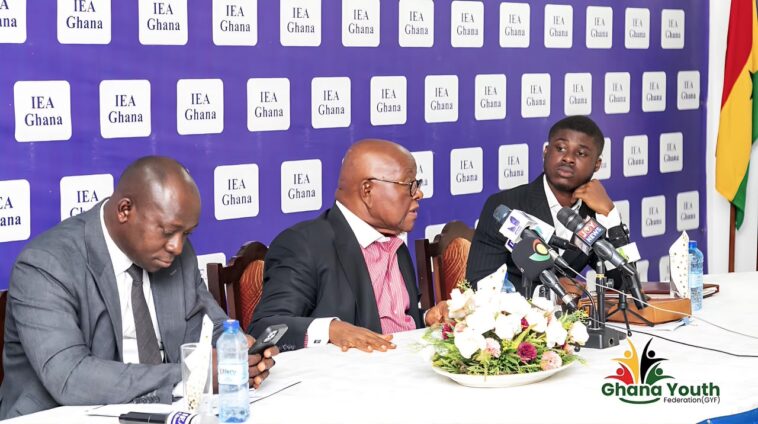
LSN President Abraham Kwaku Gyasi raised the concern at a roundtable organised by the Institute of Economic Affairs (IEA) at its Dialogue Centre in Accra on Tuesday, October 13, 2026.
The forum examined the Constitution Review Committee’s report, chaired by Professor H. Kwasi Prempeh, and the government’s response to its recommendations.
In a paper presented at the meeting, the network acknowledged that the government was entitled to assess the committee’s proposals because its report was advisory rather than binding.
However, it argued that concerns arise when an institution whose powers are under review also has the dominant role in deciding which restrictions should be implemented. The LSN said this was particularly significant where proposals to limit presidential appointment powers or strengthen independent oversight had been rejected.
The network also questioned the government’s plan to introduce two bills to implement the proposed reforms, with one covering non-entrenched provisions and the other addressing entrenched provisions that require a referendum.
It warned that rushing the drafting and parliamentary consideration of the bills could limit public scrutiny of contentious changes. “Constitutional reform must not become an exercise in legislative speed at the expense of democratic legitimacy,” the paper stated.
The LSN said the process should reflect Article 1(1) of the 1992 Constitution, which vests sovereignty in the people. It also referred to figures cited in an assessment by the opposition New Patriotic Party (NPP), which identified 22 recommendations as fully accepted and 25 as partially accepted out of 147 examined, while acknowledging that the methodology behind the figures remained open to scrutiny.
Despite its reservations, the network welcomed the government’s acceptance of several proposed reforms, including the establishment of an Independent Public Emoluments Commission, the abolition of the death penalty and measures aimed at strengthening the independence of certain public institutions.
Other panellists at the forum included Titus Owusu Darko of the National Union of Ghana Students and Sharif Ghali of the Ghana Youth Federation. Former Speaker of Parliament and IEA Distinguished Fellow, Professor Aaron Mike Oquaye, delivered the opening and closing remarks, while Dr William Kofi Osew moderated the discussion.
Latest Stories
-
12-year-old boy found dead in muddy pit at Opeikuma
1 minute -
GHS begins Yellow Fever vaccination campaign in three Upper West districts
2 minutes -
Organised Labour pushes for higher 2027 base pay despite slowing inflation
4 minutes -
Parliament’s Human Rights Committee demands swift justice in Obuasi SHTS sexual abuse case
14 minutes -
From Campaign Propaganda to Gov’t Accountability: When the message-makers demand a seat at the table
33 minutes -
Ashanti Region Security Coordinator warns sand winners to stay off Accra–Kumasi Expressway site
37 minutes -
PZ Cussons Ghana promotes hand washing among schoolchildren through Camel campaign
1 hour -
30 NDC aspirants file nominations in Upper West as regional election approaches
1 hour -
UPSA launches laptop assembly plant, requiring new students to assemble their own devices
1 hour -
UCC sociologist calls for action on gender inequality to end child marriage
1 hour -
LSN questions Ghana’s proposed five-year presidential term and DCE election reforms
1 hour -
AFCON 2027Q: Black Queens Coach to lead Black Stars for Somalia doubleheader with Tanko, Attram as assistants
1 hour -
AMA completes road repairs on Kwame Nkrumah Avenue
2 hours -
Law Students’ Network warns executive dominance could undermine constitutional review
2 hours -
Mahama to meet relevant stakeholders over concerns about the new Customs Act
2 hours