

Audio By Carbonatix
A Cuban man deported by the United States to the African nation of Eswatini is on a hunger strike at a maximum-security prison, having been held there for more than three months without charge or access to legal counsel under the Trump administration’s third-country program, his U.S.-based lawyer said Wednesday.
Roberto Mosquera del Peral was one of five men sent to the small kingdom in southern Africa in mid-July as part of the expanding U.S. deportation program to Africa, which has been criticised by rights groups and lawyers, who say deportees are being denied due process and exposed to rights abuses.
Mosquera’s lawyer, Alma David, said in a statement sent to The Associated Press that he had been on a hunger strike for a week and there were serious concerns over his health.
“My client is arbitrarily detained, and now his life is on the line,” said David. “I urge the Eswatini Correctional Services to provide Mr. Mosquera’s family and me with an immediate update on his condition and to ensure that he is receiving adequate medical attention. I demand that Mr. Mosquera be permitted to meet with his lawyer in Eswatini.”
Mosquera was among a group of five men from Cuba, Jamaica, Laos, Vietnam and Yemen deported to Eswatini, an absolute monarchy ruled by a king who is accused of clamping down on human rights. The Jamaican man was repatriated to his home country last month, but the others have been kept at the prison for more than three months while an Eswatini-based lawyer has launched a case against the government demanding they be given access to legal counsel.
Civic groups in Eswatini have also taken authorities to court to challenge the legality of holding foreign nationals in prison without charge. Eswatini said the men will be repatriated but have given no timeframe for any other repatriations.
U.S. authorities said they want to deport Kilmar Abrego Garcia to Eswatini under the same program.
The men sent to Eswatini were criminals convicted of serious offenses, including murder and rape, and were in the U.S. illegally, the U.S. Department of Homeland Security said. It said Mosquera had been convicted of murder and other charges and was a gang member.
The men’s lawyers said they had all completed their criminal sentences in the U.S. but are now being held illegally in Eswatini, where they have not been charged with any offense.
The Department of Homeland Security has cast the third-country deportation program as a means to remove “illegal aliens” from American soil as part of President Donald Trump’s immigration crackdown, saying they have a choice to self-deport or be sent to a country like Eswatini.
The Trump administration has sent deportees to at least three other African nations since July under largely secretive agreements: South Sudan, Rwanda and Ghana. It also has a deportation agreement with Uganda, although no deportations there have been announced.
International rights group Human Rights Watch said it has seen documents that show that the U.S. is paying African nations millions of dollars to accept deportees. It said the U.S. agreed to pay Eswatini $5.1 million to take up to 160 deportees and Rwanda $7.5 million to take up to 250 deportees.
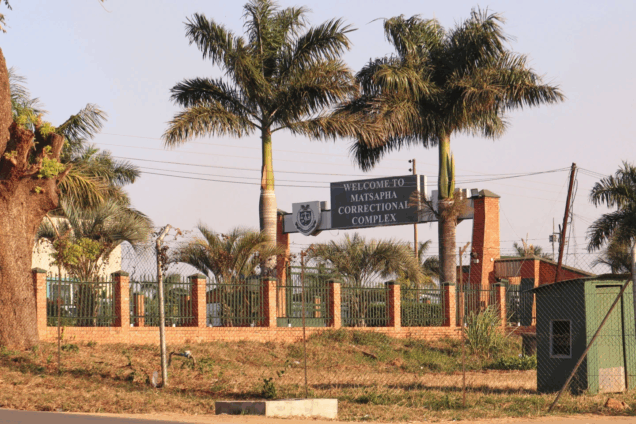
Another 10 deportees were sent to Eswatini this month and are believed to be held at the same Matsapha Correctional Complex prison outside the administrative capital, Mbabane. Lawyers said those men are from Vietnam, Cambodia, the Philippines, Cuba, Chad, Ethiopia and Congo.
Lawyers say the four men who arrived in Eswatini on a deportation flight in July have not been allowed to meet with an Eswatini lawyer working there as their legal counsel, and phone calls to their U.S.-based lawyers are monitored by prison guards. They have expressed concern that they know little about the conditions in which their clients are being held.
“I demand that Mr. Mosquera be permitted to meet with his lawyer in Eswatini,” David said in her statement.
“The fact that my client has been driven to such drastic action highlights that he and the other 13 men must be released from prison. The governments of the United States and Eswatini must take responsibility for the real human consequences of their deal.”
Latest Stories
-
Ghana Russia Centre signs ICT cooperation agreement with Moscow University
3 minutes -
The powerhouses of the village: Honouring Ghana’s rural women on International Rural Women’s Day
4 minutes -
Vincent Assafuah petitions CHRAJ to investigate alleged irregularities in 2026 World Cup visa arrangements
4 minutes -
12-year-old boy found dead in muddy pit at Opeikuma
6 minutes -
GHS begins Yellow Fever vaccination campaign in three Upper West districts
7 minutes -
Organised Labour pushes for higher 2027 base pay despite slowing inflation
9 minutes -
Parliament’s Human Rights Committee demands swift justice in Obuasi SHTS sexual abuse case
19 minutes -
From Campaign Propaganda to Gov’t Accountability: When the message-makers demand a seat at the table
37 minutes -
Ashanti Region Security Coordinator warns sand winners to stay off Accra–Kumasi Expressway site
42 minutes -
PZ Cussons Ghana promotes hand washing among schoolchildren through Camel campaign
1 hour -
30 NDC aspirants file nominations in Upper West as regional election approaches
1 hour -
UPSA launches laptop assembly plant, requiring new students to assemble their own devices
1 hour -
UCC sociologist calls for action on gender inequality to end child marriage
1 hour -
LSN questions Ghana’s proposed five-year presidential term and DCE election reforms
1 hour -
AFCON 2027Q: Black Queens Coach to lead Black Stars for Somalia doubleheader with Tanko, Attram as assistants
1 hour