


Audio By Carbonatix
What seemed like a usual downpour of torrential rains took a drastic turn on 29th June 2026. The scenes across the southern parts of Ghana, particularly Accra, Tema, Keta, and other environs, were nothing short of heartbreaking. We witnessed not only the destruction of homes and the tragic loss of lives but also the crippling of businesses. Warehouses have been emptied by floods - and, unfortunately, by looters – flood waters have taken over farms, and major thoroughfares have become impassable. For many Micro, Small, and Medium Enterprises (MSMEs), which form the backbone of the Ghanaian economy, these floods are an existential threat.
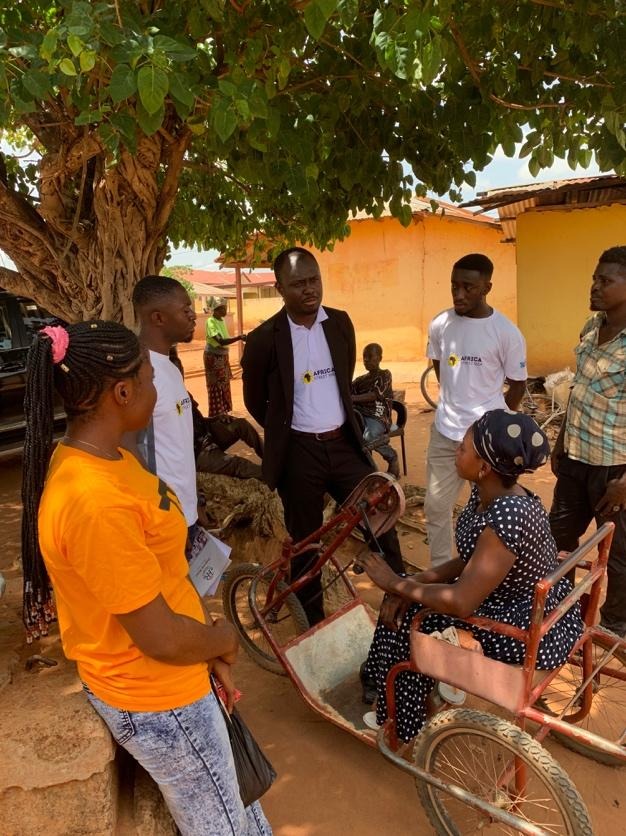
Indeed, for far too long, businesses in the southern part of Ghana have been trapped in a gruelling cycle of disruption, loss, and laborious recovery, an exhausting pattern dictated by the recurring floods that strike our beloved country year after year. This perennial cycle of react and repair is not a sustainable operational model; it is a profound drain on capital, morale, and long-term stability. The critical question remains: how long can our enterprises continue to absorb these recurring shocks before the damage becomes irreversible? The solution lies in shifting our focus from passive reaction to proactive business resilience. By embedding robust management systems, disaster recovery protocols, and financial safeguards into the core of our operations, businesses can transform their stance from vulnerable to impervious. True resilience ensures that when the next inevitable flood occurs, it is perceived as a manageable hurdle rather than a catastrophic event, allowing businesses to maintain operations, trade through the disruption, and emerge with their continuity intact.
However, if we view business resilience solely through the lens of natural disasters, we will miss the broader, more volatile reality of doing business in Ghana. This is because the average Ghanaian entrepreneur navigates a labyrinth of shocks that have a similar impact on businesses, just like the floods. These include currency fluctuations that erode profit margins, high costs of borrowing that reduce profitability, increase operational costs, and limit access to capital, among others. We have also seen how global events like the COVID-19 pandemic, or localised failures - such as the recent undersea fibre-optic cable cuts that disrupted internet connectivity and continuous blazing of markets by avoidable fires - can instantly halt operations.
Building resilience is no longer an option for Ghanaian MSMEs; it is an absolute necessity for their survival. Because a business that can only survive in optimal conditions is living on a sharp edge, awaiting a crisis to bring it down.
Generally, the average Ghanaian businessperson views developing a resilience strategy for their business as being too expensive, time-consuming, or something meant for large businesses. Smaller businesses seem to have the viewpoint that problems should be solved as and when they occur. But this should not be the case. True resilience is not about preventing every problem - an impossible task in a world full of turbulence - but rather about developing the agility to anticipate changes, develop plans, test these plans, and allocate resources in ways that enable success irrespective of the circumstances that the business will find itself in.
For an MSME, resilience is the ability to cope with challenges and suffer minimal setbacks. It requires a shift from a mindset that seeks only to react to one that prepares for unforeseen circumstances and can identify new opportunities even while the storm is raging and the floods appear.
Building this resilience requires a comprehensive strategy that covers six foundational areas: financial buffers, risk transfer, organisational agility, management systems, technology, and the human element. For a Ghanaian MSME, resilience begins with liquidity. Because many operate hand-to-mouth, building a cash reserve is essential. Even a disciplined monthly saving towards a contingency fund can be the difference between closing permanently and surviving a month of low revenue. Furthermore, insurance - often viewed as an unnecessary expense - must be re-envisioned as a critical tool for risk transfer. Policies covering fire, flood, and business interruption provide a pathway to recovery that does not rely on high-interest loans or family and friends' charity.
To maintain a heartbeat during a crisis, MSMEs must adopt a systematic approach to business continuity. This is best achieved through protecting people, premises, processes, technology, communication, and having community ties. Regarding people, business owners should prioritise the safety and accountability of staff by creating an emergency contact list, clearly defining roles and responsibilities, and investing in cross-training to ensure operations can continue even if key personnel are unavailable. Premises and assets require careful planning; this includes identifying muster points for evacuation, arranging for backup locations, and maintaining an updated asset register. Businesses should also keep a set of digital photos of their premises and maintain contingency stock at separate sites to mitigate localised risks.
Processes and technology are equally vital for keeping data safe and trading through disruption. This means backing up data to the cloud, scanning critical documents, and identifying the primary profit-earning products and services that must be protected at all costs.
By creating a mini-business continuity plan and designing user policies, companies can ensure they are not paralysed by single points of failure. In this regard, technology should be used strategically - not as an end in itself, but as a flexible tool that maintains both online and offline capabilities. Complementing this is the need to prioritise relationships with customers and suppliers. Entrepreneurs should understand their suppliers’ continuity measures and manage customer expectations during disruptions, as well as ensure that their supplier contacts are always at hand.
Communication is the linchpin of this simplified resilience strategy. Keeping people informed requires a reliable warning system, alternative communication channels, and a designated single point of contact for emergency services. Furthermore, MSMEs must engage with their local community by maintaining close ties with assembly members, security services, and local institutions. Also, by keeping an eye on the world, monitoring the news, and being aware of hazards in the immediate locality, business owners can better anticipate shocks.
Ultimately, resilience is also an internal, cultural trait. Entrepreneurs must choose a missionary mindset over a mercenary one, as those driven by a deep sense of purpose are far more likely to weather the rollercoaster of unplanned circumstances. Cultivating emotional intelligence helps owners understand that customers value brands that remain reliable and empathetic during lean times. Finally, fostering a culture where employees feel safe reporting small problems before they accumulate into systemic failures is the hallmark of a truly resilient organisation.
By integrating these strategies, Ghanaian MSMEs can stop surviving from one disaster to the next and start building a future where they can thrive regardless of the environment.
The devastation on June 29, 2026, is a stark wake-up call. We cannot control the rain, the global price of fuel, or the stability of undersea cables. We can, however, control how our businesses respond to them.
The resilient Ghanaian MSME of the future will measure its weaknesses, invest in digital infrastructure, adopt management systems and embed continuity planning into its daily DNA. We must move away from the scramble-to-adjust model that plagues us during every crisis. Instead, let us adopt structured, proactive, and flexible systems.
Resilience is not just about survival; it is about ensuring that when the clouds clear, your business is still standing, stronger and more innovative than it was before the storm. Let us start building that resilience today, for the future of our economy depends on it.
The author is the Lead Implementer of Africa Street MBA – a social initiative that has directly empowered over 7,000 young Ghanaian entrepreneurs in 7 regions. This article is the independent view of the author and does not represent the views of individuals or corporations with which the author is associated.
Latest Stories
-
Mobile Money Fintech LTD, UMB train hairdressers and beauticians
50 minutes -
Asylum votes show people want help, says Kemi Badenoch
2 hours -
Badenoch welcomes expanded grooming gangs inquiry
2 hours -
GACL MD sues Samuel Buabeng over alleged Facebook defamation
2 hours -
Christa Pike in critical condition after surviving two lethal injections, lawyer says
2 hours -
Kemi Badenoch backs face covering ban at protest
2 hours -
Man City not ‘above the rules’, says No 10 after backlash to Burnham remarks
2 hours -
Real Madrid submit ‘substantial’ dossier in Barca payments case
3 hours -
Messi completes purchase of second Spanish club
3 hours -
Government must engage horticulturists on tomato crisis – GhIH
3 hours -
King Promise’s ‘Can’t Tame Us’ becomes official Chelsea anthem
3 hours -
Afenyo-Markin demands Baffour Awuah’s release from EOCO’s custody, end to alleged political intimidation
3 hours -
Rapper Rick Ross arrested on domestic violence charges
3 hours -
Minority demands security review of Ghana-Colombia visa waiver and port deals
3 hours -
Pursue drug kingpins, not persecute political opponents – Afenyo-Markin tells EOCO
4 hours