

Audio By Carbonatix
Africa contains more than 70 percent of the world's genetic diversity. Any AI system built to transform global healthcare that ignores that fact is, by definition, built on a flawed dataset. It will underperform. It may cause harm.
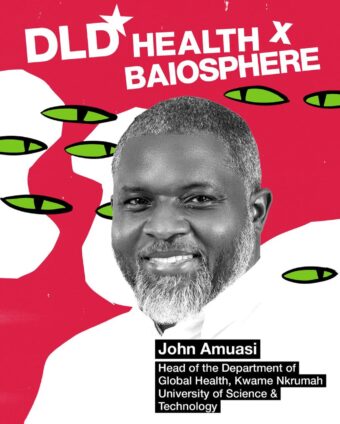
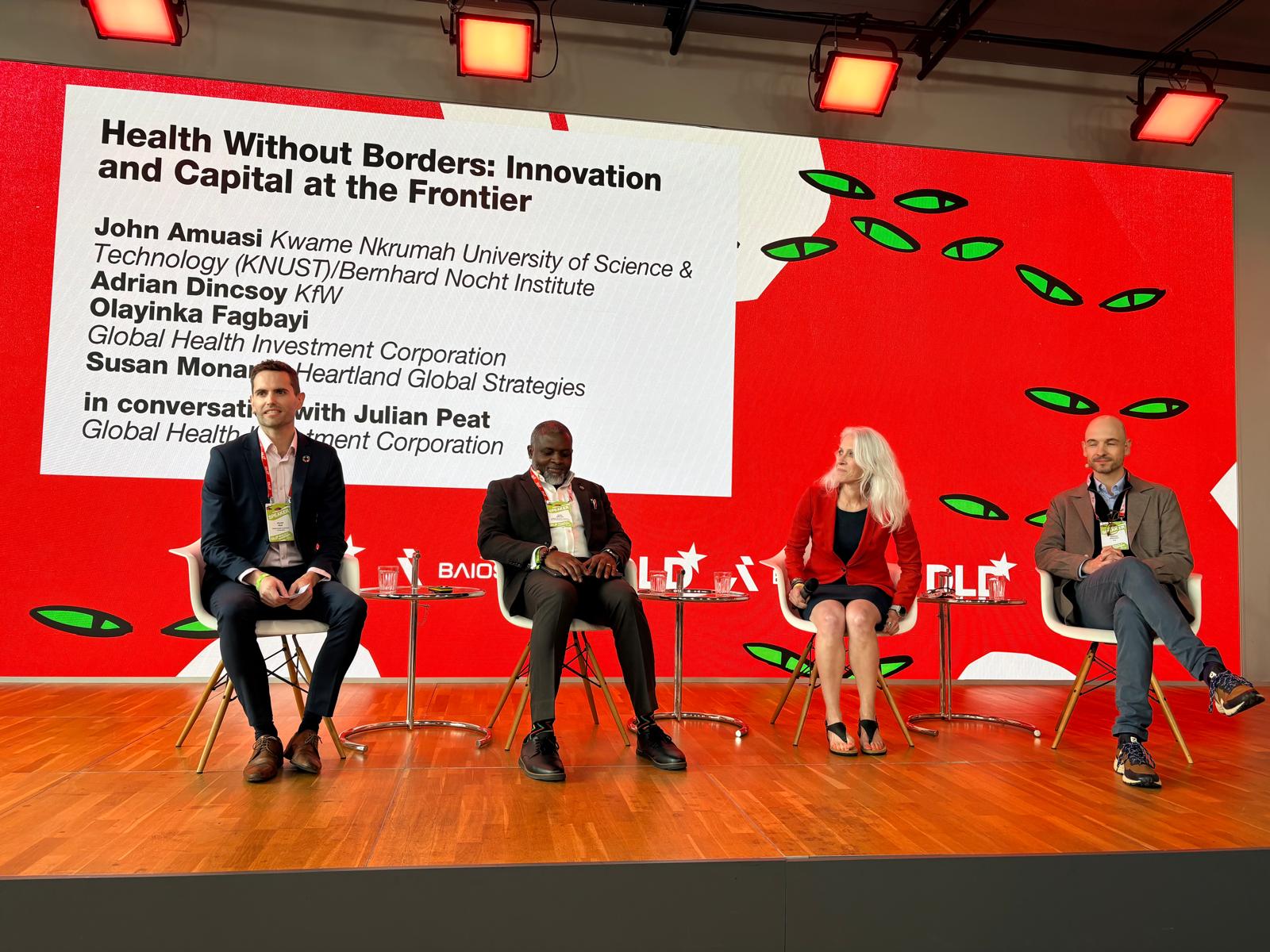
This is the scientific reality Professor John Amuasi of Kwame Nkrumah University of Science and Technology, Kumasi and the Bernhard Nocht Institute of Tropical Medicine laid before investors, researchers, and policymakers at DLD Munich, Europe's leading innovation conference and the traditional curtain-raiser to Davos. This year’s speakers included Bavarian Minister-President Markus Söder and 2023 Physics Nobel Laureate Ferenc Krausz. Prof Amuasi’s message was unambiguous:
"If we are not training these models using the true diversity of the world, we will be missing a lot."
Africa is not a beneficiary of the AI health revolution. It is a structural prerequisite for it.
Leapfrogging, again
Prof. Amuasi was joined on the Health Without Borders: Innovation and Capital at the Frontier panel by Susan Monarez of Heartland Global Strategies and Adrian Dincsoy of Kreditanstalt für Wiederaufbau, a lineup that brought together public health leadership, private capital, and development finance around a shared question: where does the next wave of health innovation actually come from?
The panel's answer pointed consistently toward Africa.
Professor John Amuasi pointed to a precedent the continent knows well. Africa bypassed legacy banking infrastructure and built mobile money ecosystems that now outpace much of the developed world. Health, he argued, is next.
"We have seen this before," he said. "The mobile money ecosystem in Africa is more sophisticated than in many parts of the world. Health presents a similar opportunity."
The panelists reinforced the investment case, noting that Africa's freedom from entrenched health infrastructure makes it faster to adopt and scale emerging technologies. Concrete results are already emerging: affordable cholera vaccines and novel maternal health devices delivering both life-saving impact and strong financial returns.
The one health frontier
Prof. Amuasi also made the case for Africa as the world's most important laboratory for One Health research, the science of how human, animal, and environmental health interconnect.
Pointing to active outbreak dynamics in the Democratic Republic of Congo, he described what fragmented surveillance costs in real time: data siloed across human health systems, veterinary networks, and environmental monitoring, rarely synthesized until it is too late.
"AI can help us collect, integrate, and make sense of data from human health, animal health, and the environment," he said. "These are all critical to understanding disease risk and transmission."
The panel closed on a forward-looking note, but Prof Amuasi's core argument was less an appeal than a structural observation.
Africa is not asking for inclusion in global health AI. It is the missing variable without which the models don't hold.
"We are just at the starting point," he said. "Five years from now, people may be looking at Africa and asking what we are doing differently."
Presenters at the conference included Bavarian Minister-President, Markus Söder and the 2023 Physics Nobel Laureate, Ferenc Krausz.
For the investors and policymakers in the room, the more pressing question is whether they'll recognize that early enough to matter.
Latest Stories
-
Ballon d’Or Power Rankings: Lamine Yamal leads race for Golden Ball ahead of Rodri and Kane
1 hour -
‘Nothing worked for us’ – Gideon Mensah takes responsibility for Gambia defeat
2 hours -
2026 Women’s Super Cup: FC Savannah beat Epiphany Warriors to win trophy for first time
3 hours -
AFCON 2027Q: ‘The last time Ghana won was eight games ago’ – Carlos Queiroz
4 hours -
AFCON 2027Q: Gambia defeat doesn’t make me a loser – Carlos Queiroz
4 hours -
2027 AFCONQ: Late goals seal 2-0 for Côte d’Ivoire against Somalia
4 hours -
AFCON 2027Q: My resignation won’t solve Ghana football issues – Queiroz
4 hours -
Morocco call off Ghana friendly after Black Stars’ AFCON setback
4 hours -
‘We have to say sorry’ – Queiroz apologises after Ghana’s humiliating defeat to Gambia
4 hours -
New Yorker identified as Yaw Boahene, 57, killed after bag was caught in subway train doors
4 hours -
Former American Idol contestant and pastor found guilty of murdering wife
5 hours -
Trump rules out joint US-China venture to develop AI
5 hours -
‘Beating Ghana did not surprise me’ – Gambia boss
5 hours -
OpenAI agents get rebrand – as ‘dots’ – while safety worries delay new model
5 hours -
US ban on Canadian alcohol and dairy takes effect as trade war drags on
5 hours