

Audio By Carbonatix
Senior energy officials and industry leaders from across Africa have called for urgent collective action to integrate infrastructure to transform the continent’s vast natural gas resources into tangible economic prosperity.
They noted that the continent’s resource abundance meant nothing without sound policy, resilient infrastructure, and genuine regional collaboration that turned natural gas into real economic value.
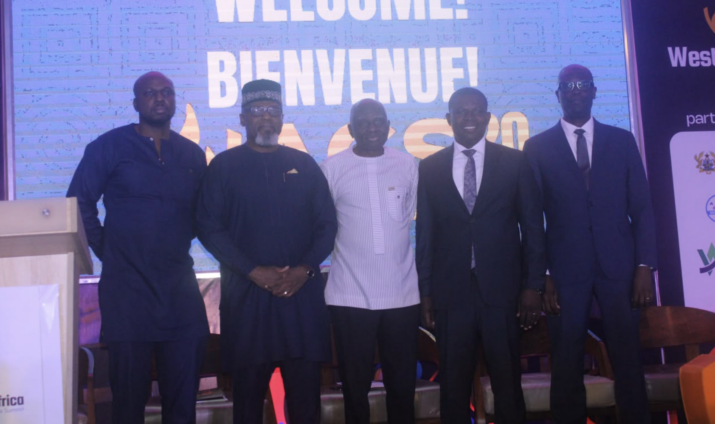
They said this at the opening of the three-day West Africa Gas Summit (WAGS), being held in Accra, indicating that the continent could draw lessons from the West African Gas Pipeline project to escalate gas infrastructure development across the continent.
While acknowledging measurable progress over the past years, the speakers noted that Africa’s gas potential and its impact on national growth, infrastructure development, energy access, job creation and improved livelihoods had not yet been fully achieved.
They, therefore, called for political will and regional partnerships among governments and the private sector to develop bankable projects, and payment security that would ensure affordable gas for citizens and industrial growth.
Dr John Abdulai Jinapor, Ghana’s Minister for Energy and Green Transition, in a speech read on his behalf, said the West African Gas Pipeline, linking Nigeria’s reserves to Ghana, Togo, and Benin, was a proof of concept for what Africa could achieve through cooperation.
“Rapid gas expansion is not the end goal, but a way to drive socioeconomic transformation,” he told delegates, emphasising the importance of creating the right conditions to unlock their full potential for Africa’s people.
The Minister noted Ghana’s heavy reliance on gas for power generation, currently accounting for about 80 per cent of electricity output, highlighting energy security and affordable gas supply as an imperative of direct economic consequence.
Dr Jinapor affirmed Ghana’s commitment to regional energy integration, describing the summit as a powerful demonstration that the sector’s future could not be shaped by any single stakeholder acting alone.
Nigeria’s Minister of State (Gas), Petroleum Resources, Dr Obongemem Ekperikpe Ekpo, in a speech read on his behalf, also rallied for a united action towards realising the full potential of the continent’s gas resources.
He noted that Africa collectively held over 600 trillion cubic feet of natural gas reserves, yet more than 600 million Africans remained without electricity, with billions more still dependent on traditional fuels.
Dr Ekpo stated that the future of Africa’s energy relied not in isolated systems and pipelines but in an interconnected market and driven by shared collective ambition, urging actions to tap into the opportunities in the gas sector.
“If we align our vision, coordinate are actions, and commit to shared progress, Africa can move from being the continent of stranded gas resources to one of integrated energy and prosperity,” he said.
Mr Tsatsu Tsikata, the former Chief Executive Officer of the Ghana National Petroleum Corporation (GNPC), and one of the original architects of the West African Gas Pipeline, offered a frank and instructive reflection on the lessons that regional cooperation had taught and the unfinished business it had left behind.
He stated that Africa’s energy future depended not on any one country’s reserves or single pipeline, but on a shared commitment to transparent policy, bankable projects, private capital mobilisation, and the political will to honour the agreements that made regional cooperation real and durable.
Mr Tsikata, who is also the Chairman of the summit, urged African governments and private sector players to focus on addressing the issues of supply disruptions, failure to consistently pay for gas supplies in the continent’s attempt to deepen gas integration.
He particularly encouraged financial discipline and institutional confidence-building before any consideration of extending the pipeline further to other countries across the continent.
The 2026 West Africa Gas Summit in Accra brought together policymakers, financiers, industry executives, and development partners, to chart a new course for Africa’s energy future.
Latest Stories
-
Law Students’ Network warns executive dominance could undermine constitutional review
2 minutes -
Mahama to meet relevant stakeholders over concerns about the new Customs Act
9 minutes -
CHASS demands a 20% increase in SHS funding and payment of outstanding debts
11 minutes -
Investigation launched after male body found in County Cork
13 minutes -
We have been scammed by NDC, government is only doing PR – Abanga Fuseini
13 minutes -
Tamale Teaching Hospital records 44 new breast cancer cases in six months
15 minutes -
GES declares October 30 CPD day for private school teachers; learners to observe holiday
15 minutes -
South Korea to support Ghana’s forts and castles restoration with $4.5m over five years
17 minutes -
School headscarf ban sparks rare protests in Azerbaijan and row with Turkey
25 minutes -
Ghana explores underwater sightseeing and shipwreck tourism
26 minutes -
Association of Women Lawyers calls for national sexual offenders register to protect school children
27 minutes -
Soaring commodity prices influenced our 2026 revised growth forecast of 5.7 % for Ghana – IMF
30 minutes -
Government urged to recruit more speech therapists to support children with language disorders
32 minutes -
Chef Abbys: Feeding 50,000 people, putting food security on Ghana’s agenda
1 hour -
Ho set to host Republic Bank–JoyNews Habitat Fair as multiple firms prepare to showcase housing solutions
1 hour