

Audio By Carbonatix
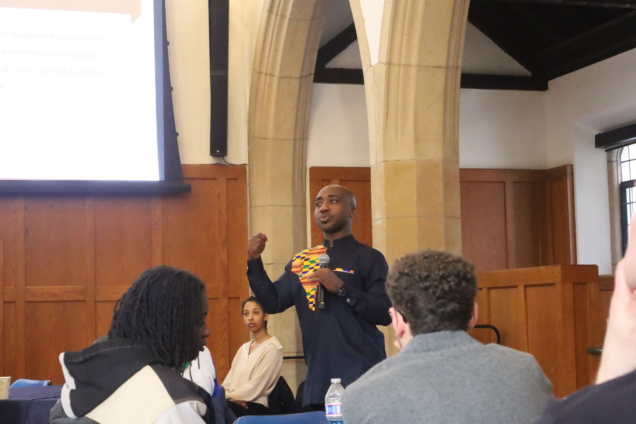
The Africa Head of Infrastructure and Capital Projects at Deloitte, Yaw Appiah Lartey, has expressed worry about how the operates in a state of profound paradox, despite its dynamism and undeniable global footprint
According to him, the continent captures only a small fraction of the value of its cultural exports, and the vast majority of its creators operate in the informal economy, lacking basic protections and struggling to build sustainable livelihoods.
He disclosed this at a leadership conference in New York, USA organised by Yale Model African Union (YMAU).
About 60% of African creators earn less than US$100 a month. Mr. Lartey said it is not attractive to invest in creators in Africa because businesses are too closely tied to individual personalities rather than institutionalised systems, whilst Income lacks durability and predictability, leading investors to apply significant discounts.
In addition, creators often cannot prove ownership of their most valuable assets.
Mr. Lartey also highlighted the policy gaps within the creative industry including the absence from national planning, institutional fragmentation and culture budget allocations.
He also mentioned that the creative economy is characterised by high levels of informality, hence no social protection for workers. For instance, in Kenya, 84% of creative enterprises are informal.
Another critical policy gap, he said, is the absence of frameworks that enable investment to flow into the creative economy.
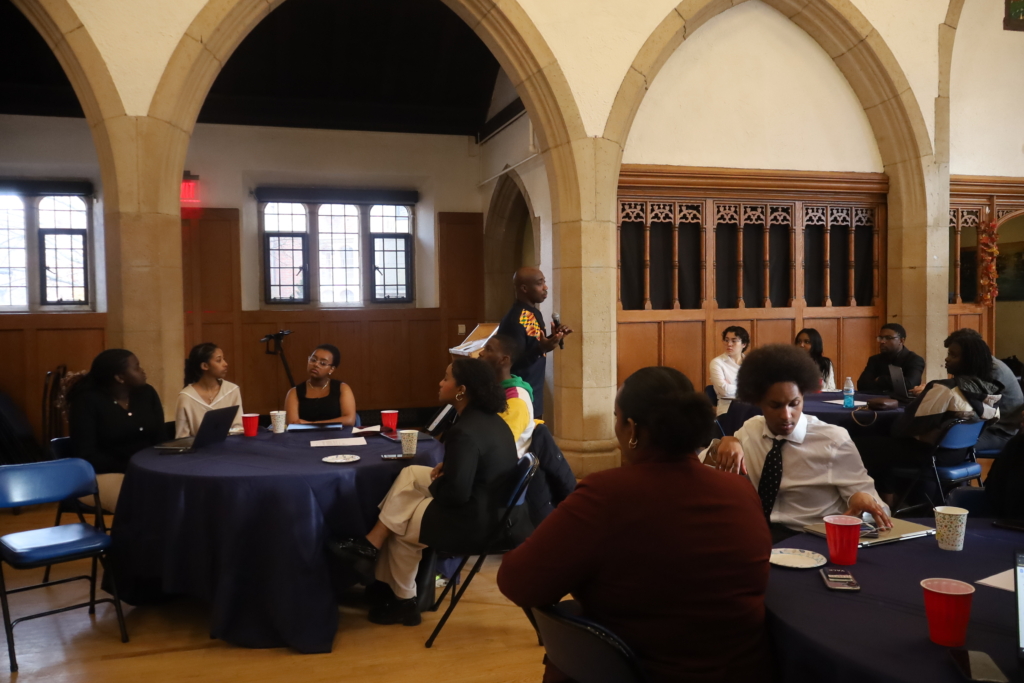
He enumerated strategic recommendations in the short term to be implemented by governments, development partners, private sector investors and creative industry stakeholders.
For creative economy observatory, he called for the establishment of data on creative economy size, employment and value.
Regarding simplify business registration for creatives, he suggested a streamlined, low-cost registration process for creative enterprises.
For medium term, he urged the enactment of modern copyright and AI legislation to address modern digital realities and the establishment of a finance facility for creative sector.
In the long-term, he called for a regional production hubs to build film studios and fashion hubs for industrial-scale production.
Latest Stories
-
$270m poultry investment to create 12,000 jobs under 24-Hour Economy
3 minutes -
My petition against Special Prosecutor put on ice after political intervention – Kpebu
4 minutes -
‘Don’t fail our teachers’ – Parents demand full implementation of strike deal
11 minutes -
Ghana Baptist Convention ordains 92 ministers, urged to live above reproach
12 minutes -
SIGA’s GH¢19.8bn SOE profit claim misleading – Bright Simons
17 minutes -
Central Regional Minister inspects projects in Assin South
24 minutes -
Mahama must show stronger leadership in galamsey fight – Prof. Bokpin
31 minutes -
Abu Jinapor defends Domestic Gold Purchase Programme, credits Bawumia with its introduction
32 minutes -
I’ll beat NDC for third time through my development record in Karaga – Amin Adam
36 minutes -
Denkyirahene hosts sixth Akwasidae, calls for unity, peace
43 minutes -
Edem Agbana outlines development gains, future projects at Ketu North accountability forum
49 minutes -
Let’s develop a culture of reading – Tourism Minister
57 minutes -
Kpone Kokompe records four confirmed measles cases
1 hour -
Non-interest banking not religious doctrine – Governor Asiama
1 hour -
Internet banking transactions hit GH¢383.82bn in 2025
1 hour