

Audio By Carbonatix
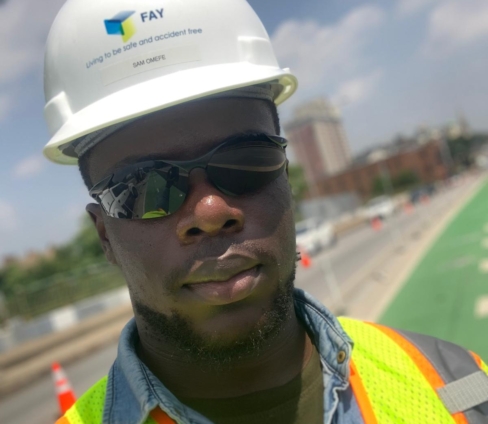
In a landmark step toward transforming urban transportation safety, Nigerian engineer and technology innovator Samuel Omefe has been awarded a national patent for his pioneering invention: the AI-Driven Smart Crosswalk System.
This breakthrough addresses a critical need in cities across Africa where pedestrian safety remains a major challenge.
The system, designed to adapt to the unique characteristics of African urban environments, uses advanced artificial intelligence and sensor-based technology to predict pedestrian movement and control traffic signals intelligently. It was officially patented in Nigeria earlier this month and is currently under review for broader protection through a Pan African framework.
Samuel’s invention stands out for its ability to interpret human behaviour at intersections. The system uses real-time input from multiple sources, including computer vision, LiDAR, radar, and thermal sensors.
These inputs are processed by machine learning models that determine whether a pedestrian is likely to cross the road. Once the system identifies an imminent crossing, it activates a safe crossing phase by adjusting the traffic lights to prevent potential collisions. This responsive traffic control provides a major upgrade over conventional systems that rely on fixed signal timing or require manual intervention through pedestrian buttons.
Speaking at the Urban Mobility and Safe Cities Forum hosted virtually by the African Smart Cities Network, Samuel shared data from recent pilot programs conducted in Nigerian cities such as Ibadan and Abuja. According to his findings, deployment of the system in these areas led to a reduction of nearly fifty per cent in pedestrian-vehicle near misses. His presentation captured the attention of participants from across the continent, especially in countries like Ghana, where urban safety concerns are growing alongside increasing urbanisation.
In response to the innovation, officials from the Ministry of Roads and Highways in Ghana have initiated discussions with Samuel’s team to explore potential collaboration. The ministry is particularly interested in testing the system in high-risk locations within Accra, Kumasi, and Tamale. These cities have seen a rise in pedestrian fatalities over the past decade, and the demand for effective, locally developed safety technologies has never been higher.
One of the most impressive aspects of Samuel’s solution is its inclusive design. The system not only caters to able-bodied pedestrians but also considers the needs of individuals with disabilities. Voice activation features allow visually impaired users to request a safe crossing.
Tactile feedback systems help guide people with mobility limitations. An optional mobile application provides additional support through directional audio and vibration prompts. These features are in alignment with international goals such as the United Nations Sustainable Development Goal eleven, which promotes safe and inclusive urban environments, and the African Union’s Agenda twenty sixty three, which outlines a vision for smart, people-focused, and resilient cities.
Urban planners, civil engineers, and transportation researchers across West Africa have praised Samuel’s approach for its practicality and cultural relevance. Unlike imported traffic systems that may not function well in informal or congested environments, this invention is designed specifically for the traffic patterns and pedestrian behaviour found in African cities. It bridges a critical gap by providing both technological sophistication and contextual understanding.
Samuel Omefe’s accomplishment is more than a personal success. It represents a broader movement toward African-led innovation in fields once dominated by imported solutions. His AI-driven smart Crosswalk System is not just a product of academic theory or foreign consultancy. It is the result of hands-on experience, local insight, and a clear vision for safer streets.
With increasing interest from cities across the continent and growing international recognition, this patented system may soon become a standard component of urban development strategies across Africa.
As Samuel noted during his presentation, “Our roads and intersections should reflect the intelligence and dignity of the people who use them. This technology is my contribution to building cities that protect every life.” His words are not only inspiring but also a clear call to action for decision makers and innovators working to shape the future of urban mobility on the continent.
Latest Stories
-
Sam George cautions ministers against reading unverified AI-generated speeches
1 minute -
Ghanaian entrepreneur Mary Nyamekye Asamoah wins Africa Travel 100 award
4 minutes -
Obuasi SHTS abuse: Sanction all officials who failed to act – Moving Masculinity
10 minutes -
Lucy Agyepong honoured for excellence in engineering education at maiden GAAS Women’s Awards
12 minutes -
Harriet Afia Konadu Asiedu
19 minutes -
AFCON 2027: Sports Minister ‘convinced’ Black Stars will qualify despite losing opening two games
20 minutes -
CUTS welcomes VAT collection on cross-border digital services, urges fair treatment of Distance Learning students on overseas programmes
25 minutes -
Leave the Chiefs and fix the Galamsey Problem: Dr Solomon Owusu Advises President Mahama
27 minutes -
Pay attention to teachers and give them what is due – Ho District GNAT tells government
31 minutes -
Authorities knew of abuse allegations against Obuasi headmaster months before suspension – JoyNews investigation
36 minutes -
US teenager appears in court over alleged Hindu temple shooting plot
38 minutes -
Academic City donates paediatric rehabilitation staircase to Ga East Hospital
42 minutes -
Services drive 7.4% expansion in Ghana’s economic activity
54 minutes -
‘I don’t make music for awards, I make it to connect people’ – Rocky Dawuni
1 hour -
Farmer jailed for three months over assault on wife in viral video
1 hour