

Audio By Carbonatix
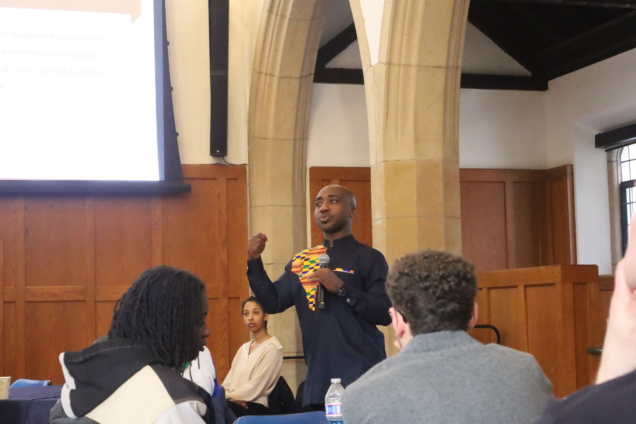
The Africa Head of Infrastructure and Capital Projects at Deloitte, Yaw Appiah Lartey, has expressed worry about how the operates in a state of profound paradox, despite its dynamism and undeniable global footprint
According to him, the continent captures only a small fraction of the value of its cultural exports, and the vast majority of its creators operate in the informal economy, lacking basic protections and struggling to build sustainable livelihoods.
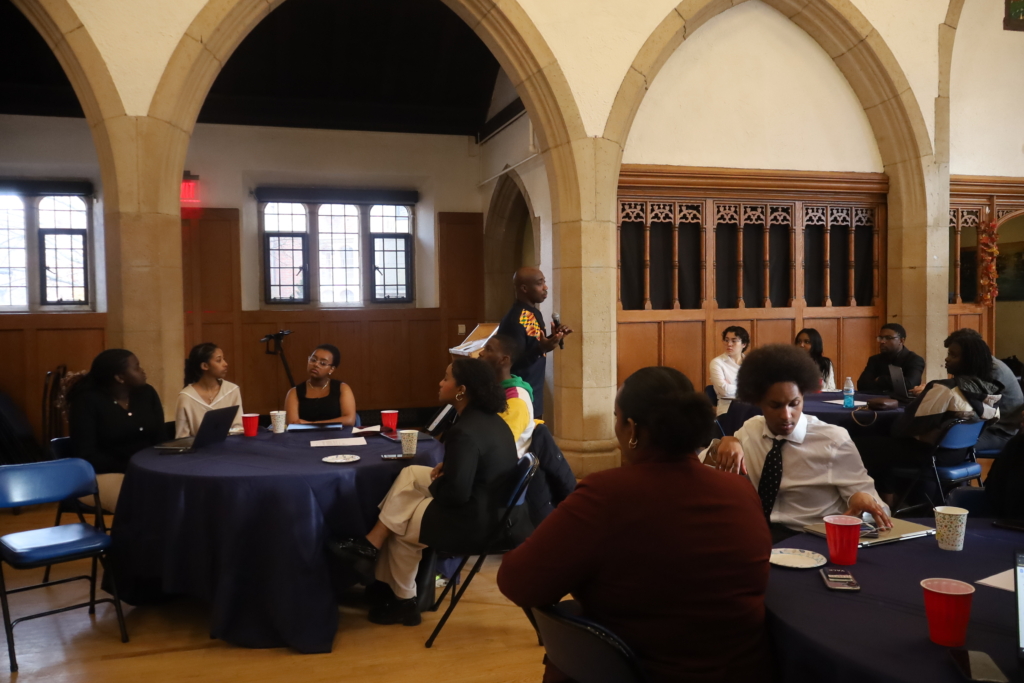
He disclosed this at a leadership conference in New York, USA organised by Yale Model African Union (YMAU).
About 60% of African creators earn less than US$100 a month. Mr. Lartey said it is not attractive to invest in creators in Africa because businesses are too closely tied to individual personalities rather than institutionalised systems, whilst Income lacks durability and predictability, leading investors to apply significant discounts.
In addition, creators often cannot prove ownership of their most valuable assets.
Mr. Lartey also highlighted the policy gaps within the creative industry including the absence from national planning, institutional fragmentation and culture budget allocations.
He also mentioned that the creative economy is characterised by high levels of informality, hence no social protection for workers. For instance, in Kenya, 84% of creative enterprises are informal.
Another critical policy gap, he said, is the absence of frameworks that enable investment to flow into the creative economy.
He enumerated strategic recommendations in the short term to be implemented by governments, development partners, private sector investors and creative industry stakeholders.
For creative economy observatory, he called for the establishment of data on creative economy size, employment and value.
Regarding simplify business registration for creatives, he suggested a streamlined, low-cost registration process for creative enterprises.
For medium term, he urged the enactment of modern copyright and AI legislation to address modern digital realities and the establishment of a finance facility for creative sector.
In the long-term, he called for a regional production hubs to build film studios and fashion hubs for industrial-scale production.
Latest Stories
-
I have supported highway authority financially to fix roads in my constituency – A Plus
26 minutes -
US, Iran fail to reach peace agreement after marathon talks in Pakistan
49 minutes -
ECG kicks off Phase Two of transformer upgrades at Lashibi; brief outages expected
1 hour -
Port crises loom as 11,000 drivers threaten four-day strike
2 hours -
A source of excellence across generations – Vice President Opoku-Agyemang lauds Mfantsipim
3 hours -
(Photos) Mfantsipim School launches historic 150th anniversary
3 hours -
Knights and Ladies of Marshall group backs Catholic Bishops’ stance on anti-LGBTQ+
4 hours -
Bright Simons writes: All the Filla in the Ibrahim Mahama/E&P – Gold Fields Saga
5 hours -
Monetise Idiocy In Ghana
5 hours -
The Ghanaian prophet and the mysterious death of his scottish wife Charmain Speirs
6 hours -
Nearly 400 sentenced in Nigeria for links to militant Islamists
6 hours -
Ghana’s recovery supported by gold strength despite global oil price pressures – Standard Bank Research
6 hours -
Methodist Church hails Mfantsipim@150; calls for “fresh consecration” to excellence
6 hours -
‘Excellence is our inheritance’ – Nana Sam Brew-Butler hails Mfantsipim’s 150-year reign in leadership
7 hours -
Kwaku Azar writes: A-G vs OSP
7 hours