

Audio By Carbonatix
Plastic waste is a growing problem globally, with up to 12.7 million metric tons of plastic entering the oceans each year1. Plastic packaging is also an essential part of our modern lives, supporting efficient, safe and hygienic food value chains, among other important applications.
On a continent where food safety is an abiding concern, this means plastic packaging will continue to have a role for some time to come, and the focus must be on eliminating plastic waste.
Creating a viable circular economy for plastic waste is a key strategy to address this problem.
The circular economy promotes the reuse and recycling of products and materials, creating a closed-loop system that minimises waste and pollution. The circular economy offers a unique opportunity to address post-consumer plastic waste in Africa by keeping plastics in use and out of the environment.
Africa also has an unusually large informal economy, with the International Labour Organisation estimating in 2018 that 85.8 per cent of employment on the continent is informal.2
This includes a vast network of waste pickers who collect and sort recyclable materials, creating a key component of a circular economy for plastic waste that both generates employment and reduces plastic pollution.
Integrating waste pickers into the formal waste management system, by providing training, equipment and a reliable income, can improve their working conditions and increase economic opportunities for marginalised communities.
At the same time, by reducing waste and increasing resource efficiency, the circular economy can reduce the reliance on virgin resources and create a more sustainable future for all.
This requires a significant investment in infrastructure, technology, and education. Governments, businesses, and civil society must work together to create an enabling environment for the circular economy to thrive.
This includes policies that incentivise the use of recyclable materials, regulations that require producers to take responsibility for their products' end-of-life, and public education campaigns that raise awareness about the benefits of the circular economy.
Coca-Cola Beverages Africa (CCBA) has made a commitment to invest in our planet and our packaging, to help make the world’s packaging problem a thing of the past, working in partnership with The Coca-Cola Company which launched a sustainable packaging initiative called World Without Waste in 2018.
We are rethinking how our bottles are designed, collected, recycled and repurposed as part of our World Without Waste vision, with the following global goals:
- Help collect a bottle or can for every one we sell by 2030
- Focus on making all our packaging 100% recyclable by 2025
- Make 25% of our packaging reusable by 2030
We recognise the importance of supporting the total collection value chain from waste picker level, to buyback centres and recyclers.
Understanding that we can't do this alone, we partner with like-minded bodies to shape policy and leverage our combined scale.
Poor waste disposal is everybody’s problem, so everybody needs to get involved.
One of the most valuable environmental interventions in addressing poor waste disposal and achieving circularity is setting up the right Extended Producer Responsibility (EPR) mechanisms and policies.
In the EPR model, producers pay fees to a producer responsibility organisation, or PRO, such as PETCO.
By creating value for post-consumer waste in this way, waste collectors or municipalities are incentivised to gather and return it to buy-back centres, who then deliver it to the recyclers.
So far, through effective industry partnerships, we have implemented voluntary EPR models in four of our markets and helped create organisations like PETCO South Africa, in Kenya, Ethiopia and Tanzania, and soon to be established in Uganda as well.
The model has been extremely successful since PETCO was established in South Africa, growing from collection and recycling of 9,000 tonnes of PET in 2005 to more than 92,000 tonnes in 2021, and an average price paid of around 50c/kg of PET in 2005 to around R3.80/kg in 2021, showing an increase in both volume and value.
Going a step further, the South African government adopted mandatory EPR regulations in 2021, creating a precedent that other African countries can consider and adopt too.
Building on these successes, CCBA has engaged with SADC, NEPAD and other regional organisations to roll out the self-regulated EPR model in other markets.
We are also improving the recyclability of our packs through a strong emphasis on shifting to homogeneous and clear bottles and have made significant progress on this already.
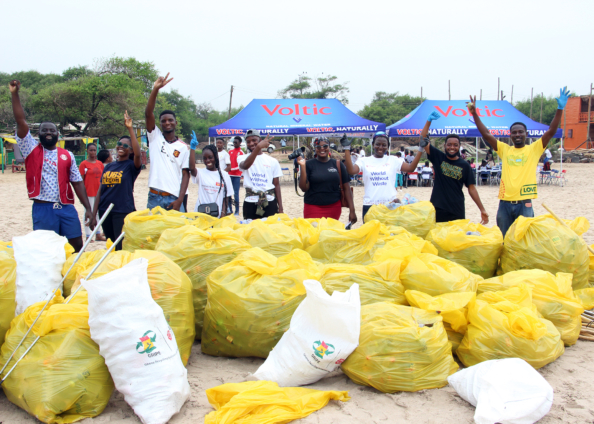
To clean up existing packaging, we’re bringing people together through programmes like beach and river cleanups and other ongoing local activities. To encourage more people to recycle more often, we’re investing to help people understand what to recycle, how to recycle, and where to recycle.
The opportunity to grow employment in Africa through a circular economy for plastic waste is clear. In Mozambique alone, a total of 37,000 people benefit from collection and recycling activity that is supported by CCBA.
Scaling up the EPR model across the continent will go a long way towards addressing unemployment and poverty, while also removing plastic waste from the environment.
- https://www.science.org/doi/10.1126/science.1260352
- https://www.ilo.org/wcmsp5/groups/public/---dgreports/---dcomm/documents/publication/wcms_626831.pdf
Latest Stories
-
GPL 2025/26: Dreams FC stage stunning comeback to hammer Eleven Wonders
1 hour -
Livestream: The Probe examines Kumasi’s looming water crisis
1 hour -
MTN Ghana gears up to lead Africa’s AI revolution
1 hour -
Philanthropist Alhaji FuZak donates Da’wah bus to Ambariya Sunni community
1 hour -
GUTA calls for suspension of Publican AI system over trade disruptions
2 hours -
TTAG raises alarm over proposed recruitment of 7,000 teachers, demands national posting roadmap
2 hours -
Civilians feared killed after reports of air strike on Nigerian market
2 hours -
Bishop Simon Kofi Appiah installed as new Jasikan Diocese Bishop
2 hours -
Trump’s Strait of Hormuz blockade threat raises risks and leaves predicaments unchanged
2 hours -
US Court backs extradition of former MASLOC CEO Sedina Tamakloe-Attionu to Ghana
3 hours -
Seven arrested as NAIMOS dismantles illegal mining camp, seizes firearms at Boin River
3 hours -
Fire erupts at Madina Ritz Junction, destroys multiple wooden structures and containers
3 hours -
Daniel-Kofi Kyereh returns from long-term injury, registers assist for Freiburg U23
3 hours -
Knifeman calling himself ‘Lucifer’ slashes three at NYC’s Grand Central
3 hours -
Brands are built from within to without
3 hours