

Audio By Carbonatix
Renowned Ghanaian businessman Anthony Oteng-Gyasi believes that the International Monetary Fund (IMF) and World Bank can guide Ghana and other African countries from poverty to economic prosperity.
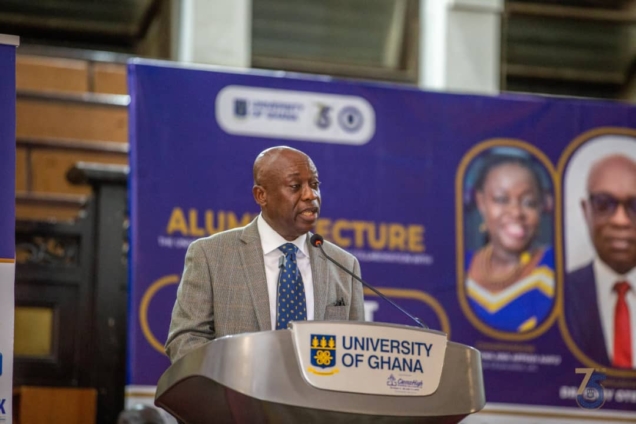
During the 2023 Alumni Lecture at the University of Ghana, Oteng-Gyasi highlighted the success of China and other Asian Tigers, asserting that these economies flourished under the guidance of the two international financial institutions.
Oteng-Gyasi debunked the common belief in Ghana that “no country has developed under the watch of IMF and World Bank.”
He argued that this notion is clearly untrue. He emphasized that while many countries diligently adhere to recommendations of international institutions, Ghana and other African nations, influenced by pride and indiscipline, approach such advice with less commitment, resulting in limited economic growth.
The Managing Director of Tropical Cable and Conductor Limited credited the IMF and World Bank with playing a role in developing the Asian Tigers. He acknowledged the valuable policy advice from these institutions, ranging from the free zones concept to technology centers and tax policy guidance, which, if embraced, could contribute significantly to national development.
Oteng-Gyasi's thought-provoking lecture covered topics such as economic development, policy formulations, public sector procurement, rent-seeking, and other intellectually stimulating subjects. He attributed Ghana’s historical underperformance in manufacturing to the absence of a pragmatic manufacturing promotion policy, the lack of established value chains, and the allure of easier profit through importation.
The Chairman of the Board of the Ghana Revenue Authority highlighted that the International Finance Corporation faced challenges in identifying viable manufacturing projects in Ghana. He noted that a significant number of the nation’s top talents were more inclined to pursue lucrative public contracts for imported goods and services, rather than investing in and developing manufacturing industries.
Oteng-Gyasi emphasized that the lax enforcement of laws, particularly regarding import duty regimes and local content rules, has favored traders and importers over local producers.
This imbalance, he argued, has transformed the nation into one dominated by traders, resulting in the loss of quality manufacturing jobs that traditionally supported the middle class. The situation influences political strategies focused on appeasing the majority through low prices and free social programs to secure and retain political power.
Latest Stories
-
Photos: Housing solutions take centre stage at Day 2 of the 3rd Republic Bank-JoyNews Habitat Fair
29 minutes -
Video: Immunity should be exercised without creating classism – Inusah Fuseini on cocaine bust
1 hour -
Ghana Air Force passes out 293 recruits after six months of intensive training
1 hour -
EOCO vrs Baffour Awuah: EOCO should have secured warrant before arrest attempt at court – Inusah Fuseini
1 hour -
Triple fibre cuts disrupt telecom services across Northern, Oti regions – Sam George
1 hour -
Politicisation could undermine parliamentary probe into cocaine seizures – Dr Osae-Kwapong
1 hour -
EOCO chases MP: Can Section 41 cure lacuna in EOCO Act? – Inusah Fuseini asks
1 hour -
GNFS, GWL inspect fire hydrants in Ministries enclave; 23 found faulty
2 hours -
Gov’t directs release of 50,000 bags of grain to ECOWAS
2 hours -
Ghana, Germany deepen cooperation on railways, labour mobility
2 hours -
Huge crowds greet Pope in Paris for open-air Mass
2 hours -
Ghana’s Charles Amofah Elected Vice President of African Bowling Federation
2 hours -
‘I never said I’ll declare a state of emergency’ – President Mahama on galamsey
2 hours -
Bobby Banson condemns EOCO’s attempted arrest of Nana Agyei Baffour Awuah
3 hours -
When Kumasi begins to look like somebody is in charge
3 hours