


Audio By Carbonatix
Caught between modernity and 20,000 years as hunter-gatherers, the San people sit at a crossroads.
An indigenous people in Southern Africa, they are our oldest human ancestors, DNA testing proving the San are direct descendants of the first Homo sapiens. But today their culture, traditions and heritage are at risk of being lost forever.
The San live across South Africa, Botswana, Angola and Namibia. In Botswana they're known as the Basarwa, where they live a largely nomadic lifestyle that has remained undisturbed for millennia.
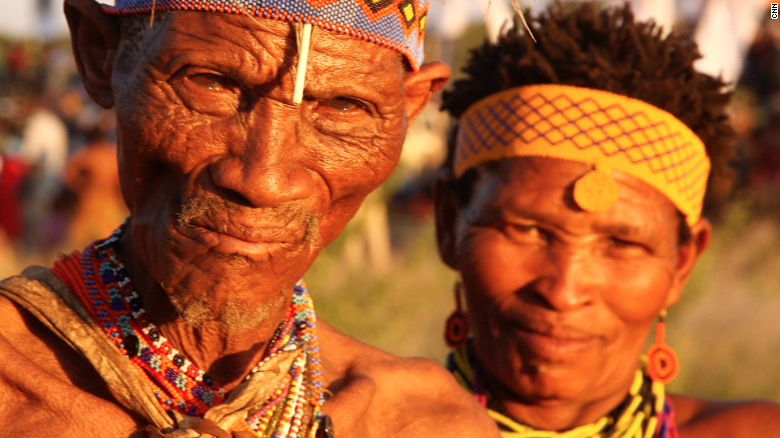
"Culture is something that can die and we should understand that culture is dynamic," says Bihela Sekere, part of the indigenous population who previously worked at the Botswana High Commission in London.
Sekere grew up in the Central Kalahari Game Reserve, the second largest of its kind in the world, hunting as his father had done before him. But in 1997 the government began removing the Basarwa from the reserve, ostensibly to protect the area and integrate the community into mainstream society.
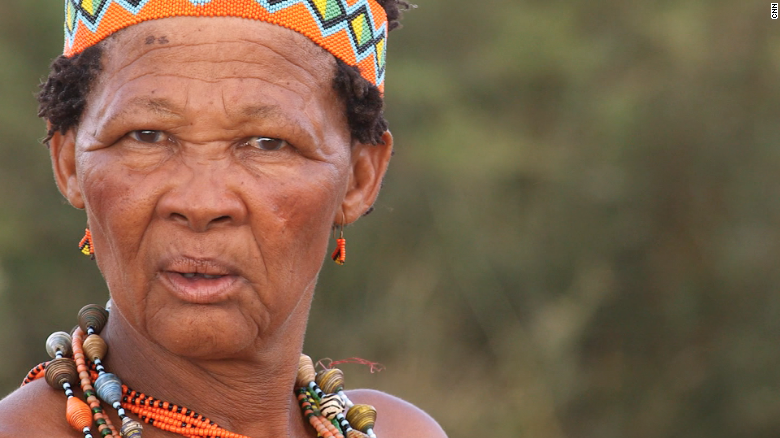
Now based in a resettlement village, passing on age-old traditions has become harder and harder for the Basarwa.
"Some of the kids, Basarwa kids, are taken to schools (and) they can lose their culture because they are taught other ways of living," explains Sekere. "To start with the language -- if they are taught Setswana and English, it means the language will suffer."
Sekere also cites the famous trance dance, a stalwart of Basarwa culture, as something that could one day suffer at the hands of modern music, played on radios and mobile phones by youths.
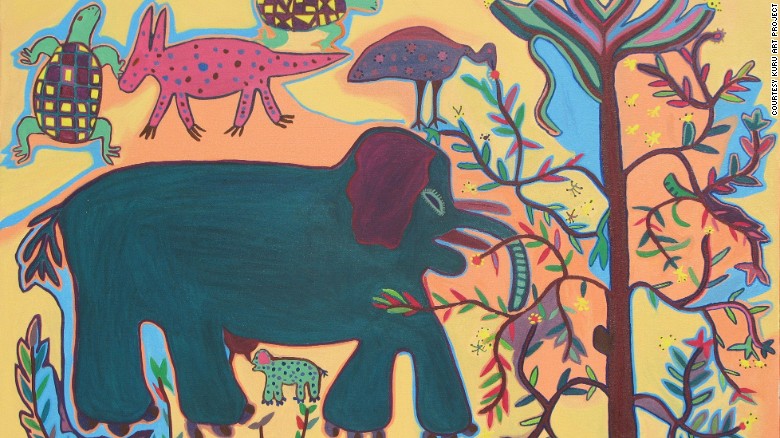
Hope is not lost, however, while there are those willing to preserve indigenous culture. Local man Xontae guides the curious around some of his people's greatest heritage sites, including the Tsodilo Hills, where 4,500 rock paintings dating back to the Stone Age can be explored. Meanwhile the Kuru Art Project seeks to revive art making among the Basarwa once more.
British-Caribbean artist Ann Gollifer, who is part of the initiative, says that the work the Basarwa create mainly depicts a hunter-gatherer lifestyle of yesteryear. Using modern mediums to paint ancient traditions, these artworks have sold all over the world.
It's proof that culture is dynamic, malleable and susceptible to change -- for better or for worse. But with will and determination, the likes of Sekere believes the Basarwa have what it takes.
"Culture on its own, it is what makes you who you are... It's upon us, the youth, to learn from these old people to promote our culture and to preserve it while they are still alive."
Latest Stories
-
Church of Pentecost supports over 2,000 BECE candidates in Obuasi with career guidance seminar
13 minutes -
Brandon Asante and Coventry all but promoted to Premier League despite Sheffield Wednesday draw
35 minutes -
GPL 2025/26: Late Kwartemaa strike downs Hearts in Tema
41 minutes -
Ghana Faces Sierra Leone Moment as Prosecutorial Powers come under strain
51 minutes -
Don’t consume fish or seafood from Tema Shipyard until further notice – FDA warns
55 minutes -
Why volunteering might be Africa’s most underrated career accelerator
1 hour -
ActionAid Ghana raises concern over gender gaps in Feed Ghana Programme
1 hour -
Windstorm wreaks havoc in Gushegu, displacing nearly 2,000 residents and damaging schools
1 hour -
Friends of Bridget Bonnie Marks her 35th birthday with donation to Kasseh Model Health Centre
2 hours -
From Ekumfi Kokodo to the Pulpit Stage: Essi Donkor’s gospel journey takes shape
2 hours -
Landfilling waste management creates no value, it’s an economic waste
2 hours -
Photos: Speaker Bagbin Commissions MPs constituency office under parliamentary decentralisation programme
3 hours -
Black Stars technical advisor Winfried Schäfer sacked as GFA shakes up backroom staff
3 hours -
Wenchi water project almost complete, critical to gov’t agenda – GWL MD
3 hours -
Anti-LGBTQ+ bill not part of government’s legislative agenda – Inusah Fuseini
3 hours