

Audio By Carbonatix
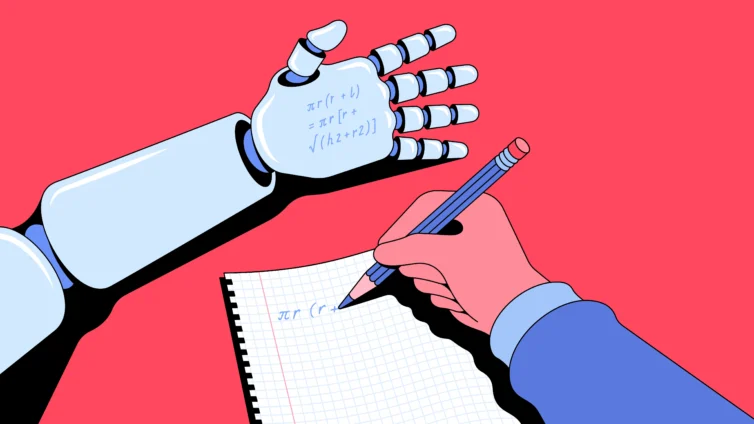
Ghana’s education sector is facing a mounting crisis as the rise of artificial intelligence (AI) in schools, rampant exam malpractice, and a sharp decline in reading culture converge to threaten learning outcomes nationwide. Experts warn that without urgent reforms, the country risks producing a generation of students who hold certificates but lack fundamental skills.
Professor Stephen Adei, a prominent Ghanaian educationist, has described the situation as a reflection of a “moral decay that is eating into the fabric of our nation.” Speaking earlier this year, he noted that exam malpractice has become so normalised that many no longer see it as wrong.
WAEC Results Expose Systemic Weaknesses
In 2025, the West African Examinations Council (WAEC) cancelled over 7,000 results due to malpractice, one of the highest numbers in recent years.
The cancellations involved impersonation, leaked papers, and the use of unauthorised digital devices.
Kofi Asare, Executive Director of civil society watchdog Africa Education Watch, emphasised that the focus should be on systemic reform rather than politicising the issue.
“The real issue is not politics; it is the weakness of our education system. We cannot fix learning by shouting at WAEC. We must fix the system itself,” he said.
AI in Universities: A Double-Edged Sword
At the tertiary level, Ghanaian universities are grappling with a new challenge: AI-generated assignments. Lecturers struggle to determine whether essays are genuinely written by students or produced by tools like ChatGPT. Veteran English teacher Casey Cuny described the phenomenon as “the worst I’ve seen in my career,” echoing concerns shared by Ghanaian faculty.
Internationally, similar trends are emerging. French teachers Aude Paul and Marie Perret warn that AI has made homework “dead” and effortless to generate, providing complete essays with arguments, examples, and references in minutes.
“This is a global trend, but in Ghana, where reading and critical thinking skills are already weak, it exacerbates the problem,” noted a senior lecturer at a local university.
The Reading Crisis
Compounding exam malpractice and AI dependence is a collapse in reading culture. The 2025 National Literacy Trust survey in the UK revealed that only 32.7% of children aged 8–18 enjoy reading, and only 18.7% read daily in their free time. Ghanaian educators say the trend is worse locally, with students preferring TikTok videos, gossip blogs, and AI summaries over books.
A basic school teacher lamented during a PTA meeting: “Most children cannot read a simple paragraph without struggling. But they can spend hours scrolling on their phones. How do we expect them to write essays without copying from AI?”
A Dangerous Combination
The intersection of AI dependence, exam dishonesty, and declining reading habits forms a dangerous cocktail. Professor Adei warns that Ghana risks producing graduates with certificates but lacking competence, critical thinking, and problem-solving skills.
“The future workforce will be underprepared. If students rely on AI for thinking and avoid reading, we are setting ourselves up for failure,” he said.
Towards a Solution
Experts call for urgent reforms:
- Greater emphasis on in-class writing, oral exams, and supervised research projects.
- Equip students to use AI as a learning tool, not a shortcut.
- Community libraries, school reading clubs, and competitions can instil reading habits.
- Biometric registration, stricter supervision, and prosecuting organised cheating.
Looking Ahead
Ghana stands at a critical juncture. Without systemic change, the combination of AI misuse, cheating, and weak literacy could compromise the nation’s long-term human capital. As one lecturer warned, “If we allow AI to think of our students, we will pay for it in the next decade.”
For policymakers, educators, and parents alike, the message is clear: protecting learning, fostering curiosity, and promoting critical thinking are no longer optional—they are essential to securing Ghana’s future.
Latest Stories
-
Ghanaian entrepreneur Mary Nyamekye Asamoah wins Africa Travel 100 award
2 minutes -
Obuasi SHTS abuse: Sanction all officials who failed to act – Moving Masculinity
7 minutes -
Lucy Agyepong honoured for excellence in engineering education at maiden GAAS Women’s Awards
10 minutes -
Harriet Afia Konadu Asiedu
17 minutes -
AFCON 2027: Sports Minister ‘convinced’ Black Stars will qualify despite losing opening two games
18 minutes -
CUTS welcomes VAT collection on cross-border digital services, urges fair treatment of Distance Learning students on overseas programmes
22 minutes -
Leave the Chiefs and fix the Galamsey Problem: Dr Solomon Owusu Advises President Mahama
25 minutes -
Pay attention to teachers and give them what is due – Ho District GNAT tells government
29 minutes -
Authorities knew of abuse allegations against Obuasi headmaster months before suspension – JoyNews investigation
34 minutes -
US teenager appears in court over alleged Hindu temple shooting plot
36 minutes -
Academic City donates paediatric rehabilitation staircase to Ga East Hospital
40 minutes -
Services drive 7.4% expansion in Ghana’s economic activity
51 minutes -
‘I don’t make music for awards, I make it to connect people’ – Rocky Dawuni
1 hour -
Farmer jailed for three months over assault on wife in viral video
1 hour -
Police arrest eight in Okaishie operation targeting illicit drugs and medicines
1 hour