

Audio By Carbonatix
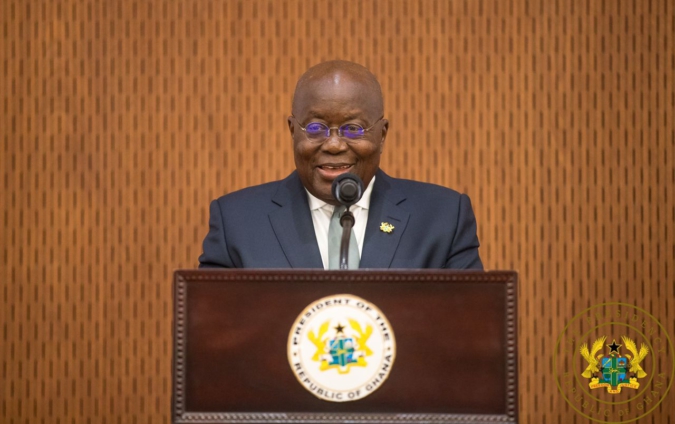
President Akufo-Addo has now incorporated the inclusion of nuclear technology into the country’s power generation mix.
The move, according to him, is in consonance with the global collective commitment to the sustainable availability of power, and the peaceful exploitation of nuclear energy for the benefit of our citizens, to enhance rapid industrialization, and to propel economic growth.
It will be recalled that in 2008, cabinet took a decision to include nuclear energy into our country’s energy generation mix and paved the way for its inclusion into the National Energy Policy and Strategy.
“This led to the establishment of the Ghana Nuclear Power Programme Organisation (GNPPO) to oversee the implementation and coordination of the nuclear power programme. Ghana subsequently declared its intention to pursue a Nuclear Power Programme (NPP) for peaceful purposes in August, 2013, through a letter submitted to the International Atomic Energy Agency (IAEA).”
A statement issued and signed by the President of the Republic, Nana Addo Dankwa Akufo-Addo said, “two other key institutions, namely Nuclear Regulatory Authority (NRA) Ghana, an independent nuclear regulatory body, and Nuclear Power Ghana (NPG), a project company to take up the role and responsibility as owner-operator, have been established by government.”
“To satisfy all the relevant obligatory technical issues related to the introduction of nuclear power, the Ghana Atomic Energy Commission (GAEC), through its Technical Institute (the Nuclear Power Institute, NPI-GAEC), and with the support from other national bodies, has met all the Phase-1 nuclear infrastructure requirements as recommended by the International Atomic Energy Agency (IAEA) Milestone’s approach,” it added.
The statement continued that, “ in 2017 and 2019, the IAEA International Peer Review Mission, on the invitation of the country, undertook a review of the status of Ghana’s Phase 1 nuclear infrastructure development, and concluded that Ghana has satisfied all the prescribed studies for government to make a knowledgeable commitment to a Nuclear Power Programme. Furthermore, the numerous studies and progress of activities undertaken in Phase 1 of the nuclear power programme had been consolidated into the Programme Comprehensive Report (PCR).”
He said, “I, hereby, announce and instruct the Minister for Environment, Science, Technology and Innovation (MESTI) and the Minister for Energy (MoE), in collaboration with the Chief of Staff at the Office of the President, to take all the necessary steps to move the Ghana Nuclear Power Programme Organisation (GNPPO) from the Ministry of Energy to the Office of the President, to enhance proper coordination among the key institutions already established. GAEC and its technical Institute (NPI-GAEC) will continue to play its supportive role to the GNPPO at the Office of the President following its re-alignment.
As a result, “I, hereby, announce and instruct the Minister for Environment, Science, Technology and Innovation (MESTI) and the Minister for Energy (MoE), in collaboration with the Chief of Staff at the Office of the President, to take all the necessary steps to move the Ghana Nuclear Power Programme Organisation (GNPPO) from the Ministry of Energy to the Office of the President, to enhance proper coordination among the key institutions already established.”
Additionally, “GAEC and its technical Institute (NPI-GAEC) will continue to play its supportive role to the GNPPO at the Office of the President following its re-alignment, he added.
The declaration stated further that, the Government of Ghana has adopted the content of the PCR as a reflection of nuclear power infrastructure issues in the country, committed to the peaceful uses of nuclear technology, as well as, continue their international cooperation and collaborations and participate in enhancing knowledge in all peaceful applications of nuclear technology.”
It also stated government’s commitment to “continue their transparency, adherence to the strict standards of safety, security, and accountability in the peaceful uses of nuclear technology and continue with its efforts to implement the nuclear power programme in the subsequent phases of the programme by using nuclear technology to generate electricity to accelerate national development and industrialisation.”
Latest Stories
-
Benedict Okyere Yeboah: Ghana’s football problem goes beyond sacking a coach
4 minutes -
GPL 2026/27: Darkwah Wiafe’s winner sees All Blacks beat Kotoko
10 minutes -
ITF World Tour : Patel Wins Boys’ Singles Final at J100 Accra
22 minutes -
Ghana must pursue BRICS partnership if it brings economic benefits – Kpebu
26 minutes -
Success and Wright Claims J100 Accra Girls’ Doubles Championship
26 minutes -
ITF J100: America’s Wright wins J100 Accra Girls’ Singles Title
33 minutes -
Expedition hopes to find aviator Amelia Earhart’s plane on remote island
33 minutes -
US seeks changes to rejected $109m health compact with Ghana – Mahama
1 hour -
Nine dead in mass shooting at Pennsylvania home
1 hour -
‘Time for Ukraine to get new president,’ says Trump after Zelensky condemns diesel deal
1 hour -
Hincapie injury adds to Arsenal issues after Guimaraes rescue act
2 hours -
Henderson scores twice as Chelsea thumb Bournemouth
2 hours -
Photos: Mentapulse Africa convenes health and labour summit to address talent retention
2 hours -
Mahama inspects Nkokɔ Nketenkete plant, eyes Bechem as chicken capital
2 hours -
Ghana not seeking full BRICS membership, applying as Partner Country – Ablakwa
2 hours