

Audio By Carbonatix
The quest for reparatory justice for the Transatlantic Slave Trade has taken a historic leap from academic debate to formal legal action.
On March 29, 2026, the Freetown Reparatory Trust submitted a pioneering claim to the United Nations Human Rights Council, specifically targeting the unique historical and biological proximity of the Krio (Creole) people of Sierra Leone.
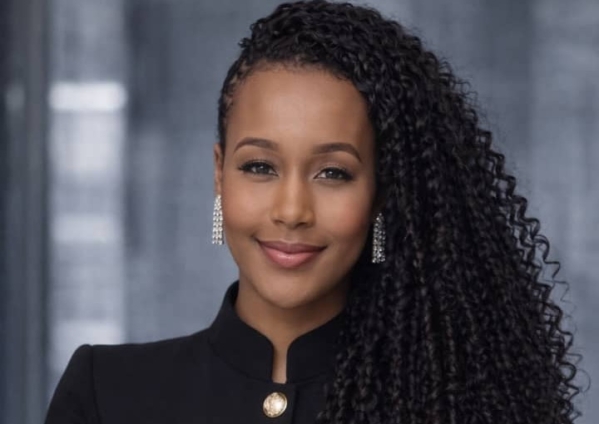
Leading the charge is Amanda Mary Clinton, founder of the Freetown Reparatory Trust. She argues that the Krio people represent a "perfect legal test case" for reparations because their identity, language, and very presence in Freetown are direct, traceable consequences of the abolition of slavery.
Solving the “Proximity” Problem
For decades, Western nations have dismissed reparations as impossible, citing the 400-year gap between the crime and the present day.
Ms Clinton’s submission, titled “A Proximity-Based Claim for Reparatory Justice,” seeks to dismantle this defence by narrowing the focus to specific, identifiable groups rather than broad national populations.
“The Krio people meet the three-fold test: an identifiable people, a traceable history, and ongoing harm,” Ms Clinton stated. “This isn't about rehashing the past; it’s about a structured approach to development for a group whose history is documented not just in archives, but in their very blood.”
The Krio Identity: A Living Archive
The Krio people of Sierra Leone are the descendants of recaptives and freed slaves, individuals who were either liberated from slave ships by the British Royal Navy or resettled from the Americas and Great Britain in the late 18th century.
This unique origin created a distinct community with its own language, Krio, an English-based creole, and a culture rooted in the establishment of "Freetown" as a sanctuary for the formerly enslaved.
Ms Clinton points to physical reminders of this history, such as the ancient gunposts on Banana Island, once used to ward off pirates and slave raiders, as evidence of a "measurable reality" that still exists today.
From Theory to Action: The Trust’s Mandate
The Freetown Reparatory Trust is modelled after global humanitarian structures like the Red Cross, which began as an informal idea and evolved into a world-changing institution.
The Trust’s constitution is designed to:
- Verify Beneficiaries: Use historical and DNA-based tracing to identify direct descendants.
- Deliver Resources: Bypass bureaucracy to fund education, housing, and economic programmes.
- Ensure Sustainability: Rebuild the cultural and economic influence of the Krio community, which has dissipated following years of civil war and mass migration.
Why Now?
The claim comes at a time of heightened global sensitivity toward restorative justice.
Ms Clinton noted that Sierra Leone has recently led a "strong reparations push," gaining international recognition of slavery as the "most atrocious crime ever committed against the human race."
She argues that by focusing on a "small, clearly defined group," the financial burden on Western countries becomes manageable, avoiding the bankruptcy fears often used to stall the movement.
“We are not asking for everything; we are proving how this model works through one community,” Ms. Clinton concluded. “History documents these things. The question is no longer 'if' it happened, but 'why not' take action now?”
Latest Stories
-
Government promises support for Kumasi Central Market fire victims
3 minutes -
Vibes The Movie: Big Ghun’s Ghanaian film earns five nominations at 2026 REFFA
33 minutes -
MamaCare CEO warns unresolved conflicts among health workers could undermine maternal and neonatal care
57 minutes -
Health professionals urged to translate medical knowledge into practice to save mothers
1 hour -
Conflicts among care providers linked to maternal, neonatal deaths – Expert
3 hours -
GIS marks 10th TIME conference, champions improved teaching practices
3 hours -
BRICS Or Balance? What Ghana’s bid really means
3 hours -
GPRTU wants full TRAFFITECH-GH implementation to start in 2027
4 hours -
Mahama announces plans to import electric wheelchairs for PWDs
4 hours -
KGL U17 Colts 2026: Western beat Prempeh Elite Academy to set up final final with Greater Accra Region
4 hours -
Late Solanke strike salvages 10-man Spurs draw at Man United
4 hours -
Gender Ministry to monitor welfare of Nana Akua Addo’s children amid domestic violence case
4 hours -
Benedict Okyere Yeboah: Ghana’s football problem goes beyond sacking a coach
4 hours -
GPL 2026/27: Darkwah Wiafe’s winner sees All Blacks beat Kotoko
4 hours -
ITF World Tour : Patel Wins Boys’ Singles Final at J100 Accra
5 hours