

Audio By Carbonatix
Ghana has called on the international community to move beyond mere reflection and toward active justice for the victims of the Transatlantic Slave Trade.
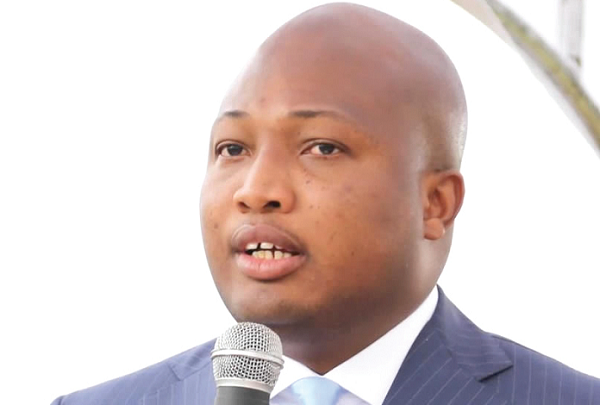
Addressing a high-level reparatory justice forum at the United Nations General Assembly on Tuesday, 24th March 2026, the Minister for Foreign Affairs, Samuel Okudzeto Ablakwa, argued that the world owes more than a backward glance to the millions of Africans whose humanity was systematically erased.
The minister's address was the centrepiece of Ghana’s participation in the International Day of Remembrance of the Victims of Slavery and the Transatlantic Slave Trade. Speaking to a global audience of diplomats and human rights advocates, Mr. Ablakwa emphasised that true honouring of the deceased requires a modern-day commitment to systemic change.
“Remembrance carries responsibility. Honouring victims of this tragedy requires more than recalling the past. It calls on us to recognise the humanity that was denied to them,” the minister declared.
He further urged the Assembly to use historical education as a tool for contemporary justice: “Deepening our understanding of this history and strengthening our commitment to building a world where dignity, equality and justice are upheld for all people.”
President Mahama leads the charge
The Ghanaian delegation was led by President John Dramani Mahama, whose presence at the event signals a renewed diplomatic push for reparatory justice. The President has long been an advocate for a formal global acknowledgement that the trafficking of enslaved Africans and racialised chattel enslavement constitute the "gravest crime against humanity".
The 2026 observance is particularly significant as Ghana continues to position itself as a global hub for the African Diaspora, following the success of its "Beyond the Return" initiative. By championing reparatory justice on the UN stage, the administration seeks to bridge the gap between historical trauma and modern economic and social equity.
The event in New York serves as a platform for African nations and their Caribbean allies to harmonise their demands for reparations. Delegates at the forum discussed various frameworks for justice, ranging from formal apologies and debt relief to direct investments in health and education infrastructure in regions still reeling from the ancestral brain drain and economic plunder of the slave trade.
The Ghanaian delegation maintained that the world cannot claim to value human rights today without fully accounting for the era when those rights were most brutally denied.
Latest Stories
-
Ghana explores centre of excellence for hearing, communication and cochlear implant care
31 minutes -
Schizophrenia-related disorders lead mental health cases recorded in Ghana
53 minutes -
Dutch authorities enlist Ghana in hunt for fugitive drug lord Bolle Jos
1 hour -
Ghana housing finance conference adopts communiqué to improve affordable housing access
6 hours -
Special Initiatives Minister urges Wa Technical Institute to enrol more girls as EU-backed solar training lab opens
6 hours -
In the matter of my first year at the Bar
6 hours -
ActionAid Ghana calls for an end to child marriage, greater investment in girls’ rights
6 hours -
Newsfile to tackle World Cup visa scandal, beach demolitions, education strikes, BRICS bid
7 hours -
UK-Ghana Trade & Investment Summit: Trade Resource Centre to help businesses maximise UK-Ghana trade opportunities
7 hours -
Embassy of Denmark celebrates World Maritime Day
7 hours -
Linking LEAP to productive inclusion could cut extreme poverty by 2030 – UNICEF
8 hours -
Trade Ministry backs use of creative arts to rehabilitate prison inmates
8 hours -
Negotiations with government to continue despite strike suspension – GNAT
8 hours -
‘Ghana cannot afford to waste public resources; every cedi has a job’ – Ato Forson
8 hours -
Ghana expects economic boost as World Assemblies of God Congress brings 10,000 delegates to Accra
9 hours