

Audio By Carbonatix
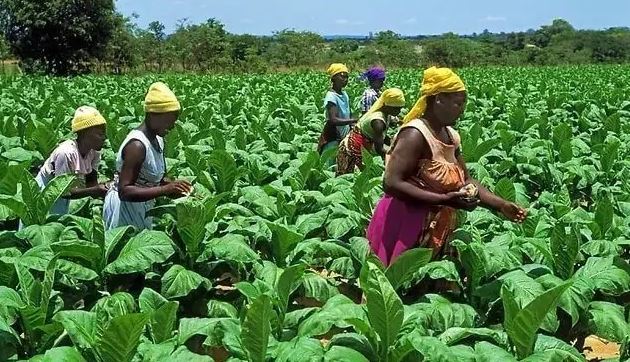
Some civil society organisations have called on the government to place agriculture at the core of its strategy as it strives to recover from the novel coronavirus pandemic.
The organisations pushing the proposal include the Peasant Farmers Association of Ghana (PFAG), Send Ghana, the International Budget Partnership (IBP), the Voice for Change Partnership Program, GROW partners among others.
"The groups as part of its recommendations want government to "increase input subsidy to farmers both in the percentage cost borne by government and the number of beneficiary farmers; improve beneficiary targeting; and reduce leakages, diversion and smuggling in the distribution channels of subsidized fertilizer," the group said.
In a statement July 16, they urged government to "strike a good balance between health spending and spending on food security and nutrition" as a way of enhancing the immune system of the citizenty post-Covid-19.
"This is because healthy eating/healthy diets is a way to boost the immunity of the population and if this is made integral to our recovery plan it could save us needless health expenditures subsequently," the statement read.
Read the full statement below.
Anchor Ghana's Post-Covid Recovery on Agriculture
The Peasant Farmers Association of Ghana (PFAG), SEND GHANA, the International Budget Partnership (IBP), the Voice for Change Partnership Program, GROW partners and like-minded CSOs are proposing the reliance of Agriculture as the tool for reviving Ghana’s economy after COVID-19.
Since the onset of the COVID-19, Ghana has not only been in a health crisis but also food security challenges. Small holder farmers are facing increased difficulty in accessing credits, markets, agricultural machinery and inputs among others due to the restrictions and disruptions as a result of the COVID preventive measures.
This situation might lead us to a food and nutrition crisis if immediate remedial actions are not taken to avert them. Investment in agriculture offers the surest way to revive the economy as majority of Ghanaians draw their livelihood from the sector as it also has a higher inequality reducing effect. It is also our best bet in adhering to the President’s admonishment in boosting our immune system to fight the virus.
Unfortunately, the agricultural sector over the past years has been under funded, therefore the Mid-year budget review gives us the right opportunity to right the wrong and importantly scale up its budgetary allocation to at least the 10% enshrined in the CAADP. Ghana should not return again to importing basic food items when COVID-19 is contained and the country must revolutionize its agriculture to safeguard food and nutrition crisis.
As we await the presentation of the Mid-year budget by the Finance Minister, we are of the view that Ghana’s Covid-19 Recovery Strategy should be agriculture led and expand into other critical sectors embracing greater usage of technology and climate resilient farming practices. In addition, we believe that these areas within the sector need urgent and immediate attention and should be major highlights in the mid-year review of the budget. These include:
- Increase input subsidy to farmers both in the percentage cost borne by government and the number of beneficiary farmers; improve beneficiary targeting; and reduce leakages, diversion and smuggling in the distribution channels of subsidized fertilizer.
- Since the Coronavirus Alleviation Programme (CAP) Business Support Scheme was targeted at micro and small enterprises and the registration requirements were inherently unfriendly for small holder holders, we are calling for the creation of a special stimulus facility solely for small holder farmers to enable them access financial credit at very flexible and low interest rates with extended moratorium periods.
- Prioritize the reduction of Post-harvest losses as an immediate strategy to reduce the losses of income for small holder farmers. To this end, critical attention must be weighed on the location and siting of warehouses in food-producing areas for adequate utilization.
- Consult and support smallholder farmers to access or procure simple, affordable and appropriate hand-held equipment and restructure the Agricultural Mechanization Service Centres in other to reduce Post-harvest losses.
- Create a special model to enable farmer groups to aggregate and directly supply food produce to the numerous food distribution channels such as the School feeding program, Feeding for SHS, amongst others.
We also call on government to strike a good balance between health spending and spending on food security and nutrition. This is because healthy eating/healthy diets is a way to boost immunity of the population and if this is made integral to our recovery plan it could save us needless health expenditures subsequently.
Latest Stories
-
Alhassan Tampuli donates cement, roofing sheets to support storm victims in Gushegu
18 seconds -
Alhassan Tampuli appeals for urgent support for storm victims in Gushegu
3 minutes -
The hypocrisy must stop; pass Anti-LGBTQ+ Bill now – Alhassan Tampuli to Mahama
7 minutes -
Imprisonment should be rehabilitative, not punitive – Ghana Prisons boss at UNGA
29 minutes -
Ga Adangbe traditional priests petition Mahama over McDan aviation licence revocation
40 minutes -
Anti-LGBTQ Bill: NDC’s arrogance is worrying – Hassan Tampuli
50 minutes -
Let’s give OSP time to mature, not to scrap it – Hassan Tampuli
54 minutes -
Nigeria convicts 386 Islamist militants in mass trials
59 minutes -
Djibouti president wins election with 97.8% of vote, state media says
1 hour -
We don’t have mandate to deduct tax from rent allowance of security services personnel – Interior Ministry clarifies
1 hour -
Ablakwa receives Presidential Special Envoy on Reparations to advance global agenda
2 hours -
Christina Koch becomes first woman to travel around the moon on Artemis II
2 hours -
Epstein survivors’ calls to meet King Charles and Queen harder to ignore as US visit approaches
2 hours -
UN Secretary-General names Ghana’s Anita Kiki Gbeho as South Sudan envoy
2 hours -
Mali withdraws recognition of Sahrawi Republic, backs Morocco’s autonomy plan
2 hours